

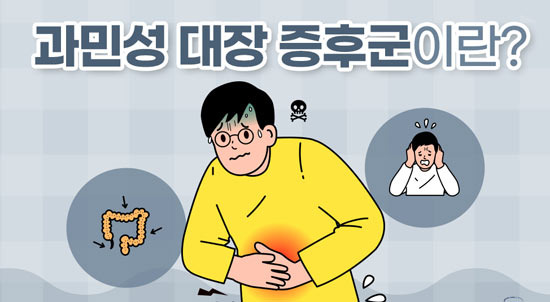
Recently, I've noticed a significant increase in my trips to the bathroom. What used to be once a day has turned into two or three times, and on some days, four times.
At first, I thought, "Have I been eating more lately?"
But honestly, I didn't think my portion sizes had increased that much, which made me feel something was off.
For men in their 40s, there's something to consider. It's quite likely that this isn't just due to eating more.
Does eating more really increase the frequency of bowel movements? It's half true and half false.
When food intake increases, the volume entering the intestines can increase, which may lead to larger bowel movements.
However, an increase in "frequency" is a different matter.
Unless your stomach has suddenly turned into a highway, the pattern of intestinal movement itself has changed.
As I looked for real causes to suspect, I thought of Irritable Bowel Syndrome (IBS).
IBS is characterized by abdominal pain and recurring diarrhea or constipation, even when no specific abnormalities are found in tests.
This makes it even more confusing. It also tends to appear more frequently in people in their 40s.
If you haven't eaten anything particularly bad but suddenly find yourself needing to go to the bathroom frequently, it's worth checking out.
Symptoms often worsen in stressful situations, and a typical pattern is experiencing abdominal pain that decreases after a bowel movement.
If the state of having a sensitive gut persists for a long time, it can significantly disrupt daily life.
Caffeine, alcohol, fatty foods, and irregular eating habits can exacerbate symptoms, so managing lifestyle and stress is crucial.
In the case of IBS, doctors may say everything is normal, but the individual feels uncomfortable every day.
A typical characteristic is that the stomach hurts a little, but the pain decreases after going to the bathroom.
Additionally, the state of bowel movements is inconsistent. Some days they are loose, some days normal, and other days there is a feeling of incomplete evacuation.
This can subtly make life difficult. You start looking for a bathroom before going out, and you feel anxious about long drives or meetings.
Many people feel the urge as soon as they wake up in the morning. Just having a cup of coffee can trigger a response in the gut. This is especially worse on stressful days. On days with important appointments, travel days, or days when you're nervous, your stomach reacts first.
The problem is that once this starts, it can become a habit. The gut seems to remember the stress pattern, so when you're tense, the urge to go to the bathroom comes immediately. Therefore, simply reducing food intake won't solve the issue; you need to look at your overall lifestyle patterns, including sleep, stress management, and eating speed.
Medication treatment for IBS varies depending on the symptoms. If diarrhea is frequent, medications that slow down intestinal movement or stabilize intestinal nerves are used. If it's constipation-predominant, medications that promote intestinal movement or osmotic laxatives are prescribed. When abdominal pain or cramps are severe, antispasmodics that reduce excessive contractions of the intestines can be helpful.
Lifestyle therapy is also an important part of treatment. In hospitals, patients are advised to maintain regular eating patterns and reduce the intake of irritating foods, caffeine, alcohol, and fatty foods. Recently, some recommend a low FODMAP diet that reduces specific carbohydrates that are easily fermented in the gut. Dietary fiber can help with constipation-predominant IBS, but increasing it suddenly can lead to increased gas, so it's important to adjust it slowly.
Stress management is also key to treatment. IBS is significantly influenced by the 'gut-brain axis' connecting the gut and the brain. Hospitals recommend improving sleep, regular exercise, and relaxation techniques, and in cases where symptoms are severe or accompanied by anxiety or depression, low-dose antidepressants or anxiety management medications may be used. These medications are not for psychiatric treatment but serve to reduce the gut's hypersensitivity.
In conclusion, treating IBS is not a matter of just one medication; it is more about reducing lifestyle habits that irritate the gut and lowering its sensitivity through long-term management. If symptoms recur, rather than enduring them, I believe it is most effective to accurately identify the type at a hospital and find a management method that suits you.







 neroyo |
 nivex85 |
 Old English |
 nixxon |
 LIZ Legal Information Blog |
 squidogame |
 Margarine Daebimama |
 eatontown blog |
 cloudyday |
 Google Idea |
  Korean Mom |
  My NYC |
  moo moo |
  Mr Oh |
  forevergee |
  festival |
  manchester |
  constant |
  Leapfrog Move |
  vibranto |
  Tora Tora |
  yellowbutter |
  Dolly |
  US Embassy |
  NYC saladbar |
  Finding Superfoods |
  lightyear |
  song bang |
  vexomo |
  Indiana Jones |