
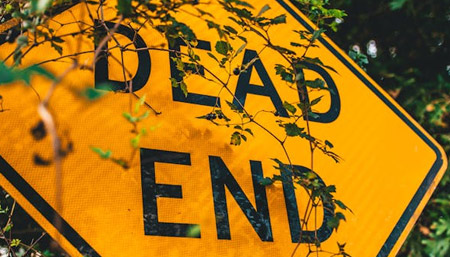
These days, when you talk about rent in LA, everyone starts with a sigh, right?
I hear a lot from my friends that "I can't do anything because I'm paying rent."
Living in K-Town, I feel that rent has gone up significantly compared to before, making life increasingly tight.
Moreover, costs for public electricity, water, sewage, and garbage, which used to be covered by landlords, have now shifted to tenants, leading to a continuous outflow of money. Utility bills are also rising...
Once they go up, they never come down, haha, it's driving me crazy.
In the past, I thought that if I worked hard, I could at least manage to pay the rent.
But now, that's not easy.
So, I want to talk about why rent has skyrocketed and how it greatly affects our lives.
In recent years, rent has really skyrocketed.
A one-bedroom apartment averages $2,800, and a two-bedroom starts at $3,500. In Korean money, that's over 5 million won just for rent. Earning that much in Korea is considered doing well, but in LA, that's just going to rent, haha.
Newly built apartments are even worse. They are much more expensive than before, making them completely out of reach.
As a result, even middle-class white residents who used to live in Hollywood or Santa Monica are now flocking to find relatively cheaper homes in K-Town or downtown.
It used to have a strong Korean neighborhood image, but these days, you can really feel the presence of white people at Korean markets.

Spending 500 on a two-bedroom?
They say earning 5 million won a month is quite good in Korea, but in LA, that's just going to rent, haha.According to economic news, more than half of people in LA spend over 50% of their income on rent.
Originally, around 30% of income was considered a reasonable level, but now it's become normal to spend more than half of one's salary on rent.
On top of that, prices are soaring, with car payments, insurance, and gas all going up. Even basic maintenance like oil changes is much more expensive than before. In the end, everyone is cutting back on food, clothing, and entertainment just to get by.
So why has it gone up this much?
First, there's a shortage of housing supply. In LA, building new homes is difficult, so demand always outstrips supply.
Second, there's the issue of investors. Nowadays, overseas funds or large investors often buy homes, upgrade them, and then list them at high prices, making it hard for ordinary incomes to keep up.
Third, there's the pandemic's aftermath. Rent that briefly dropped during the pandemic skyrocketed again as people flocked back to the city. The increase in remote work has also heightened demand for good homes.
Fourth, there are building maintenance costs and taxes. After the pandemic, building management costs have risen, and property taxes have also increased.
Ultimately, these situations are placing a chain burden on tenants.
A comedian joked, "I work hard to support my landlord," and it feels like a perfect expression of the current reality.
The problem is that this isn't just a financial issue; it lowers the quality of life itself.
When you pay more than half your salary in rent, naturally, expenses for dining out, education, healthcare, and leisure decrease.
Many people are moving frequently because they can't afford rent, and the process incurs additional costs for deposits and moving, creating a vicious cycle. In the worst cases, the number of people being pushed into homelessness is increasing, and the rise in rent is a significant factor in LA's homelessness crisis.
The LA city government has implemented measures like rent control, but they don't apply to all buildings and there are many exceptions, so the effectiveness is limited.
Every time there's talk of building more public housing, the actual changes felt are almost nonexistent. There are discussions about easing regulations, but the pace is slow. Sometimes I wonder if it would be better to demolish an entire block in LA and build hundreds of 30-story apartments, haha.
In the end, it seems there are two realistic choices.
One is to just endure and manage finances thoroughly, and the other is to leave LA altogether.
In fact, among my acquaintances, four people have already moved to other states.
One brother who can work remotely moved to Phoenix, where he pays $1,300 for rent that was $3,200 in LA. He boasts that his new place is bigger and even has a pool. He says he'll save $100,000 in four years to buy a house, and I can't help but feel envious when I hear that.
I sometimes think about it. Just like a monk leaves a temple he dislikes, should I leave LA if I can change jobs?
Or should I just endure somehow? I still don't know the answer, but one thing is certain: this reality of rent is making all of us think deeply.







 Weekend Movie Blog |
 Beauty, Health, Lifestyle Blog |
 coloradoman |
 Superman Cat Blog |
 novapixel |
  dralix58 |
  Gorama Round |
  Skydiving |
  dreamport |
  Yellow Snowman |
  Toaster Pizza Magic Show |
  velvetnom |
  Anytime Journey |
  Mrs. Duluth |
  jaxter |
  Atlanta Mama |
  Baguette Blog |
  US Embassy |
  Korean Mom |
  My NYC |
  moo moo |
  Mr Oh |
  forevergee |
  festival |
  manchester |