

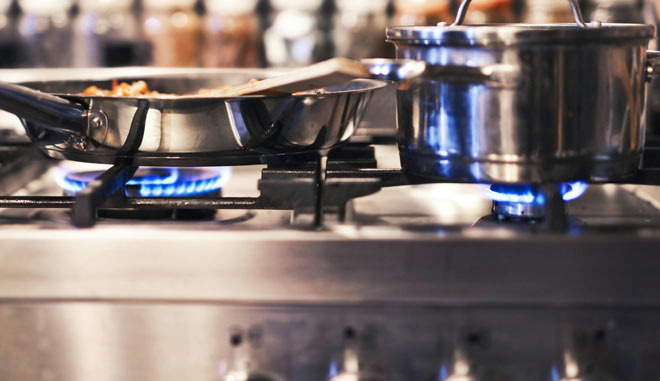
Recently, studies from various countries have been emerging, indicating that the use of gas stoves in homes increases the risk of lung cancer.
In the past, many people believed that the flavor from cooking with gas was essential, saying, "I can't cook without a gas flame," but now everyone talks about the more important issue of health.
When we cook rice or boil soup, the blue flame of the gas stove burns beautifully. However, there are more frightening things hidden within that flame. When natural gas or LPG burns, harmful gases such as nitrogen oxides (NOx), carbon monoxide (CO), and benzene are produced.
In particular, nitrogen oxides can irritate the mucous membranes inside the lungs, and prolonged inhalation can lead to decreased lung function or inflammation, increasing the risk of lung cancer. Some studies in the U.S. and Australia have even described the indoor air pollution levels in homes that use gas stoves daily as being comparable to those near busy roads... It's quite a scary thought.
This means that the kitchen becomes a 'high-risk area for indoor smog.' Housewives who cook for long periods or those who frequently prepare home-cooked meals are exposed to this polluted air for longer. This is especially severe in apartment structures where ventilation is poor. In winter, many people cook with the windows closed, and in older homes, the exhaust ducts are often ineffective.
In fact, data measured by environmental organizations show that the concentration of nitrogen oxides when cooking with gas stoves often exceeds the WHO indoor air quality guidelines. The problem is that this pollution does not disappear immediately and lingers in the air after cooking, which means children and families breathe it in.
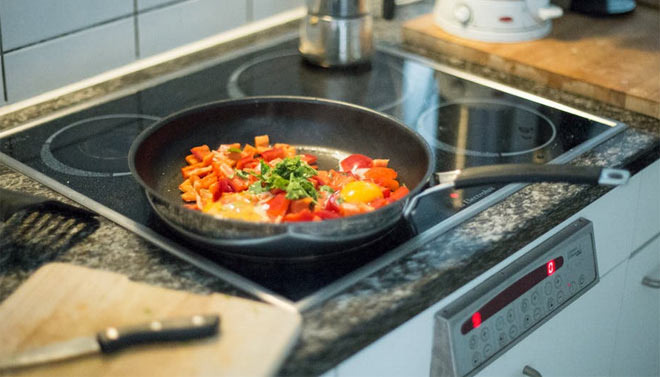
On the other hand, electric stoves or induction cooktops do not emit these harmful gases because there is no combustion process.
They convert electricity directly into heat, so there are no flames. As a result, they do not burn oxygen or pollute the air.
Additionally, induction cooktops keep the surrounding air cooler during cooking, making the kitchen much more comfortable in the summer. At first, it feels strange because there are no visible flames, but those who have used them say, "I can't go back to gas now." Moreover, the risk of burns is reduced, and there is less worry about whether the flame is out.
However, this doesn't mean we should immediately throw away our gas stoves. It is advisable to open the windows wide while cooking and to turn on the hood in advance to circulate the air. The hood filter should be cleaned regularly, and if possible, installing a window fan can also improve ventilation efficiency.
But in the long run, I believe switching to electric or induction cooktops is a much wiser choice.
Even if electricity bills may rise slightly, considering health and air quality, this should be seen as an investment. Nowadays, some government or energy-saving programs offer subsidies for switching to induction, so it might be worth looking into.
In the past, seeing the flame provided reassurance, but now we live in an era where 'flame-free cooking' is safer and smarter.
The kitchen is where the health of the family begins.







 neroyo |
 nivex85 |
 Old English |
 nixxon |
 LIZ Legal Information Blog |
 newyorker 101 |
 Things to Do to Buy a House |
 International Court |
 U.S. Weather Bureau News |
 Lunch and Dinner Mexican Taco |
  Korean Mom |
  My NYC |
  moo moo |
  Mr Oh |
  forevergee |
  festival |
  manchester |
  constant |
  Leapfrog Move |
  vibranto |
  Tora Tora |
  yellowbutter |
  Dolly |
  US Embassy |
  NYC saladbar |
  Finding Superfoods |
  lightyear |
  song bang |
  vexomo |
  Indiana Jones |