

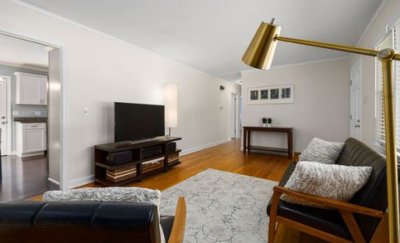
Among cities in Orange County, Irvine is noted as one of the areas with the steepest price increases over the past five years. This is attributed to a well-planned community, top-ranked public school districts, and relatively safe neighborhoods, which have led to both residential and investment demand. Particularly, the ongoing development of emerging villages like Woodbury, Great Park, and Portola Ranch has kept interest in new construction high.
At the beginning of 2021, the median home price in Irvine was around $950,000. As of 2026, it is estimated to be trading around $1.5 million, with a cumulative increase of approximately 58%. Considering that the national average increase during the same period was around 35-40%, Irvine has significantly outpaced the national trend. Notably, the increase was more pronounced in single-family homes compared to condos and townhomes.
From 2021 to the first half of 2022, a period of ultra-low interest rates and the rise of remote work contributed to a surge in prices. However, from the second half of 2022 to 2023, the rapid interest rate hikes by the Federal Reserve led to a decrease in transaction volume and a noticeable slowdown in price growth. Between 2024 and 2025, the market returned to a moderate upward trend amid ongoing supply shortages, and recently, price increases have stabilized to single digits. However, areas with strong school district premiums, such as Northwood and Woodbridge, still tend to see properties sell quickly when they come on the market.
The factors driving the price increase in Irvine include sustained demand for quality school districts, job growth from tech and biotech companies in Orange County, and a city structure with limited new land supply. The area's popularity among Korean parents also appears to support demand. Rental prices have risen at a similar pace to home prices, indicating that the gap between renting and buying has not widened significantly.
Looking ahead, a cautious perspective is necessary. If interest rates gradually decrease, purchasing power may return, potentially resuming the price increase trend. However, the already high price burden and inventory shortages suggest that any further rapid increases are unlikely, with a more gradual trend expected. The gradual depletion of new development sites may also act as a long-term supply variable.
For Korean households, there may be significant concerns regarding the timing of buying and selling. If considering a purchase for residential purposes due to school districts, it seems reasonable to monitor interest rate trends and inventory levels. For investment purposes, given the already high price levels, it would be wise to evaluate from a long-term holding perspective. Calculating total ownership costs, including closing costs and property taxes, in advance could also be beneficial.
Nationally, while emerging Sun Belt cities like Phoenix and Austin have surged over 50% in the past five years, some areas in Chicago and New York have seen increases in the 20% range, indicating significant disparities between cities. In this context, Irvine can be classified as one of the cities with top-tier price increases on the West Coast.
Mortgage rates are also a crucial aspect to consider. The 30-year fixed mortgage rate, which was around 3% in 2021, rose to over 7% at one point, significantly increasing monthly payment burdens, particularly in high-priced markets like Irvine. Although rates have recently shown a gradual decline, many believe the likelihood of returning to pre-pandemic levels is low, suggesting that a cautious approach considering repayment burdens remains necessary.
Ultimately, the Irvine market is evaluated as a city where structural strengths in school districts and location support prices. However, since all markets have cycles, it seems essential to prioritize individual financial planning and living purposes. Whether to rent and observe the market or to enter now, even if it feels burdensome, will ultimately depend on each household's financial situation and children's educational schedules.
 DreamValley88
 UdirTemper





 garlic bread |
 Sugar Cream Door Bulletproof Noodles |
 urbanmint |
 |
| 
 Premium Gas Camp |
 Piano Teacher Blog |
 American Airlines Mileage |
 Lightning Sikhye Cooking Method |
 Coco and Lulu |
  Round and Round Children's Song Kingdom |
  Mia Flori |
  nova nova |
  healthy |
  leaves |
  sparkling |
  maryland park |
  persiste |
  conte |
  blueman |
  Going Once |
  Eldorado 88 |
  cherrydino |
  middlekick |
  Moscow Kim |
  nivex85 |
  quanta7 |
  Tomato Health Club blog |
  horse |