

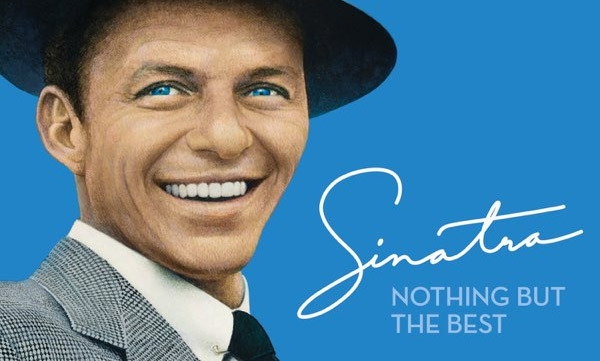
"Frank Sinatra became one of the most popular performers in the entertainment industry through his long career and very public personal life. He is generally regarded as the greatest American singer of 20th century popular music. Through his life and art, he transcended mere icon status to become one of the most recognized symbols of American culture."
Frank Sinatra 1915-1998 (Died at 82)
For many Koreans, songs like "My Way", "New York, New York", and "Strangers in the Night" served as the soundtrack of their youth from the 50s to the 90s.
Frank Sinatra is a symbol of 20th century popular culture and left a deep mark on American music and film. He was not just a singer but a representation of style, attitude, and masculinity. Especially during the Rat Pack era, his image embodied a sophisticated man associated with elegant drinks, jazz clubs, tuxedos, and cigarette smoke.
As a singer, he symbolized the revival of standard pop in the 1950s, and as an actor, he showcased outstanding acting skills, winning the Academy Award for Best Supporting Actor and the Golden Globe Award for Best Actor.
Born on December 12, 1915, in Hoboken, New Jersey, as the only son of Italian immigrant parents, he nurtured his dream of becoming a singer by listening to Bing Crosby's songs. After dropping out of high school, he began building his career by singing in local clubs and won a radio audition program in 1935.
In 1939, he made his first recording as a vocalist with the band of trumpeter Harry James, and later joined Tommy Dorsey's band, gaining national popularity. In 1943, he signed a contract with Columbia Records and debuted as a solo artist, releasing albums like 'The Voice of Frank Sinatra' (1946), receiving enthusiastic support from young female fans known as 'bobby-soxers'.
He won the Academy Award for Best Supporting Actor for his role in the film 'From Here to Eternity' in 1953. He solidified his position as an actor with impressive performances in films like 'The Man with the Golden Arm' (1955) and 'The Manchurian Candidate' (1962).
Musical Peak
From the mid-1950s to the 1960s, Sinatra reached his musical peak by releasing emotional albums such as 'In the Wee Small Hours' (1955), 'Songs for Swingin' Lovers!' (1956), and 'Only the Lonely' (1958). In 1960, he established his own label, Reprise Records, securing creative freedom, and produced numerous famous songs including I'll Never Smile Again, Learnin' the Blues, Strangers in the Night, Somethin' Stupid, My Way, Fly Me to the Moon, That's Life, and Theme From New York, New York. Many of these songs are so famous that they are often heard somewhere, and he was known to frequently sing carols during national tours and Las Vegas performances.
Sinatra was married four times, with his marriage to actress Ava Gardner receiving particular attention. He was also politically active, maintaining a friendship with President John F. Kennedy and finding himself at the center of controversy due to alleged ties with the mafia.
On May 14, 1998, Sinatra passed away from a heart attack in Los Angeles, leaving behind a record of over 150 million album sales and establishing himself as a global music icon. He received 11 Grammy Awards, an Academy Award, and a Golden Globe Award, recognizing his artistic contributions, as well as national honors such as the Presidential Medal of Freedom and the Congressional Gold Medal.
Evaluation by the New Generation of America
For Generation X (born 1965-1980), there is a slight distance, but he is still regarded as a 'legend'. The music they encountered through their parents' records or movie channels had a 'classic dignity' and sometimes felt like a representation of American romance. Especially due to the image connected with old mafia films like The Godfather and Casino, Frank Sinatra is etched in memory not just as a singer but as an 'icon of the era'.
Millennials (born 1981-1996) and Generation Z (born after 1997) did not experience Sinatra directly, but they feel he embodies 'retro sentiment' through indirect encounters via YouTube, background music in films, and advertisements. His emotional lyrics, classic orchestration, and calm yet powerful voice are being re-consumed as 'healing', 'classic charm', or 'emotional playlists'. He often appears during the Christmas season, weddings, and as background music in upscale restaurants.
Frank Sinatra transcended being just a singer, influencing various fields such as music, film, and politics as a symbol of 20th century American popular culture. His emotional vocals and charisma can still be seen as legendary figures that exert tremendous influence today.






 Egg Steamed Pot |
 novapixel |
 xylora |
 vegas mom |
 Coco and Lulu |
 newyorker 101 |
 Things to Do to Buy a House |
 U.S. Weather Bureau News |
 International Court |
 Lunch and Dinner Mexican Taco |
  US Embassy |
  Korean Mom |
  My NYC |
  moo moo |
  Mr Oh |
  forevergee |
  festival |
  manchester |
  constant |
  Leapfrog Move |
  vibranto |
  Tora Tora |
  yellowbutter |
  Dolly |
  NYC saladbar |
  Finding Superfoods |
  lightyear |
  song bang |
  vexomo |
  Indiana Jones |