

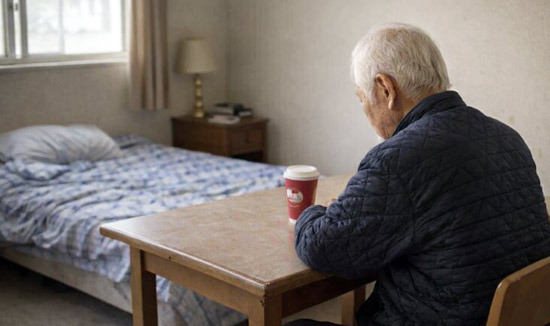
This is the story of Mr. Kim, who lives in LA's Koreatown.
At 66 years old, he came to America 20 years ago with his wife, who has since divorced him and returned to Korea, leaving him alone.
His daughter, who returned to Korea with his wife, is now independent and struggling to make ends meet.
There is no way for her to help Mr. Kim in America.
Although he came to America and even obtained citizenship, Mr. Kim is in a situation where he must support himself in retirement.
Currently, Mr. Kim lives in a one-bedroom apartment in Koreatown Eco Park, where the rent is $1,900.
Since he can't afford it alone, he shares the apartment with a friend who works delivery.
They split the rent and also share other living expenses like electricity and food costs.
The problem is that Mr. Kim's income from social security before turning 65 was only about $400 a month.
The reason Mr. Kim's social security is at $400 a month is that he has been barely making a living doing jobs like working at a market, driving a taxi, and security work since coming to America.
The issue is that most of these jobs paid low wages and were part-time rather than full-time.
At times, he would have gaps in work, and sometimes he was paid in cash.
He filed taxes for about 12 years, but because his income was low, he earned Social Security credits, but his average income was recorded as low.
As a result, the lifetime income used to calculate his pension was low, leading to the $400 monthly benefit.
Moreover, Mr. Kim's knees have deteriorated with age, making it impossible for him to continue working.
Unable to work and with a low income record, he applied for Supplemental Security Income as soon as he turned 65.
If he receives $400 from social security, the program supplements the amount to about $900 a month.
With additional government assistance (SSP), he receives a total of $1,180.
Ultimately, the amount Mr. Kim has in hand is about $1,180. He resolves medical expenses through Medicaid.
He hardly pays for hospital bills or medication. Additionally, the Medicare Savings Program covers his Medicare premiums.
With Extra Help, his medication costs are almost negligible. He manages food expenses through SNAP.
Every month, funds for food are loaded onto a card, which he uses for groceries.
At this point, one might think, "Well, he can still get by," but the reality is different. The rent is the problem.
SNAP does not cover rent. SSI also does not cover rent. Ultimately, Mr. Kim has no choice but to maintain his living arrangement with a friend.
The thing Mr. Kim looks forward to the most is Section 8, which is rental assistance for low-income individuals.
If he qualifies for this, his rent burden would significantly decrease. However, the problem is that the waiting period is at least 5 to 10 years. It's uncertain when it will happen.
So, Mr. Kim's life is just like this. He has no worries about medical care. Going to the hospital is not a problem. He doesn't go hungry. But housing is an issue.
He has given up on having a car and relies on public transportation, rarely dining out, and he can't even think about traveling to Korea.
The American system is indeed good. It doesn't let people starve or prevent them from accessing medical care. However, this is not "retirement security"; it is merely "minimum survival maintenance."
Individuals must prepare for their own retirement. If they are unprepared, they end up like Mr. Kim.
What Mr. Kim regrets is this: "I can manage to get by somehow, but I can't live comfortably like those who prepared for retirement."






 You Only Live Once |
 Texas Real Estate Blog |
 zentar |
 seouljung |
 AliAluAlo Blog |
 Experiences Living in America |
 Monte Sori |
 Rocky Mountains |
 Roman Pan |
 newyorker 101 |
  coffeee |
  |
|  Christopher |
  sylven |
  Sammy Beach |
  Bliss O |
  blue ocean |
  greenlight |
  Watanaka Karametibaksa |
  castle |
  xelton52 |
  carefree |
  vrixen73 |
  AZ Road Master |
  Victory 1988 |
  summita |
  business lim |
  Colorado Lee |
  Make My Day |