

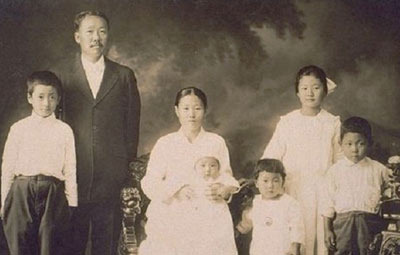
The early history of Koreans immigrating to the United States is quite interesting and actually developed alongside the deepening relationship between Korea and America.
The first immigration can be said to have started in 1903. At that time, many Koreans primarily migrated to Hawaii. The reason for Hawaii was that there was a labor shortage there, especially for workers needed in sugar plantations. Therefore, American plantation owners in Hawaii decided to bring workers from Korea. Most of the first Koreans who went to America had to work in agriculture or hard labor.
Later, in 1905, Korea became a colony of Japan, and the Japanese government restricted Korean immigration, but many had already immigrated to the U.S. before that, allowing them to settle in America. They began to gradually settle not only in Hawaii but also in major cities like California.
Initially, immigrants mainly worked as agricultural laborers, domestic helpers, and laborers. However, over time, they began to start their own businesses or educate their children, forming a community. From that time, Korean immigrants began to play an increasingly important role in the U.S.
At that time, there were many difficulties faced by Koreans in American society. For example, they faced various challenges such as racial discrimination and resource shortages, but they continued to live steadily while preserving their roots. The small Korean community they created later developed into a larger Korean community.
There are several Korean immigrant history museums in the U.S. that commemorate and preserve the history and culture of Korean immigration. Among them, the most famous is the Korean American Museum located in Los Angeles. This museum exhibits the history, culture, and the challenges and achievements faced by Korean immigrants in the U.S.Korean American Museum
- Location: Los Angeles, California
- Features: It covers the early immigration history of Korean immigrants, the Korean War, and how modern Korean Americans have grown and developed. This place plays an important role in preserving the cultural heritage of the Korean community while introducing significant events in the Korean community through various exhibitions.
- Exhibition Content: It includes various aspects such as the lives of early immigrants, the stories of Koreans who immigrated to Hawaii, the economic development of the Korean community, cultural events, and arts. There are also exhibitions dealing with the experiences of immigrants after the Korean War.
Korean War Veterans Memorial
- Location: Washington D.C.
- Features: This museum is a memorial established to honor the veterans of the U.S. and Korean forces who participated in the Korean War. It includes historical materials related to the Korean War, as well as the impact of the Korean War on Korean immigrants. Although it is not a museum that specializes in Korean immigration history, it is an important place to glimpse the formation and development of the Korean community in the U.S. through this war.
Korean American History Museum
- Location: New York, New York
- Features: This museum is an exhibition space that deals with various stories of Korean immigrants, showcasing the cultural contributions and historical events of Koreans active across the U.S. It examines the economic, social, and cultural development of Korean immigrants, recording their efforts and achievements.
In addition, there are various exhibitions and museums commemorating the history and culture of Korean immigration in different cities. These museums not only convey stories of the past but also provide important spaces that inform how modern Korean Americans have formed and what roles they have played in American society.



 eatontown blog |
 Toaster Pizza Magic Show |
 US Embassy |
 fortbliss |
 Folding Instructions |
 UCLA Captain |
 Experiences Living in America |
  Until the Day It Gets Better |
 Golden Knights |
  Tonky |
  viroma |
  cookie |
  Live and that's it |
  Alright Twain |
  HAWAII Korean Church News |
  Amore |
  linex |
  Balancework |
  laro90 |
  MEDBIO American Doctor Blog |
  SWAT TEAM BLK |
  DREAM BIG |
  frostbite |
  330 Forever My Love |
  El Dorado |
  dralix58 |
  Gorama Round |
  Skydiving |