

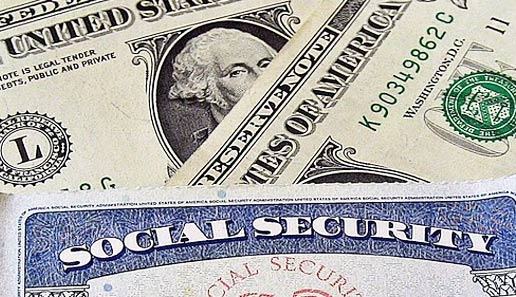
While living in the U.S., you may have heard statements like "Social Security is going bankrupt soon" or "Social Security funds will run out and payments will stop."
However, if you look a little closer at the structure, it's almost impossible for benefits to completely stop.
Instead, they may decrease. That's the key point.
First of all, U.S. Social Security is not the same as the concept of a 'savings account.'
It's not a structure where the money I paid is saved and returned to me later; rather, it's a system where the taxes paid by current workers fund the pensions of those who are currently retired.
So, just because the fund runs out doesn't mean "there's no money left, so it's over". Money continues to come in.
Therefore, the amount that can be paid is about 80%. More precisely, depending on the time, it's around 79% to 83%. In simple terms, if we assume that nothing changes and we just continue as is, the current taxes coming in can cover about 80% of the total pensions.
This means that it won't completely drop to zero. However, there's an important point here. It comes with the premise of "if we just leave it alone."
If Congress does nothing, they will have to pay from the legally incoming funds, which could lead to a situation where about 20% is automatically reduced.
This isn't just a theory; it's structured that way.
But realistically, the situation looks different. The likelihood of Congress just leaving this alone is almost nonexistent.
That's because Social Security is a politically significant issue. Millions of people receive this money, and suddenly cutting it by 20%?
That would be politically unmanageable.
So, in the past, whenever similar situations arose, they have raised taxes, slightly delayed the retirement age, or adjusted the payment structure to keep it going.
Similar discussions are happening now.
"Let's tax high earners more," "Let's raise the age for receiving benefits a bit," "Let's adjust the payment cap"—these options are continuously being discussed.
Ultimately, there is a high likelihood that they will try to maintain more than 80% in some way.
So, realistically, the chance of Social Security completely disappearing is low.
However, whether you will receive the promised amount of 100% is another issue.
There is a sufficient possibility of some adjustments being made.
The best way to view this is that "it will cover part of basic living expenses." Expecting it to cover everything is risky, but it's also too significant to ignore.
In my case, my perspective has changed while considering this.
In the past, I thought, "It's money I won't receive anyway," but now I see it as "some amount will come through."
However, relying solely on that for retirement planning seems a bit risky to me.
Ultimately, it seems we can understand that the outcome will depend on how politics moves.
 USAToday





 MEDBIO American Doctor Blog |
 Burbank Lee |
 vibranto |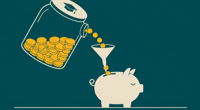
 sparkling |
 oh my salami |
 Gimmi207 Blog |
 Dingho and USA News |
 Let's Be Like a Salt-like City Person |
 Tiger Milk Foam Research Institute |
 Maximum Pro |
  Where is a really nice neighborhood? |
  Real Estate |
  Forest Gump |
  Real Estate Investment Korean American |
  Dollydori, Lover of Movies |
  dmzline |
  travelo |
  American Food Information & Calories |
  Splendid Mission |
  sparklingo |
  Watch Walker |
  Soy Angelino |
  autumn |
  K-POP TV News |
  cortiva6 |
  Nevada Teppanyaki |
  aerion99 |
  Golado |
  Joyce blog |