

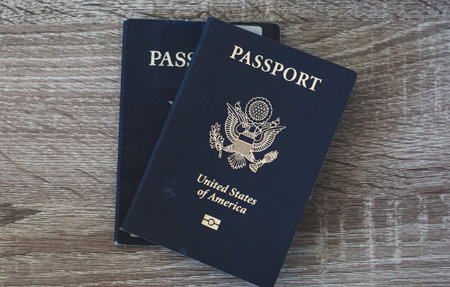
When U.S. citizens or those about to naturalize apply for a U.S. passport, many wonder how thoroughly their criminal records are checked. The process may differ slightly from that in Korea or other countries, so it's good to keep this in mind.
Basic Documents Required for U.S. Passport Application
Documents proving U.S. citizenship (birth certificate, naturalization certificate, etc.)
Identification (state or government-issued ID with a photo, such as a driver's license)
Passport application form (DS-11, DS-82, etc. as applicable)
Photo (passport photo taken within the last 6 months)
Fees
Generally, when applying for a new U.S. passport (or renewing one), you are not required to submit a separate "criminal record certificate." This means that rather than investigating all criminal records in detail, the Department of State and related agencies internally check whether there are specific reasons for concern.
Examples of situations that may restrict passport issuance include:
Travel Restrictions: If you are under investigation for a current crime or are about to face trial and are deemed a flight risk, passport issuance may be denied through state or federal measures.
Federal Child Support Arrears: If you have a record of owing more than $2,500 in child support, the Department of State may restrict passport issuance or renewal.
Arrest Warrants or Fugitives Due to Felonies: If there is a federal arrest warrant issued against you or you are wanted for a specific felony, passport issuance may be denied.
Court Orders Prohibiting International Travel: If a court or other judicial authority has issued an order prohibiting international travel, it is highly likely that passport issuance will also be denied.
Crimes Related to National Security: If you are involved in espionage, treason, terrorism, etc., passport issuance may be restricted or previously issued passports may be canceled.
How Criminal Records Are Checked During the Issuance Process
After the U.S. Department of State receives a passport application, they check the applicant's information (name, date of birth, social security number, etc.) against key lists such as child support arrears, wanted persons, and travel prohibition orders.
While they do not check the "entire criminal record" in detail, if there are reasons for denial found during the cross-verification process with state and federal systems, the issuance may be halted or a denial notice may be received.
Points Applicants Should Be Aware Of
Child Support Arrears: If you need a passport, first check if you have any outstanding child support payments and resolve the issue.
Ongoing Criminal Cases: Check in advance whether there are any travel restrictions imposed by the court.
Name Changes or Naturalization Processes: If the naturalization process is not complete or the name change process is not finalized, there may be delays due to document discrepancies, so caution is needed.
State or Federal Court Orders: You should check for any potential state-level arrest warrants or federal agency wanted notices to avoid situations leading to denial of issuance.
What to Do If Issuance Is Denied or Delayed
If you receive a notice from the Department of State stating "passport issuance not possible," you must first clarify the reason. If unpaid child support is the cause, after payment, the state department must send "payment resolution" information to the Department of State. You can then reapply. If the issue is related to warrants or arrest, you must resolve those legal matters before attempting to reapply.
In conclusion, while the U.S. passport issuance process does not require proof of all general criminal records, the Department of State internally checks whether there are reasons that may restrict your travel. The most common case is the restriction due to unpaid child support, while other reasons include being wanted for felonies or being involved in ongoing trials or investigations.
If you think you might fall into any of the above situations, it is recommended to first check with the relevant departments (such as the Child Support Enforcement Office or the court), and for accurate information, contacting the official U.S. Department of State website (travel.state.gov) or your local passport office is the most reliable approach.







 Korean Mom |
 novapixel |
 Peter Pan Pet |
 horse |
 Sunset Oregon |
 Mini Mee |
 Korea Tiger News |
 Beauty, Health, Lifestyle Blog |

 Good Hotels |
  Tonky |
  viroma |
  cookie |
  Live and that's it |
  Alright Twain |
  eatontown blog |
  HAWAII Korean Church News |
  Amore |
  linex |
  Balancework |
  laro90 |
  MEDBIO American Doctor Blog |
  SWAT TEAM BLK |
  DREAM BIG |
  frostbite |
  330 Forever My Love |
  El Dorado |
  dralix58 |
  Gorama Round |
  Skydiving |