

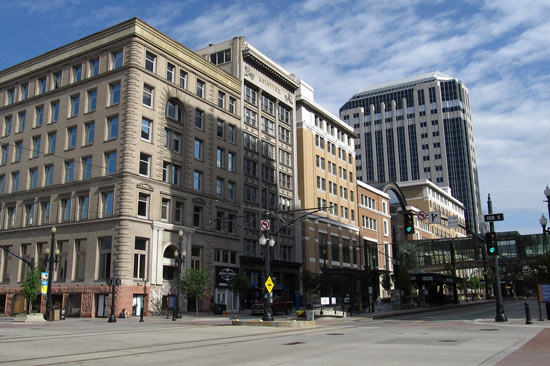
As of 2026, the commercial real estate market in Salt Lake City, Utah, is gaining attention from investors as it achieves stable growth and strategic restructuring, unlike other major cities.
In the background of this city are a solid economic foundation in the tech industry known as Silicon Slopes and the confirmation of hosting the 2034 Winter Olympics, both of which are significant advantages. These two factors are aligning, and as of 2026, the Salt Lake City commercial real estate market is securely positioned on a long-term growth path.
First, looking at the office market, it is maintaining relatively strong demand compared to traditional major cities. While older offices are struggling due to the normalization of remote and hybrid work, Class A offices equipped with modern facilities and green certifications continue to command high rents and are preferred by companies.
Especially influenced by the tech company belt expanding along Silicon Slopes, the demand for mixed-use offices that combine collaboration and cultural functions is leading the market. This indicates that the office market is structurally upgrading.
In the industrial and logistics real estate sector, Salt Lake City's geographical advantages are shining even more. As a logistics hub connecting the West Coast, including California and Washington, with the interior of the United States, Salt Lake City is establishing itself as a new Western logistics hub.
With the completion of the expansion of Salt Lake City International Airport, the demand for large logistics warehouses and data centers near the airport has surged, and e-commerce companies are utilizing this area as a Western base, leading to a continuous rise in industrial land prices. Additionally, the relocation of light manufacturing facilities centered around semiconductors and biotech to Utah is significantly increasing the investment appeal of special-purpose industrial real estate.
The retail and mixed-use development market is the area where the effects of hosting the 2034 Winter Olympics are beginning to be reflected. In downtown, mixed-use development projects that combine shopping, dining, entertainment, and residential functions are emerging, changing the atmosphere of the city. The City Creek Center and surrounding retail areas are revitalized by the influx of tourists and young professionals, while suburban areas like Draper and Lehi are also creating stable revenue structures with local commercial facilities amid population growth.
However, challenges also exist. Although the high-interest rate trend has eased, the financial burden of large projects remains a concern for developers. Additionally, the rapid influx of population and corporate relocations is increasing pressure on transportation and power infrastructure, making the speed of infrastructure investment by the city government a crucial variable affecting future market stability.
In summary, the commercial real estate market in Salt Lake City in 2026 is evaluated as one of the most stable and dynamic investment environments in the western United States. The growth of the hotel and tourism industry due to the Olympics, along with the demand for offices driven by the influx of tech companies, is supporting the market simultaneously.
In particular, projects to convert older offices with high vacancy rates into residential or mixed-use facilities are gaining attention as new revenue models. In conclusion, Salt Lake City is assessed as a city with a very high likelihood of maintaining a stable upward trend in the commercial real estate market after 2026, based on a strong job market and international events.



 moo moo |
 ultron78 |
 garlic bread |
 Sugar Cream Door Bulletproof Noodles |
 urbanmint |
 Enjoyable American Life Diary |
 morvex37 |

 Anytime Journey |
  Mrs. Duluth |
  jaxter |
  Atlanta Mama |
  Baguette Blog |
  US Embassy |
  Korean Mom |
  My NYC |
  Mr Oh |
  forevergee |
  festival |
  manchester |
  constant |
  Leapfrog Move |
  vibranto |
  Tora Tora |
  yellowbutter |
  Dolly |
  NYC saladbar |