

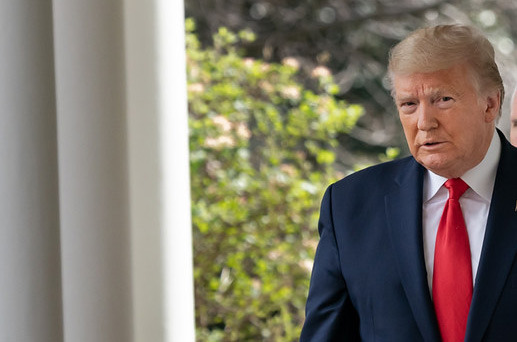
Donald Trump's approval rating has been reported at 36%.
It started at 47% in the early days of his re-election, maintaining a decent 40% range, but that line has now been broken.
In politics, the number 40% is often seen as a minimal defense line indicating some level of support. However, this time it has fallen below that threshold.
Even considering the sample size of 1,272 people and a margin of error of ±3 percentage points, it is hard to view this as just a simple fluctuation.
A 4 percentage point drop compared to the previous survey is statistically significant enough to suggest that it cannot be dismissed as mere coincidence.
This is a clear signal that the mood is shifting. The issue is where this decline began, and the timing is quite critical. It coincides almost perfectly with rising military tensions abroad and the beginning of an increase in oil prices.
On the surface, a tough foreign policy may seem like a card that helps consolidate support. In fact, there are instances in politics where a leader's approval rating rises during a crisis. However, this time the opposite trend has emerged.
In the same survey, only 35% supported military operations related to Iran, while 61% opposed them. This indicates a growing distrust not just in opinions but in the direction itself.
Even more interesting is the change over the course of a week. Support has decreased while opposition has increased. This suggests that rather than being persuaded over time, there is a growing sense of rejection.
Ultimately, the core issue is the economy. When war seems like a distant story, it feels manageable. It's just something consumed through the news.
However, when gas prices start to rise, the situation changes. You feel it immediately when you swipe your card at the gas station. Prices begin to rise, and living costs increase. From that moment on, foreign policy becomes less about "national strategy" and more about "my wallet issue." For voters, it's quite simple. Immediate living costs are more tangible than distant enemies.
Thus, this number carries more significance. It signals that the connection between perceived economic conditions and political evaluations is beginning to form, rather than just a simple approval or disapproval of policies. While heightened military tensions may create a strong leadership image in the short term, if that comes at the cost of rising oil prices and inflation, the narrative changes completely.
In the end, voters act based on calculations rather than emotions. And those calculations can happen quite quickly.
Right now, the U.S. is not in a dire or collapsing economy, but there is a strong feeling that "life is getting increasingly tough."
This is a politically dangerous signal.
The results of this survey do not reveal any particularly new facts. However, they show that the previously ambiguous balance is starting to tilt in one direction. The number 36% is not just a simple decline; it serves as a warning that "continuing in this manner could lead to further losses."
The key moving forward is choice. Will there be a continued push for a hardline stance in foreign and security policy, or will there be a consideration of economic burdens to adjust the pace? Balancing both is not as easy as it sounds, especially in a situation where oil prices and inflation continue to exert pressure.
The most challenging aspect of politics is timing when to change direction. If it's too quick, there's backlash; if it's too late, it's already too late. The current situation feels like standing on that fine line.
Ultimately, this number can be summarized into one question: Is a strong foreign policy still effective in boosting approval ratings, or has the structure shifted to one where everything is now swayed by economic factors? This 36% seems to be the first answer to that question.




 Sugar Cream Door Bulletproof Noodles |
 Investment Campus Home Ownership |
 U.S. Retirement Pension Information |
 California Dreamer |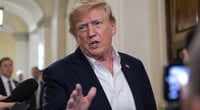

 Victory 1988 |

 Lightning Sikhye Cooking Method |
  Rolling Joy Life |
  lidus |
  French Macarons |
  Central Intelligence Agency Deputy Director |
  ATL Power 1 |
  MP Forever |
  Soy Angelino |
  San Jose Pop |
  Pronunciation Yo |
  hamooo |
  Entip |
  Yavrix 92 |
  cherry cherry |
  Coastal city |
  There Are Such Things in the World |
  Mazinger Z Rocket Punch |
  celtics |
  shinee cho |
  Kondae Garusong Blog |
  quiet river |