

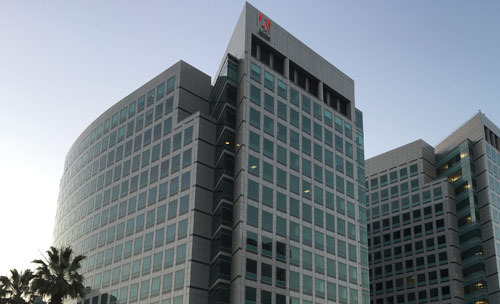
These days, Adobe is facing criticism due to the burden of subscription fees.
The price of Adobe Creative Cloud keeps rising, and when users try to cancel, they face penalties, which adds stress from the user's perspective.
Despite frequent updates, bugs and performance issues continue to persist, leading to growing dissatisfaction.
Additionally, as competing tools rapidly advance, the question of "Do I really need to keep paying this price?" has become more prominent.
However, in my view, the likelihood of Adobe going under anytime soon is very low.
Honestly, seeing the current AI tools is indeed nerve-wracking. But that doesn't mean there's a sentiment of "Adobe is finished."
The reason why talks of a crisis are emerging these days is primarily due to generative AI. When you try tools like Midjourney or Runway, you can't help but acknowledge their capabilities.
In the past, tasks that took hours of stacking layers in Photoshop can now be drafted with just a few lines of text.
Clients are increasingly approaching with questions like, "Is this done with AI?"
Moreover, tools like Canva are quietly rising in popularity. For those who don't work in design, it's a natural reaction to think, "Do I really need to learn Photoshop?"
The pricing is also much lighter. Given that Adobe's subscription fees are honestly burdensome, it seems difficult to prevent light users from leaving.
However, design is not just about the final product; it's also about the 'process' and 'control.'
For example, if you've worked with Adobe Photoshop or Adobe Illustrator, you know that adjusting pixel by pixel and matching color values accurately is fundamental.
AI-generated results may look "good enough," but fine-tuning the details can be incredibly frustrating.
Often, when client feedback comes in, you have to start all over again.
And Adobe is not a company that just sits back.
They have already integrated their own AI, Adobe Firefly, into their ecosystem.
The important thing about this is that it allows the use of AI without disrupting existing workflows.
From a designer's perspective, it feels like an upgrade without the stress of having to learn a new tool.
Another realistic point is that companies are extremely sensitive to copyright issues. If they use AI-generated images and later face lawsuits, the costs can be astronomical.
Adobe has a level of stability because it trains its models based on its own data. This is much more significant in corporate projects than in individual work.
Finally, the real key: workflow. This cannot be ignored. The structure that connects Photoshop → Adobe Premiere Pro → Adobe After Effects,
once you get used to it, is hard to break away from. File compatibility, integration speed, and work efficiency are all tied together, making it much harder to switch to other tools than one might think.
Freelance designers and those creating social media content will likely transition to AI and easier tools.
However, work that involves advertising, branding, video, and UI still relies heavily on Adobe. The market is dividing.
So rather than saying Adobe is collapsing, it's more accurate to view it as shifting from being an absolute leader to a position where it must continue to compete in a crowded market.







 U.S. Retirement Pension Information |
 California Dreamer |

 NEXT ROUND |
 US Economic Financial News |
 The Emperor Must Grow |
 Nuchuhan Exploration BLOG |
 monalisa blog |

 Strawberry Pancake Warrior |
  American Golf Course Travelogue |
  There Are Such Things in the World |
  Agenda Center |
  digital |
  timemachine |
  Starry Eyes |
  Desert King |
  Texas Real Estate Blog |
  Seattle - Emerald City |
  Texas Migration Story |
  Unknown Dog Walk blog |
  Bearded Strawberry Smoothie |
  Heart Ticker |
  JESIKYEOALBA BLOG |
  Jellia Angel |
  Moo Tang Clan |
  Khan Film Blog Production |
  yenne |