
There have been several moments in my 15 years living in Indianapolis when I thought, "This place is a bit different."
On days when the weather suddenly changes, the sky turns an odd color, and the wind starts blowing hard, and when the sirens go off, I remember reflexively heading to the basement. Living in this city is not completely unrelated to natural disasters. So, it's important to realistically know what risks exist.
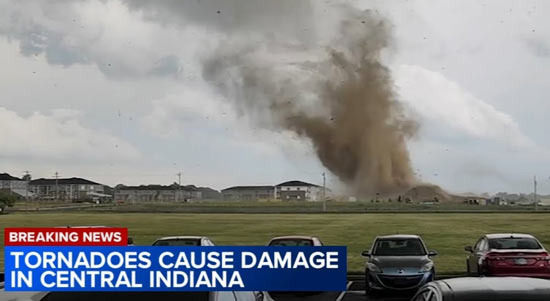
The most concerning threat is definitely tornadoes. Indiana is not the absolute center of Tornado Alley, but it falls under the influence of the Dixie Alley, which extends eastward.
Therefore, the possibility of tornadoes is always present each year. Particularly, the most active period is from April to June, with occasional occurrences in the fall. In fact, a strong tornado passed through the northern part of the state in 2006, and there were also cases of damage in surrounding areas in 2012.
If you live here, distinguishing between a "watch" and a "warning" is essential. A watch indicates a possibility, while a warning means it is actually happening.
When a warning is issued, there is no time to hesitate. You need to go to the basement or an interior room without windows immediately. Keeping your weather app and NOAA alerts on is almost a necessity.
Flooding is also mentioned quite often. There are rivers like the White River and Fall Creek within the city, so when it rains heavily, the water levels rise quickly.
Especially for homes in low-lying areas, it's a concern on rainy days. Many people check FEMA flood maps when buying a house. Insurance is not just an option; it can be necessary in some cases.
As winter approaches, another issue arises. Snow is one thing, but ice storms are even scarier. When rain freezes, it turns the roads into sheer ice, which is genuinely dangerous. When a major ice storm hit in 2009, it caused widespread power outages. On such days, it's best to just give up on driving. Checking your tires and stocking up on emergency food and water before winter is not just a precaution.
Fortunately, there is little concern about earthquakes or hurricanes. There are no tremors like in California, and you won't get hit directly by hurricanes like in Florida. Instead, tornadoes, flooding, and winter storms are the three realistic factors that can impact you.
In conclusion, Indianapolis is not a "completely safe city," but it is a place where you can prepare if you know the patterns.
If you know where to go when the sirens sound and what situations arise in winter, you will have fewer moments of panic.
At first, it may feel a bit unfamiliar, but after experiencing it a few times, you will react naturally.
 dreamer68
 MoonlightTexas
 HamCheeseDrop
 LattePower


 cheesepup |
 breezem |
 yentra |
 virex |
 vexon87 |
 Indiana Jones |
 flingstone |
 Now or Never |
 Diana Blues |
 Savion |
  pintos |
  coloradoman |
  Good Good |
  oh my salami |
  Lemonade Cider Planning Director |
  Way to easy |
  American Hardcore Band |
  Dala Dala |
  Pointy |
  Springs Korea |
  nixon |
  mini hometown |
  Gleeee |
  MacMorningBlog |
  ASURA |
  Elastico |
  shaket |
  vionoo |