

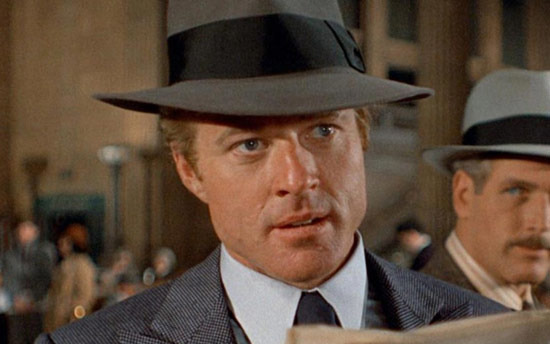
Robert Redford passed away peacefully at the age of 89 on September 16, 2025, at his Sundance home in Utah, surrounded by family.
Redford, who gained international fame, soared to stardom with "Butch Cassidy and the Sundance Kid" and "The Sting," proving his directorial eye with "Ordinary People," and creating a platform for the next generation at Sundance.
Sometimes on Sunday afternoons, I put down a cup of coffee, make some popcorn, and watch old movies that I own on Blu-ray. One that I often revisit is Robert Redford's "The Sting."
Perhaps because it is set in Chicago during the Great Depression of the 1930s, I feel that the playful spirit and tension of the film still linger in the neighborhoods I pass through in Chicago.
When Scott Joplin's "The Entertainer" plays in my ears, my toes start tapping to the rhythm without me realizing it. Redford's playful smile in that music fits quite well with the vintage air of this city.
The first time I thought, 'Ah, this person is different,' was actually in "Butch Cassidy and the Sundance Kid" from 1969, which predates "The Sting." It was a Western paired with Paul Newman, featuring youth standing slightly askew on the fringes of the era rather than typical cowboy heroes.
From that moment, Redford was an actor who explained the air of New Hollywood with his face. He was handsome, but not just handsome; he had a sense of rebellion and purity coexisting in one face. In other words, he was an actor who knew how to add a subtle shadow to the 'honest expression' of the American handsome man.
And then came "The Sting" in 1973. With this work, Redford was nominated for the Academy Award for Best Actor, and his career took flight. From my perspective as someone living in Chicago, this film is particularly special.
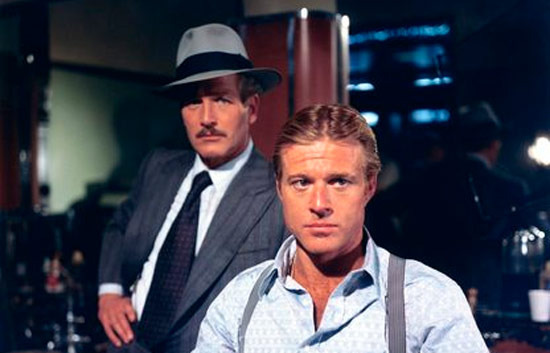
Can a con artist film be shot so elegantly and so urbanly?
It is difficult to hate him even while deceiving, and he respects the audience while surprising them with his showmanship. Redford is like someone who, while playing tricks, says with a glance, 'This is sincere,' creating an oddly human trust even in the midst of deception. That delicate balance made him not just a star but 'the face of the era.'
His acting range was also broad. He moved between Westerns, melodramas, thrillers, and action films, creating different temperatures for each character. There were works like "The Godfather" that showed the tenacity of a journalist's spirit, and he was also adept at urban characters mixed with romance and disillusionment.
But Redford did not stop there. He made his directorial debut in 1980 and won the Academy Award for Best Director with "Ordinary People." The way he touched on the cracks of a family was quite delicate. The cold and calm air of the lakeside in northern Chicago strangely resembled the film's emotions, and thanks to that restraint, the characters' wounds became even more vivid. The person who reflected the era with the face of an actor shone a light on the depths of the heart with the gaze of a director.
His journey continued outside the screen as well. He consistently raised his voice for environmental protection and peace movements, and he received the French Legion of Honor. In 2012, he posted an article opposing the construction of the Jeju Gangjeong naval base on an international environmental blog, calling for solidarity.
Some may call this 'image management,' but Redford seemed like someone who had not lost the rebellious spirit of a twenty-year-old even at seventy. Sometimes, consistent choices are more persuasive than cool words.
Perhaps that is why, when he took on the role of the villain Alexander Pierce in "Captain America: The Winter Soldier," a character he usually played as a just and upright person, I honestly applauded. The delightful reason that he wanted to show his grandchildren a grandfather in a Marvel movie was nice, but more than anything, his courage to boldly flip his image was impressive.
There is a story in the comics where someone mutters, "Isn't that Robert Redford?" when seeing Captain's bare face, indicating that he was also a pillar of the American hero image. So when that face appears wearing the skin of a villain, the audience experiences a strange sense of betrayal and thrill at the same time. That is the power of an actor.
It would be remiss to talk about Redford without mentioning the Sundance Film Festival. He is someone who directly cultivated the soil of the independent film ecosystem. He opened a space for new stories that begin on the fringes, rather than in the center of Hollywood, where capital and star power converge.
In 2018, he announced his retirement from acting after "The Old Man & the Gun." It was an elegant farewell as he drew the curtain himself. That film felt like a farewell to the charm he had explored throughout his life. As if to say that even an elderly gentleman needs one last adventure, the film closes the door with a gentle smile. I also quietly stood up and nodded once when the ending credits rolled. Thank you for the good times.
Looking back, what Redford left us was not just the image of 'goodness,' but the face of someone striving to protect that goodness. He tried not to lose human trust even in a con game of deception, maintained an attitude of not sinking into despair while looking at the wounds of family, and had the courage to speak responsibly about society outside the screen. For an ordinary guy like me from Cook County, that is quite realistic inspiration.
Whether it's when untangling a complicated situation at work or facing news that is difficult to explain to children, his attitude comes to mind. It is about solving problems with dignity and perseverance, not tricks and gimmicks.
That is why I still often play "The Sting." As I loop around and move towards Millennium Park, the strong lines of the Board of Trade building in the distance subtly overlap with the 1930s in the film.




 Khan Film Blog Production |
 Illinois Mom |
 Rice Shop Uncle BLOG |
 Enjoyable American Life Diary |
 allstar realty |
  Tonky |
  viroma |
  cookie |
  Live and that's it |
  Alright Twain |
  eatontown blog |
  HAWAII Korean Church News |
  Amore |
  linex |
  Balancework |
  laro90 |
  MEDBIO American Doctor Blog |
  SWAT TEAM BLK |
  DREAM BIG |
  frostbite |
  330 Forever My Love |
  El Dorado |
  dralix58 |
  Gorama Round |
  Skydiving |