

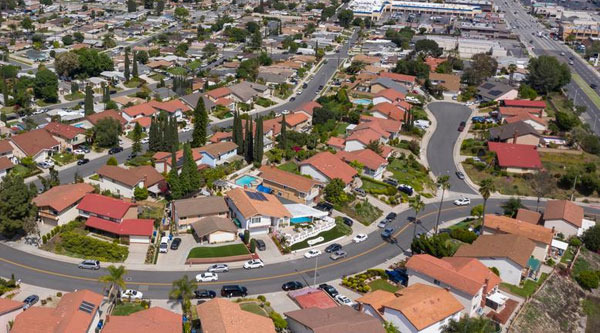
When you first move to Rowland Heights, you find that it's surprisingly calming. Although it's a suburban area of LA, you might expect it to be quite busy, but this neighborhood is the opposite. In the morning, it's quiet, and the area has a stable feel to it.
So, it's natural to say it's quiet and a good place to live. However, looking at the pros and cons through data makes it much easier to judge.
First, let's talk about the most practical aspect: money. The cost of living definitely has its advantages.
A one-bedroom rental is around $2,000, which is a significant difference compared to areas like Santa Monica or West LA, where rents exceed $3,000, even within the same LA County. The home prices are similar.
The median home price is about $1 million, which is much more manageable compared to the $1.5 to $2 million range on the Westside.
Of course, $1 million isn't an easy price, but at least it feels like a "realistically accessible range."
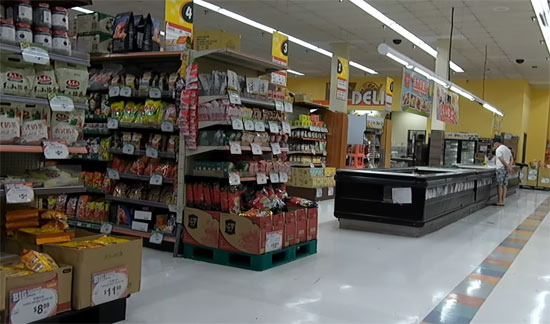
The living infrastructure is also surprisingly convenient. There are several Asian markets in the area, so grocery shopping is not a hassle at all.
While the markets are primarily Chinese and Taiwanese, the vegetables, meat, and seafood are all quite fresh, and the prices are stable.
You don't even have to go all the way to Koreatown for basic ingredients.
Additionally, the accessibility to the I-60 and CA-57 freeways makes it relatively easy to travel to LA, Orange County, and the Inland Empire.
If your commute is well-timed, the location itself is quite good.
If you have children, you'll want to check the school districts, and this area has schools like John A. Rowland High School, which has a decent reputation.
There are AP and IB programs, and it has a history of being designated as a California Distinguished School. These factors can influence home prices in the long run. The safety statistics also show a stable environment. The violent crime rate is 17.4, which is lower than the national average of 22.7. You don't feel a significant sense of insecurity when walking around at night.
The weather is also a factor not to be overlooked. The temperature ranges from about 45 to 88 degrees throughout the year, and it rarely drops below freezing. There are over 280 clear days a year, which stabilizes the living rhythm. This can be a surprisingly big advantage once you experience it. You hardly feel stressed due to the weather.
However, these are the advantages, and the disadvantages are quite clear.
The most noticeable downside is the lack of a Korean-speaking environment. Since over 90% of the population here is non-Korean, you won't hear Korean spoken much on the streets.
If you expect to comfortably communicate in Korean at restaurants, hospitals, and services, you will definitely find it lacking.
For those used to Koreatown, it might feel a bit empty at first.
Public transportation is virtually nonexistent. There are buses, but they are inconvenient for daily use. Ultimately, having a car is essential.
One car per person is standard, and for families, having two or more cars is common. This goes beyond simple inconvenience; it changes the entire way of life.
Food options also differ. While there are some Korean restaurants, the choices are limited.
You won't have the fun of pondering "What should I eat today?" like in Koreatown.
This is why many people go to Koreatown every weekend; it's often for the atmosphere rather than the food.
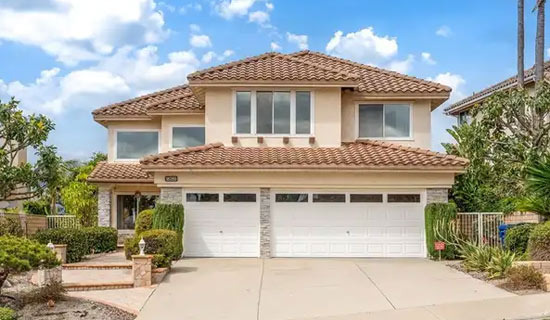
The housing prices are both an advantage and a disadvantage. While $1 million is cheaper than West LA, it's still a high barrier for first-time buyers.
Moreover, if you buy a new home for $1 million, you'll be paying about $12,000 to $13,000 annually in property taxes, which is quite a burden.
If you only look at the home price when making a decision, it could lead to a larger burden later. As you know, California assesses property taxes based on the price at the time of purchase.
And since the annual property tax increase is capped at 2%, the property tax bills for neighbors who bought their homes a long time ago at a lower price can differ significantly from those who bought recently.
Still, this neighborhood suits those who want to maintain an Asian lifestyle while enjoying a quiet and stable environment.
It becomes a realistic option for families with children or those commuting to the Inland Empire or eastward.
Conversely, for those whose lives center around a Korean-speaking environment or who have to commute west to LA daily, it can be stressful.
The conclusion is simple. It's not about whether it's a "good neighborhood" but rather if it's a neighborhood that suits you. The numbers make the answer clearer.
And once you actually live here, those who find this neighborhood comfortable tend to stay for a long time.
The reason is, as mentioned earlier, that life here is stable and doesn't feel like city living.
 SunraySoul



 moo moo |
 ultron78 |
 garlic bread |
 Sugar Cream Door Bulletproof Noodles |
 urbanmint |
  Community Cross |
 American History This and That |
 Finding Superfoods |

 Rowland Mama |
  loveyom |
  Coastal city |
  Spaghetti Flying Religion |
  My Town My Way Blog |
  holy cow |
  endone |
  starline |
  Where is a really nice neighborhood? |
  Real Estate |
  Forest Gump |
  Real Estate Investment Korean American |
  Dollydori, Lover of Movies |
  dmzline |
  travelo |
  American Food Information & Calories |
  Splendid Mission |
  sparklingo |
  Watch Walker |
  Soy Angelino |
  autumn |