

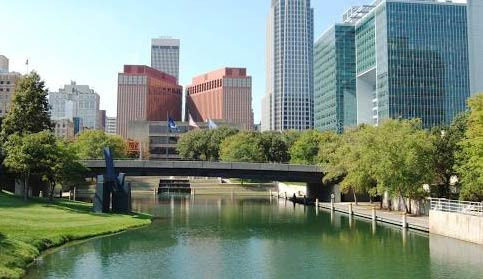
It borders Iowa across the Missouri River, making it more of a central hub connecting the two states rather than just an inland city. As of 2020, the city's population is around 480,000, and the metropolitan area, including nearby suburbs, exceeds 900,000. The city's name is derived from the Omaha Native American tribe that lived in the area, and it is considered to have a relatively long history among Midwestern cities.
Omaha may not have the glamorous image of a big city, but it is a city with a solid economic foundation. The finance, insurance, logistics, healthcare, and education industries are well-developed and balanced, and it is particularly known as the home of Berkshire Hathaway, led by investor Warren Buffett. For this reason, Omaha is often perceived as a quiet city with a stable economic flow.
The Korean population is estimated to be over 2,000. While the size is not large, it consists of a diverse mix from first-generation immigrants to their children. Many of the early immigrants settled in self-employment sectors such as laundries, restaurants, retail, and beauty services, and over time, the second generation has begun to enter professional fields, gradually changing the structure of the community.
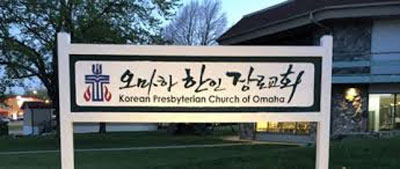
The most central role in the Omaha Korean community is played by Korean churches.
Unlike large cities, there is no separate Korean town or large community facilities, so churches naturally serve as the center for information exchange and interaction. Newcomers often obtain housing information, school district information, hospitals, and lifestyle tips through the church. Holiday events and cultural activities also take place around this space, maintaining the cohesion of the Korean community.
Korean restaurants and businesses are also established to a certain extent. While the options are not extensive, there are basic Korean restaurants, beauty salons, and small markets, so daily life is not significantly inconvenient. However, if one expects Korean-style hospitals, academies, and various services, there may be a sense of lack. On the other hand, because the Korean population is small, there is a strong atmosphere of familiarity, and the internal connectivity of the community is relatively high.
The biggest advantages of Omaha are the cost of living and stability. Housing prices and rent are lower compared to major U.S. cities, and there is not much traffic congestion, resulting in less stress in daily life. It provides a relatively stable environment for families, and some Korean families move to areas based on school districts in the suburbs.
Of course, there are clear disadvantages. The long and cold winters and the limited Korean infrastructure are points to consider. If one values Korean cultural life or a diverse Korean network, there may be some disappointment.
In conclusion, the Korean community in Omaha is characterized by density and connectivity rather than size. Although it is not large, it is maintained stably based on churches, self-employment, and family-centered networks. If one seeks practical settlement over glamour, Omaha can be seen as a realistic option.







 ultron78 |
 garlic bread |
 Sugar Cream Door Bulletproof Noodles |
 urbanmint |
 |
| 
 selvon |
 moomoon |
 Nebraska Center Director TOP |
 NE Hodori Preik |
 lunexa |
  vibranto |
  Tora Tora |
  yellowbutter |
  Dolly |
  US Embassy |
  NYC saladbar |
  Finding Superfoods |
  lightyear |
  song bang |
  vexomo |
  Indiana Jones |
  meloncat |
  novapixel |
  mortrix |
  Esther 1983 |
  fortbliss |
  Moscow Kim |
  My Two Way |
  toastyfox |
  FLORIDA Acus |