

These days, when I see news related to the Middle East, I find it confusing whether the situation has ended or is still ongoing.
Today's news can also be seen as being in such an ambiguous phase.
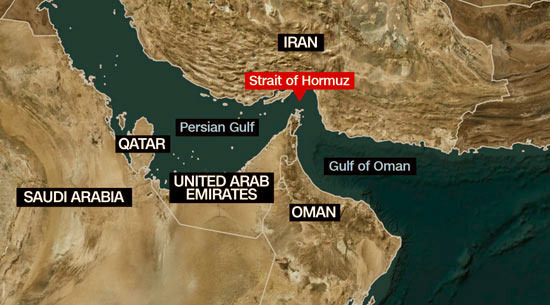
The key point is that Iran has announced it will "completely open" the Strait of Hormuz.
In addition, President Donald Trump has said to Iran, "There will be no more blockades," thanking them.
On the surface, it seems that tensions have significantly eased. In fact, the market reacted quickly.
However, looking at the details, it is not that simple.
The Iranian Foreign Minister stated that all ships will be allowed to pass, but at the same time, he presented the condition that "designated routes must be used."
This means a controlled opening rather than complete freedom of passage.
Moreover, hardline media within Iran are still suggesting the possibility of maritime control.
Additionally, President Trump positively evaluated the opening of the strait but stated that the maritime blockade against Iran would be maintained until negotiations are "100% complete."
This can be interpreted as keeping the strait open while maintaining pressure in negotiations.
Currently, both sides are entering a new phase of negotiations.
Looking at this trend, it can be seen as a step towards long-term negotiations rather than a simple ceasefire.
Another variable is the situation in Lebanon. The conflict between Israel and Hezbollah was a major variable in this Iranian negotiation, and a 10-day ceasefire was established through U.S. mediation.
As a result, movements of tens of thousands of refugees returning to the southern region are being observed. On the surface, this appears to be a sign of stability.
However, it is also difficult to see this as a state of complete peace.
Israel is still maintaining security alerts, and military actions continued right up to the ceasefire. In other words, the current situation is not completely resolved but is rather in a temporarily paused state.
The market is also reflecting this situation. Oil prices have fallen, but they have not led to a rapid stabilization, and the shipping industry is maintaining a wait-and-see attitude rather than immediate normal operations.
This seems to reflect the judgment that risks have not been completely resolved.
Overall, Iran is sending signals of easing tensions through the opening of the strait, while the U.S. maintains the blockade to secure leverage in negotiations. Israel and Lebanon have entered a temporary ceasefire, but tension factors still remain. The market and businesses are carefully responding while observing all these situations.
Currently, it is difficult to say that peace has arrived in the Middle East.
Rather, it seems to be in a state just before entering a full-scale negotiation phase.
The Strait of Hormuz is open, but it is a more realistic interpretation that tensions have not yet been resolved.
 ShinRamen







 El Dorado |
 lightyear |
 Moscow Kim |
 coloradoman |
 Montgomery Mom |
 Chino Min |


 DREAM BIG |
 Information on All Regions of the United States |
  frostbite |
  330 Forever My Love |
  dralix58 |
  Gorama Round |
  Skydiving |
  dreamport |
  Yellow Snowman |
  Toaster Pizza Magic Show |
  velvetnom |
  Anytime Journey |
  Mrs. Duluth |
  jaxter |
  Atlanta Mama |
  Baguette Blog |
  Tan Sol |
  US Embassy |
  Korean Mom |
  My NYC |