

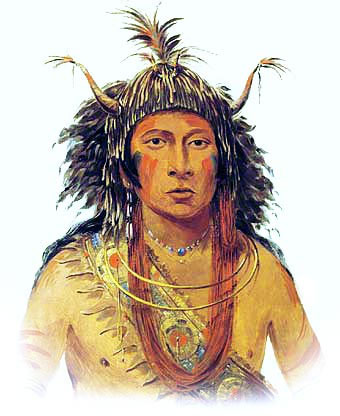
When you first hear the name Indiana, you might wonder, "What does it have to do with Indians?"
In fact, the name of this state is a combination of "Indian + a," which literally means "land of the natives."
However, it is not simply that the name was given because many natives lived in the area; there is a complex historical story behind it. Indiana did not originally refer to a region of American white settlers, but rather started as a term denoting the area inhabited by natives.
Before the name "Indiana" was officially used, this area was overlapping territories of various tribes. The Shawnee, Miami, Delaware, and other tribes lived by sharing hunting and farming, and this land was a foundation for communal living centered around rivers and forests for a long time.
Even the central part where cities like Indianapolis now stand was within the living area of the natives, and especially the northern region was a major exchange point connected to trade routes near the Great Lakes.
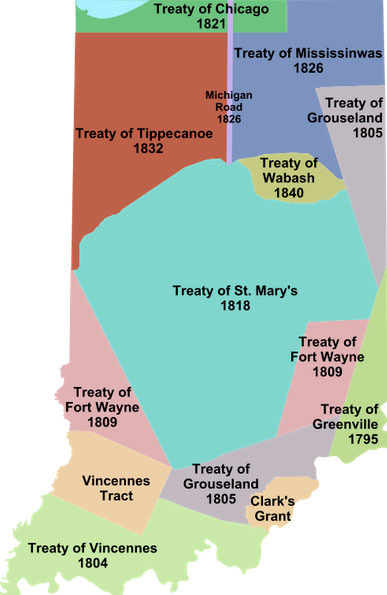
Then, as European settlers moved westward, they began to buy and sell land, and here the meaning of 'land of the Indians' began to solidify as an administrative name.
Ironically, the ones who named it were not the natives but the European settlers.
Early land investment groups like the "Indiana Land Company" began to commercially use the expression "land of the Indians" in the process of purchasing and distributing native land. In other words, it was used as a token of having bought the land from the natives rather than honoring the original owners.
In the early 1800s, as the U.S. government began to implement westward expansion policies, Indiana started to be designated as a territorial unit. In the process of becoming a state in 1816, the name "Indiana" was officially confirmed, which carried two meanings. One was the historical fact that it was a place where natives had lived for a long time, and the other was a political declaration of "Indian territory now owned by the United States."
Another interesting point is that although the name was given, the natives gradually got pushed out of this land. In the 1810s, there was a resistance movement led by Tecumseh, but ultimately many tribes were forced to move westward through forced relocation policies and treaty signings. The name remained while the original owners disappeared.
Today, Indiana is known as a region where agriculture, industry, sports, and various music cultures mix, but within its name lies an old trace that quietly remains. In some areas, the names of native tribes remain as place names, and museums and memorials are gradually recording how those communities lived back then.
Ultimately, the name "Indiana" is not just a geographical designation but a story left by a time of people, a vanished community, and the natives who were the original owners of this land.





 bada2002 |
 Now or Never |
 flingstone |
 Yellow Snowman |
 Indiana Jones |
  vibranto |
  Tora Tora |
  yellowbutter |
  Dolly |
  US Embassy |
  NYC saladbar |
  Finding Superfoods |
  lightyear |
  song bang |
  vexomo |
  meloncat |
  novapixel |
  mortrix |
  Esther 1983 |
  fortbliss |
  Moscow Kim |
  My Two Way |
  toastyfox |
  FLORIDA Acus |