
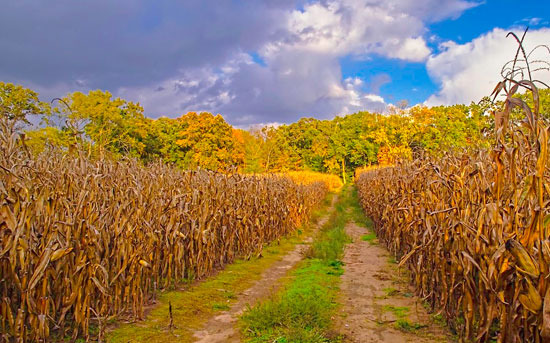
One of the first landscapes that comes to mind when thinking of Indiana is the endless fields of corn.
In reality, Indiana has a strong image as an agricultural hub, but upon closer inspection, it is not simply a rural area that grows corn. The agriculture in this state has characteristics shaped by a combination of soil, climate, topography, and local culture, showing a unique balance within Midwestern agriculture.
The most representative crops are corn and soybeans. Indiana is one of the top producers of corn and soybeans in the nation, with corn primarily used for feed and fuel (ethanol production) and soybeans having a balanced high ratio for food, processing, and export. The abundance of these two crops is due to the practice of corn-soybean rotation, which helps maintain soil fertility. Indiana's soil is rich in alluvial deposits, and the rainfall is adequate, making this method particularly effective.
In contrast, the southern region has many hills and mountains, leading to more active vegetable and fruit cultivation rather than large-scale farming. Particularly, there are many apple, peach, grape, and strawberry farms, and it is common for these to be combined with rural tourism. The climate in the south is relatively warm, and the diverse soil composition has naturally established livestock grazing and fruit farming. The north is characterized by large-scale industrial farming with extensive machinery, while the south shows a difference with family-run mixed farming.
Another feature is that dairy and livestock farming are still part of the local identity. Dairy farming is particularly strong in the north, with a milk and cheese production area extending to regions bordering Michigan. The ratio of pig and cattle farming is also high, and the proximity of farms to meat processing facilities allows for a 'raised small and sold directly' approach. This is also why farmers' markets are active in rural Indiana.
The agriculture in this region is closely connected to industry. Corn leads to ethanol plants, soybeans to cooking oil and bio-material industries, and livestock and dairy spread into local food brands. Thanks to this structure, Indiana has a unique economic foundation where agriculture is directly linked to manufacturing.
The rural lifestyle also reflects the character of this state. Even in suburban rural areas, there is a strong sense of community, and village events like agricultural fairs or county fairs are important gatherings for the local community. It is also common for children to participate in agricultural education programs like 4-H, learning about livestock, gardening, cooking, and crafts.
Ultimately, Indiana's rural areas cannot be explained solely by vast farmland and large-scale agriculture. The industrial farming in the north, the fruit and livestock-centered farming in the south, and the manufacturing and distribution industries based on these, along with community traditions, have come together to form a unique agricultural identity for this state.








 candytip |
 Gold Bar |
 Pirate Ship Popcorn Maker |
 Montgomery Mom |
 Anjollinya Blog |
 bada2002 |
 Now or Never |
 Yellow Snowman |

 Indiana Jones |
  laro90 |
  MEDBIO American Doctor Blog |
  SWAT TEAM BLK |
  DREAM BIG |
  frostbite |
  330 Forever My Love |
  El Dorado |
  dralix58 |
  Gorama Round |
  Skydiving |
  dreamport |
  Toaster Pizza Magic Show |
  velvetnom |
  Anytime Journey |
  Mrs. Duluth |
  jaxter |
  Atlanta Mama |
  Baguette Blog |
  Tan Sol |