
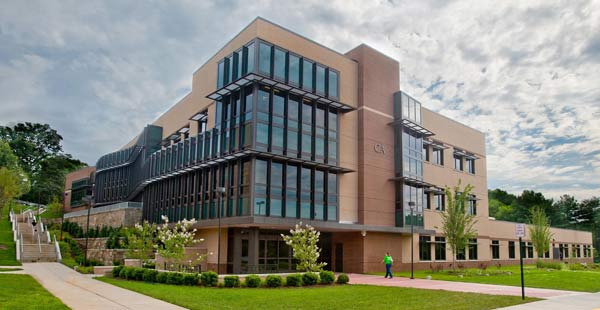
The name that immediately comes to mind when talking about colleges in Northern Virginia is NOVA, or Northern Virginia Community College.
People who have just moved here often think, "Isn't it just a small school since it's a community college?" But when they actually visit, they are surprised by its size.
The number of students is comparable to that of a typical university. The campuses are spread out across the area, including Annandale, Woodbridge, Alexandria, Manassas, and Loudoun, essentially covering all of Northern Virginia.
So when Korean parents gather, you often hear conversations like, "My child goes to NOVA," "My husband registered for ESL," or "I'm preparing for a transfer."
Especially the Annandale campus has a strangely familiar atmosphere since it is almost within the Korean community.
When you go to nearby restaurants, you can hear Korean being spoken, and there are quite a few Korean students as well. Many new immigrants who are still uncomfortable with English often start with ESL here.
Honestly, when you first encounter the American college system, it can be overwhelming. SAT, GPA, credit recognition, transfer regulations... it all seems so complicated.
However, NOVA has a relatively low barrier to entry, so many people start here.
Realistically speaking, college tuition in the U.S. is very expensive. Virginia State University is not what it used to be.
When you add tuition, dorm fees, and textbook costs, parents often sigh.
So these days, the route of "Let's send them to NOVA for the first two years and then transfer" has almost become a norm.
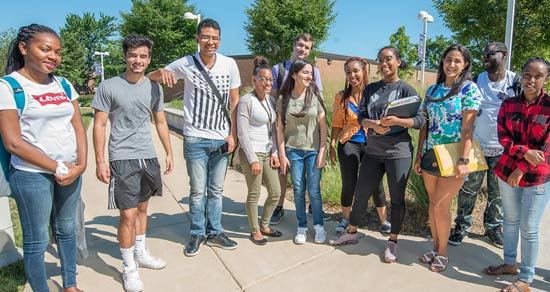
Many students aim to transfer to GMU, Virginia Tech, or UVA. There are guaranteed transfer programs if you maintain a certain GPA, which provides some relief for parents.
From the students' perspective, many believe that starting slowly here is better than jumping straight into a large state university right after high school.
However, once you attend, you also experience the unique reality of American community colleges. The age range of students is incredibly diverse. You might find an 18-year-old fresh out of high school sitting next to a 40-something working professional, or mothers who have returned to study after raising children. You can even see retirees taking classes as a hobby.
It's quite strange in America; this environment is very open. There is relatively little pressure for older students.
There are also many vocational training programs. Courses in nursing, IT, automotive repair, and welding attract people looking for actual job connections. Especially in IT, Northern Virginia has a lot of government agencies, defense contractors, and data center companies, so the interest among Koreans continues to grow.
The problem is that nowadays, IT is not like the old days when "getting one certification guarantees a job." Everyone is talking about AI and experience, which adds stress for students.
Still, realistically speaking, NOVA plays a significant role in the immigrant experience in the U.S.
While it may not have the grand image of prestigious universities, many people start here and move on to the next stage.
For immigrants who need to live within their means, having a place to start is quite significant.
Complaints about the complexity and expense of the American education system continue, but everyone agrees that if schools like NOVA didn't exist, the educational burden on the Korean community in Northern Virginia would be much greater than it is now.
 LeaveOnAvg
 PuddingFlyer







 Ari Songhan American Immigration Life |
 Bearded Strawberry Smoothie |
 Heart Ticker |
 Duck Duck Go |
 Arong and Darong |
 korvex93 |
 Next Year, Let's Become Rich |
 Alpha and Omega World |
 averagestudent |
 Yellow Snowman |
  Kondae Garusong Blog |
  quiet river |
  shinee cho |
  alamo |
  Lol Life |
  Waiting for Godot |
  parlon |
  Say Yes in English |
  Sayonara H |
  rigid |
  Ohio Ohayoung Hello |
  U.S. Military Recruitment Information |
  You Turn Me On |
  DaeBak Electronics CNET |
  Anjollinya Blog |
  solid90 |
  elion |
  xylora |
  Study Abroad Life Know-How Tips |
  cheesepup |