

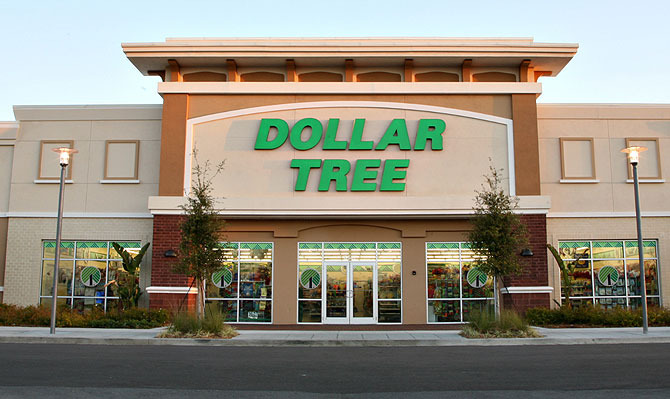
When living in Fairfax, there is a store that catches my eye every time I visit the mall for shopping.
It is the store with the green letters saying "Dollar Tree."
Perhaps because of the same atmosphere and display method, it feels familiar no matter which city I visit.
At first, I thought it was just a place that sold cheap goods, but I was surprised to learn that this Dollar Tree store, along with its sister brand Family Dollar, is a huge corporation with over 16,000 stores.
I initially thought it was just a small discount store inside the mall. I would just browse to see if there were any useful items while shopping. But one day, I accidentally searched for 'Dollar Tree locations near me' on Google, and green dots densely appeared on the map. There are several locations within Fairfax County, and just a little further out, they are densely spread in Vienna, Centreville, Leesburg, and Arlington. At this point, it wouldn't be an exaggeration to say that it has permeated the community almost to the level of convenience stores.
The history of Dollar Tree dates back to 1953. It started as a variety store named "Ben Franklin variety store" and later expanded under the name "K&K 5 and 10" before rebranding to Dollar Tree in 1986. The simple concept of 'everything for one dollar' captured people's hearts. Of course, due to rising prices, most products are now around $1.25, but it still holds its place as a 'symbol of affordability.'
Interestingly, Dollar Tree is not just a simple neighborhood discount store. The company actually acquired another large chain called "Family Dollar." Family Dollar is also a brand with a strong store network in the southern and midwestern United States, and Dollar Tree rose to become a giant in the discount retail industry by acquiring it in 2015. In other words, the 'humble store' we saw in the mall is actually a major player in the U.S. retail market alongside Walmart and Target.
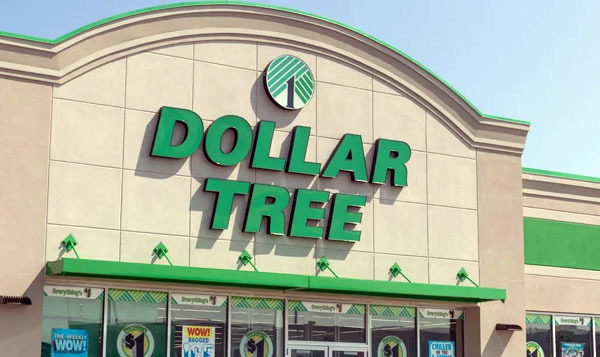
When you actually enter the store, just because the prices are low doesn't mean the quality is very poor.
There is a wide variety of kitchen supplies, stationery, detergents, simple decorations, and even snacks, and these days, there are quite a few decent seasonal decor items. Especially during the Christmas or Halloween season, there are so many creative products that can change the atmosphere of your home with just $1 decorations. Last winter, I bought a snowman ornament and LED candles here, and I was surprised that they lasted longer than expected and looked quite nice.
The secret to Dollar Tree's success lies in its thorough cost management and logistics efficiency. The headquarters purchases thousands of products at once from a central logistics center and distributes them to stores in bulk. Therefore, there is almost no price difference by region. Moreover, most products are produced under their own OEM brands. Since consumers prioritize 'price' over brand, Dollar Tree has accurately tapped into this psychology.
Interestingly, this company has been gaining more attention in the 2020s. As inflation has caused prices to soar, many American households are looking for 'discount retail' to save on living expenses. It often appears in articles from CNN or The Wall Street Journal, and Dollar Tree and Dollar General have a unique structure where their sales actually increase during economic downturns. The more the U.S. economy shakes, the busier these stores become.
The Dollar Tree in Fairfax Mall is always bustling with people. Especially after lunchtime or around quitting time, office workers stop by to buy office snacks or simple stationery, students pick out materials for school projects, and parents load up on party supplies. There is always a long line at the checkout, but everyone seems to be in a good mood. This is because they have the confidence that 'at this price, they are sufficiently satisfied.'
I sometimes think that this humble space actually shows the true face of the American economy. Everyone wants to save money and desires rational consumption. And the brand that most realistically satisfies that need is Dollar Tree. It quietly occupies a corner of the mall, but within it, countless people's daily lives and economies are connected.
So now I no longer see it as just 'a store that sells cheap goods.' Dollar Tree is a symbol of American pragmatism and, on the other hand, a realistic brand that supports the lives of ordinary people.
To think that this small store is actually a large corporation with 16,000 stores and hundreds of billions in revenue makes me realize once again that the retail industry in America is indeed moving quietly but powerfully behind the scenes.






 Alpha and Omega World |
 Yellow Snowman |

 Fairfax Fox |
 draxen |
  US Embassy |
  Korean Mom |
  My NYC |
  moo moo |
  Mr Oh |
  forevergee |
  festival |
  manchester |
  constant |
  Leapfrog Move |
  vibranto |
  Tora Tora |
  yellowbutter |
  Dolly |
  NYC saladbar |
  Finding Superfoods |
  lightyear |
  song bang |
  vexomo |
  Indiana Jones |