

When I was young, I really lived without a care.
I would order pig's feet and spicy fish stew all night, drink soju, and then go out for more food and drinks, and I was fine the next morning at work.
Even when I felt like I was overdoing it, I would reset the next day. So everyone thinks this will last a lifetime.
But after turning 40, everything changes.
At some point, my belly starts to stick out, and it's not just fat.
The funny thing is, I feel wronged. "I eat less than before, so why is this happening?" That's true.
I am gaining weight even though I eat less. The problem is not the amount I eat, but that my body's metabolism is not functioning like it used to.
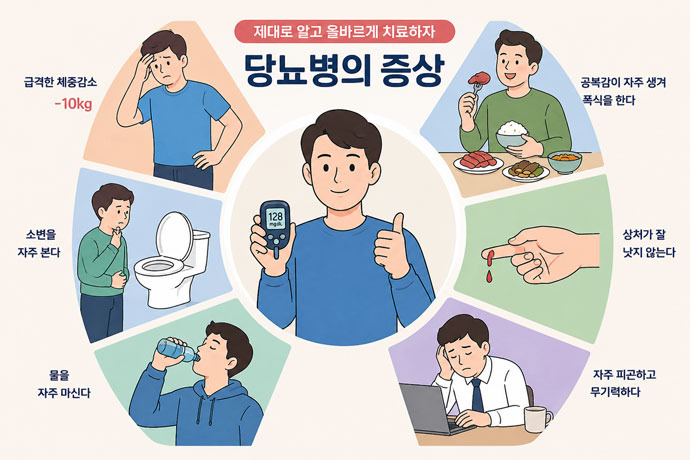
If diabetes develops, it's important not to ignore the three symptoms that appear together.
The typical ones are what is commonly referred to as the 'three P's symptoms.'
Severe thirst, frequent urination, and intense hunger.
Additionally, there can be weight loss even without dieting.
If weight continues to drop, it means the body cannot use glucose, so it ends up breaking down fat or muscle to survive.
Feeling constantly tired is also a common signal. Even after sleeping, you don't feel refreshed and feel weak for no reason.
Blurry vision can also occur. When blood sugar rises, the internal environment of the eyes changes, which can blur your vision.
Changes in the skin or nerves can also appear. Skin may feel dry and itchy, and hands and feet may feel numb or lose sensation.
Especially, frequent cramps at night are often seen as an early signal.
Wounds that do not heal well are also an important characteristic. If small wounds take a long time to heal or become inflamed repeatedly, it may indicate a weakened immune function.
Another easily overlooked symptom is drowsiness after meals. If you suddenly feel sleepy and weak after eating, it could be a problem with blood sugar changes.
Ultimately, you shouldn't rely on feelings alone. "I think I'm fine?" This is the most dangerous thought.
You must get tested to confirm. Just checking fasting blood sugar and HbA1c can provide a diagnosis.
The body does not collapse suddenly. It continuously sends signals. The problem is ignoring them until you face the numbers at some point.
Unmanaged diabetes is known to shorten average lifespan by more than 5 to 10 years.
And acute complications like diabetic ketoacidosis, where blood sugar rises drastically, can threaten life within days.
In the end, diabetes is a disease where 'management' rather than 'speed' determines survival. You must always pay attention to health management.







 daddyyo |
 Top Beaches |
 Diana Blues |
 Dragon Lee |
 Churros Train Conductor |
 Yellow Snowman |
  Alpha and Omega World |
 Fairfax Fox |
 American Nationwide Live News |
 Diamond King |
  vivavida |
  Way to easy |
  limestone |
  oster |
  neapolis |
  seadoll |
  ansdal |
  Vivid U.S. Regional Information |
  Vasila's Newlywed Blog |
  Arizona Cowboy |
  merry merry |
  Hoorah Ooorah |
  Fragile Me |
  Rowland Mama |
  foxtree |
  bayaa |
  loveyom |
  Coastal city |
  Spaghetti Flying Religion |