
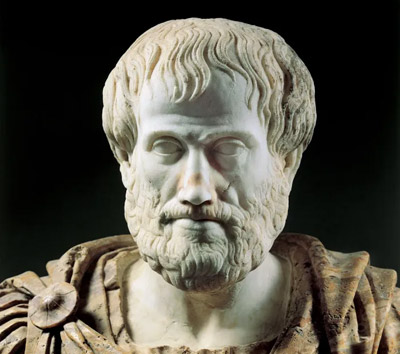
Aristotle (384-322 BC) was an ancient Greek philosopher and scientist, a significant figure who laid the foundation for Western philosophy and science.
He was a student of Plato and developed philosophy in a different direction. Aristotle conducted research across various fields, and his thoughts continue to influence many academic disciplines today.
First, Aristotle sought to explain the 'causes of existence' in metaphysics. He believed that everything in the world exists due to specific causes, which he divided into four categories.
These are material cause, formal cause, efficient cause, and final cause. Aristotle argued that all existence is formed by these four causes, and this maintains the order of the world.
Additionally, Aristotle made significant contributions to ethics. He defined the ultimate goal of human beings as 'happiness' (Eudaimonia) and emphasized 'virtue' (Arete) as the means to achieve it.
Aristotle viewed virtue as the 'mean of moderation' and stated that it is important to avoid excess and deficiency while maintaining a proper balance. He saw happiness not as mere pleasure or external achievement, but as living a rational life.
In logic, Aristotle also made important contributions. He laid the groundwork for 'formal logic,' and the syllogism he created is widely used as a fundamental framework for logical reasoning.
This syllogism draws conclusions based on two premises and continues to play a significant role in logic today.
Aristotle had a deep interest in science as well. He researched various fields such as biology, physics, and astronomy, leaving significant achievements, especially in biology.
He systematically classified and studied the characteristics of various animals and plants, contributing to the explanation of the types of organisms and their traits. He also presented important theories in cosmology, advocating for a geocentric universe where the Earth is at the center of the universe.
His thoughts on politics also had a significant impact. Aristotle viewed the 'city-state' (Polis) as an important community for human life, arguing that the purpose of politics is to help citizens live happy lives.
He discussed various forms of government (monarchy, aristocracy, democracy) and analyzed their advantages and disadvantages. He preferred a political system with a strong middle class, believing it could create a stable society.
Aristotle's thoughts form the foundation of Western philosophy and have greatly influenced the development of medieval and modern philosophy and science.
His theories were integrated into Roman Empire and medieval Christian thought, influencing many philosophers, particularly those like Thomas Aquinas, who sought to integrate his ideas with Christian theology.
Moreover, Aristotle's philosophy significantly impacted the development of modern science, and his way of thinking remains an important standard in various fields of philosophy and science today.







 Weekend Movie Blog |
 Beauty, Health, Lifestyle Blog |

 coloradoman |
 Superman Cat Blog |
 novapixel |
  DREAM BIG |
  frostbite |
  330 Forever My Love |
  El Dorado |
  dralix58 |
  Gorama Round |
  Skydiving |
  dreamport |
  Yellow Snowman |
  Toaster Pizza Magic Show |
  velvetnom |
  Anytime Journey |
  Mrs. Duluth |
  jaxter |
  Atlanta Mama |
  Baguette Blog |
  Tan Sol |
  US Embassy |
  Korean Mom |
  My NYC |