
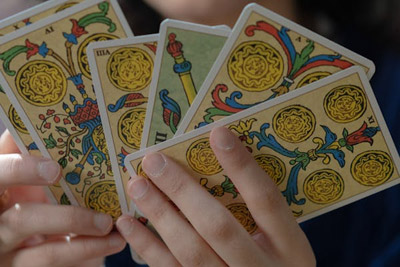
Tarot is a divination method that uses a deck of cards to predict the future or understand a person's psychological state.
Tarot is deeply connected to the history of Western mysticism and divination, and examining its origins and the psychology of its believers can provide interesting insights.
The exact origin of tarot cards is not known, but several theories exist.
Originating from card games in medieval Europe: Tarot cards were likely first used as a type of card game in 15th century Italy. At that time, tarot cards had an entertainment purpose unrelated to divination, and the images drawn on the cards had symbolic meanings.
Fusion of mysticism and divination: After the 18th century, tarot cards began to be used as divination tools. In particular, as mysticism and magical elements combined, tarot developed into a divinatory technique. During this period, each tarot card began to hold psychological and spiritual meanings, and was used to analyze an individual's fate or personality.
Egypt and ancient mysticism: Some people believe that the origins of tarot cards are related to ancient Egypt. There are claims that sacred symbols and cards with mystical meanings from ancient Egypt evolved into the prototype of tarot cards. However, this theory lacks historical evidence, leading to controversy over its credibility.
The Psychology of People Who Believe in Tarot
Tarot can be attractive to people for various psychological and emotional reasons. To understand the psychology of those who believe in tarot, the following points can be considered.
Fear of uncertainty and the pursuit of stability: One of the main reasons people believe in tarot is the uncertainty about the future. When faced with important life decisions, people seek comfort and stability through tarot. Because the interpretations or advice provided by tarot cards can feel like they offer a clear direction for the future, individuals may seek psychological stability through them.
Self-exploration and self-understanding: Tarot is often used as a tool for self-awareness. The symbolic images of tarot cards are considered to reflect a person's inner state or unconscious emotions, serving as a tool for self-exploration and personal growth. The images presented by the cards can help individuals view their emotions and issues objectively.
Desire for control: Humans have a strong desire to gain a sense of control in uncertain situations. Tarot provides predictions about the future, giving people a sense of expected outcomes and choices they can make. This can fulfill the psychological need for individuals to regain a sense of control in their lives.
Psychological comfort and hope: People going through difficult times can find comfort and hope in tarot. Tarot cards often provide positive messages or hints of opportunities, which can offer psychological support to those in challenging situations. Because the cards sometimes seem to predict positive changes in the future, many people seek hope through them.
Collective belief and social influence: People who believe in tarot are often influenced by the social culture surrounding tarot. For example, when tarot cards frequently appear in the media or are associated with famous diviners, people may be more inclined to believe in them. This process can lead to the formation of collective beliefs among those who trust and follow tarot, influenced by social groups.
Tarot has evolved in its origins and methods of use, serving not only as a tool for predicting the future but also as a means of psychological support and self-understanding.
Those who believe in tarot utilize it in their search for comfort from fear of uncertainty, self-exploration, desire for control, and psychological support and hope.
The interpretations provided by tarot are often symbolic and open to personal interpretation, leading many to seek the answers they need through it, which may be a reason for the continued popularity of tarot.





 Weekend Movie Blog |
 Beauty, Health, Lifestyle Blog |
 coloradoman |
 Superman Cat Blog |
 novapixel |
  DREAM BIG |
  frostbite |
  330 Forever My Love |
  El Dorado |
  dralix58 |
  Gorama Round |
  Skydiving |
  dreamport |
  Yellow Snowman |
  Toaster Pizza Magic Show |
  velvetnom |
  Anytime Journey |
  Mrs. Duluth |
  jaxter |
  Atlanta Mama |
  Baguette Blog |
  Tan Sol |
  US Embassy |
  Korean Mom |
  My NYC |