
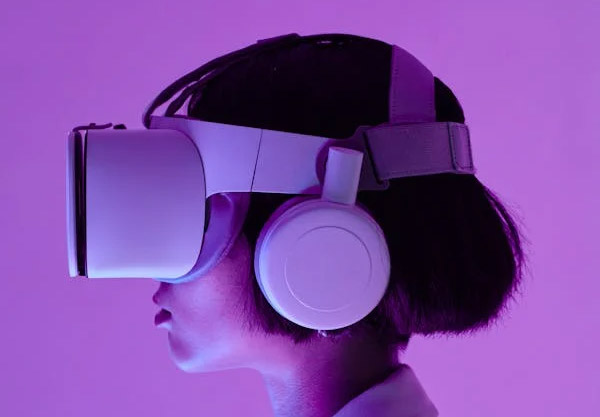
This question explores the significant philosophical issue of the impact on humans when the boundary between virtual reality (VR) and the real world becomes blurred. The answer to this question can vary from different perspectives, considering technical, ethical, and psychological factors.
First, we need to understand the differences between VR and the real world. The real world exists according to physical laws, and the sensory experiences we have are actual responses to external stimuli. In contrast, VR is a computer-generated virtual environment that primarily stimulates sight and sound, but the sensory experiences are different from reality. In VR, all experiences are merely simulations reconstructed digitally, and free will and physical constraints may manifest differently.
If VR becomes indistinguishable from the real world, there could be several advantages. In VR, one can have various experiences without risk, stimulating human curiosity and eliminating danger.
For example, one can experience space exploration or extreme environments in a virtual space without actually undergoing them. Additionally, VR can reconstruct social interactions virtually and may also be useful in relieving mental stress. Especially for those with physical limitations, it can enable free movement and various activities, providing new opportunities beyond physical constraints.
However, the real world is a space rich in sensory experiences where true human experiences occur. In reality, interactions with real people and physical experiences are important, providing emotional satisfaction and self-actualization.
The importance of free will and self-directed behavior lies in the fact that humans grow and learn through mistakes and successes in the real world. Moreover, the real world involves social norms and ethical responsibilities, and there are roles as members of a community and genuine face-to-face relationships that cannot be experienced in the virtual world.
If we cannot distinguish between VR and reality, ethical issues may arise. In virtual reality, moral responsibilities can become ambiguous. For instance, we must consider the implications of actions in the virtual world on the real world.
If actions that are impossible in reality are permitted in VR, it could distort human behavioral standards or moral values. In particular, confusion regarding self and identity in virtual reality may arise, and individuals may struggle to process what they experienced in the virtual space in reality.
When the distinction between VR and reality blurs, psychological confusion may occur. If experiences in VR feel as intense as reality, a person may mistake experiences in the virtual world for reality, leading to identity confusion or emotional instability. Additionally, there is a risk that motivation for relationships, work, and achieving goals in the real world may weaken.
If everything in the virtual world is controlled and satisfying, one may fall into the temptation to avoid challenges and difficulties in reality.
If we cannot distinguish between VR and reality, the answer to which is advantageous may depend on individual values and goals.
With technological advancements, the opportunities that VR can provide are vast, but it cannot replace the essential human experience.
In the real world, there exists satisfaction gained through true self-development and social interaction.
Therefore, VR and the real world can exist in a complementary relationship, and how to balance the use of both worlds is an important issue.







 Weekend Movie Blog |
 Beauty, Health, Lifestyle Blog |

 coloradoman |
 Superman Cat Blog |
 Noodle Noodle |
  Cherokee Rose |
  Kor. Master |
  Holey Moley |
  Conflite Teacher |
  Hodong Prince Over Flex |
  Mist inn |
  citrus pop |
  Onion Ring |
  phoenixia |
  viewtop |
  loverun |
  Kim Do Sun |
  SEVEN SEVEN |
  yentra |
  Make My Day |
  Victory 1988 |
  Tonky |
  viroma |
  cookie |
  Live and that's it |