

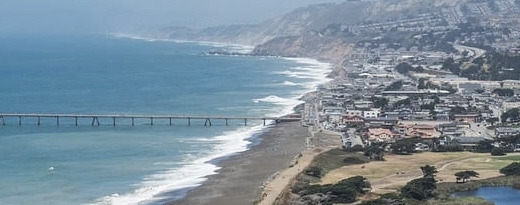
Working at a real estate law firm in the United States, I often receive inquiries about California's real estate development regulations, especially regarding zoning laws.
Simply put, this law determines "what type of buildings can be constructed on which land," with details varying by city and county, and the closer the area is to the coast, the stricter the criteria become. Coastal cities like Santa Monica, Malibu, and Newport Beach, where I am located, have tightly woven zoning regulations, meaning that whether it's a residential or commercial building, preparing to build on the coast requires more than just drawing up plans and obtaining permits.
The first hurdle is the California Coastal Act.
This law strictly regulates development within 1,000 yards (about 900m) of the coastline. Before development, a Coastal Development Permit (CDP) must be obtained, and this process is much longer and more complicated than a standard building permit. It's not just about submitting plans to build; it must include coastal view preservation, public beach access maintenance, coastal erosion prevention measures, and marine ecosystem protection plans. In other words, it requires a comprehensive assessment of "the impact of this building on the environment and the community."
Additionally, in coastal development, the designation of Flood Zones and Tsunami Hazard Zones is also a significant variable.
If the area is marked as a flood risk zone on FEMA maps, enhanced standards must be met regarding foundation construction methods, building height, and drainage systems. For example, considering the possibility of rising sea levels, it may be necessary to implement a 'pilotis structure' that leaves the first floor empty. Such conditions naturally increase construction costs and prolong the review process from the design stage.
For commercial buildings, the conditions increase further.
For instance, if building a beachfront restaurant or hotel, securing public parking, installing pedestrian beach access paths, and even obtaining approval from the city or county design review board for exterior colors and materials are required. The reason is simple: coastal views are an asset for both residents and tourists, so "buildings that obstruct views or do not blend with the surroundings" are not permitted.
The development process is also complex. Generally, it involves:
-
Checking zoning – determining whether the parcel is residential, commercial, or mixed-use
-
Environmental Impact Report (EIR) – analyzing coastal erosion, ecosystem changes, traffic impacts, etc.
-
Coastal Commission review – review and approval by the state's coastal management agency
-
City/County building permit – approval of detailed designs for structure, fire safety, drainage, electrical, plumbing, etc.
-
Commencement of construction – monitoring and final inspection according to permit conditions
Going through all these steps can take at least 1 year, and sometimes more than 3 to 5 years.
Especially if local residents or environmental groups oppose, hearings may be held, and the permitting process can be halted.
A few years ago, I participated in a commercial building development project near Santa Monica Beach, where the Coastal Commission ordered design changes due to the reason that "the building's shadow covers part of the beach." This resulted in additional design costs and schedule delays.
Ultimately, coastal real estate development is not just a simple real estate investment or construction project; it is a comprehensive negotiation involving law, environment, and community. At our law firm, when handling such projects, we always form a team of real estate attorneys, environmental consultants, and architects. This is to ensure a quick response to unexpected regulations or opposition.
Coastal real estate development in California is a long-term endeavor that requires legal review and strategy, rather than just "let's develop quickly because the location is good."
Especially in coastal cities like Santa Monica, while the barriers of zoning laws are high, the rarity and value are greatly recognized once completed.
So I always tell my clients:
"Coastal development is a marathon. However, the rewards of successfully progressing with construction make the wait worthwhile."






 ultron78 |
 garlic bread |
 Sugar Cream Door Bulletproof Noodles |
 urbanmint |
 |
| 
 U.S. Weather Bureau News |
 Choco Choco Star |
 Exploring American Life Information |
 Conflite Teacher |
 US Home Buying Information Home Insurance |
  manchester |
  constant |
  Leapfrog Move |
  vibranto |
  Tora Tora |
  yellowbutter |
  Dolly |
  US Embassy |
  NYC saladbar |
  Finding Superfoods |
  lightyear |
  song bang |
  vexomo |
  Indiana Jones |
  meloncat |
  novapixel |
  mortrix |
  Esther 1983 |
  fortbliss |
  Moscow Kim |