

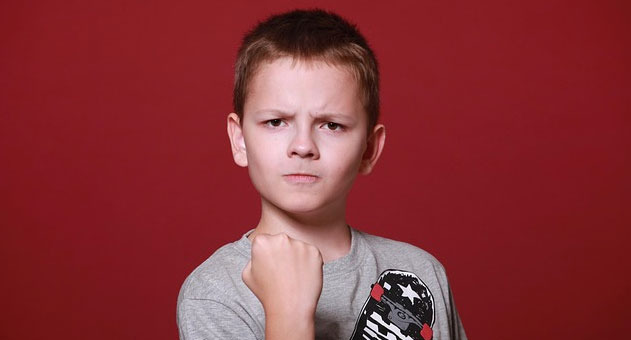
As a parent of a son attending middle school in Denver, I received a call one afternoon while having lunch.
The caller ID was the school number. As soon as I answered, the voice on the other end was from the student guidance officer. My heart sank from the very first words.
"Your son has exhibited inappropriate behavior towards his friends today. According to school regulations, this could be considered bullying, so I am contacting you immediately."
In that moment, my mind went blank. How could my bright and playful child behave like this at home?
The details of the call were specific. He had mocked a friend's appearance and made comments to deliberately exclude a specific friend from a team on the playground.
The officer explained the circumstances quietly but firmly, and at the end of the call, added this.
"I will send you an email summarizing the details of the situation and the school's follow-up actions."
A few minutes after hanging up, the email arrived.
It detailed the time and place of the incident, the observed behavior, the impact on the victim, and why this behavior was deemed bullying.
The name of the victim was not disclosed for privacy reasons, but the situation was clear enough.
At the end, the future actions were outlined. My son would be required to write a letter of reflection and apologize directly to the victim.
That evening, my husband and I had a long conversation with our son. When I asked why he had acted that way, he said it was to gain popularity among his friends.
He thought that by teasing a weaker friend, like his close friends did, and making them laugh with his comments, he would feel good and that this was a way to be accepted.
Hearing that made my heart sink. I wondered if he had some insecurities since we immigrated that led him to form relationships with friends in the wrong way.
The next day, I called the school to get a clearer understanding of the situation. I expressed my intention to apologize to the parents of the affected friend and requested an opportunity for my son to meet and apologize in person.
The school also decided that as a result of this incident, my son would write a 'reflection letter' and meet regularly with the counseling teacher.
Bullying in middle schools in Korea and the U.S. differs significantly in form and response.
In Korea, the structure of students living together all day leads to persistent, relationship-based bullying such as group exclusion, name-calling, and ignoring. The victimization often occurs secretly, and teachers find out late.
In the U.S., with classroom transitions, verbal abuse, physical pushing, and social media bullying occur more frequently in specific times and places rather than fixed groups. When discovered, immediate administrative intervention, parent contact, counseling, and disciplinary procedures are followed according to school regulations.
Additionally, the U.S. places importance on records and procedures, officially notifying through emails, phone calls, and app alerts, and in cases of recurrence, disciplinary actions or transfers at the district level are possible. I decided to consistently talk to my son about what words and actions can hurt others and how long those effects can last.
Looking at the clear sky in Denver, I resolved to watch over my child to ensure his heart can also become this clear.
I hope this incident does not remain just a shameful and upsetting memory but becomes an opportunity for greater maturity.




 Magic Cabbage School of Martial Arts |
 Vacation on Hawaii |
 morvex37 |
 Ari Songhan American Immigration Life |
 Bearded Strawberry Smoothie |
 Your Curiosity Resolved |
 coloradoman |

 Jean Claude Bundang Blog |
 Successful Manager Kim's Team |
  Finding Superfoods |
  lightyear |
  song bang |
  vexomo |
  Indiana Jones |
  meloncat |
  novapixel |
  mortrix |
  Esther 1983 |
  fortbliss |
  Moscow Kim |
  My Two Way |
  toastyfox |
  FLORIDA Acus |
  tracker |
  TONTON COFFEE |
  sunrise |
  ultron78 |
  uplifted |
  Folding Instructions |