

Living in Tacoma, Washington, I often notice the fog slowly lifting in the morning and the air feeling humid during the day.
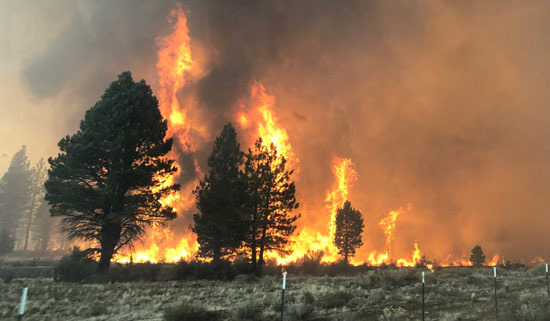
However, from early spring to mid-summer, news about wildfires in California frequently appears on TV. Each time, I wonder why that area experiences fires every year while it remains so quiet here.
Upon searching, I found that areas in the U.S. where wildfires are relatively rare tend to have high humidity and frequent rainfall. Western Washington and Western Oregon are known for their frequent rain and moist air. Therefore, places like Tacoma, Seattle, and Olympia rarely experience completely dry ground in the summer, and despite having dense forests, they are not in an environment conducive to fires.
On the other hand, areas in the U.S. that frequently experience wildfires are generally those with dry winds. Conversely, regions around the Great Lakes, such as Michigan, Wisconsin, and Minnesota, have forests but benefit from the moisture provided by the lakes, making extremely dry days rare, so when fires do occur, they are usually contained more quickly than expected.
Heading east, the New England states like Maine, Vermont, and New Hampshire have many forests, but with lower temperatures and sufficient rain and snow, the likelihood of large wildfires spreading is low. In the south, Florida's hot and humid weather means there may be small fires, but there are almost no wildfires that burn millions of acres like in the west.
Talking about this makes me think that wildfire management in places like Delaware or Rhode Island must be quite uneventful. The entire state is flat, and there are hardly any terrains that could be called mountains, so the conditions for fires to spread with the wind simply do not exist. Even with some forests, large wildfires that would make the news are almost nonexistent.
Additionally, it's interesting that the damage costs from wildfires can vary significantly by state, even for fires of the same scale. In places like Montana or Wyoming, where the land is vast and the population is small, even if hundreds of thousands of acres burn, the property damage is minimal. Sometimes, only a few trees in the forest burn, and the nearby farmers and their livestock are just startled, and that's the end of it. In contrast, California, with its mix of mountains and homes, and where property values start in the millions, sees damage costs soar into the billions after just one fire.
Thus, even the same wildfire news sounds particularly alarming when it comes from California. In January 2025, the damage from the LA Palisades wildfire was estimated to be between $250 billion and $275 billion, according to various agencies, marking it as one of the worst disasters in LA history, with thousands of buildings (including homes and businesses) destroyed.
Initially, the damage was estimated to be in the $10 billion range, but over time, the scale of insurance losses and economic losses surged, and analyses suggested that when including losses not covered by insurance, the damage could exceed $40 billion.
Living in Tacoma, I often find that while the frequent rain can be inconvenient, I am grateful for it in this regard. I don't have to worry about the sky being covered in smoke every summer. Ultimately, wildfires seem to be less about the amount of forest and more about how dry it is, what kind of winds are blowing, and how many people are living in the area.






 Bald Eagle Brothers |
 Bacon King Blog |
 PETRO Vatican Shrine |
 Seattle - Emerald City |
 Real Estate Agent USA |
  round1 |
  Way to easy |
  musicque |
  road98 |
  Churros Train Conductor |
  gleeful |
  Burbank Lee |
  Olivia's Blog |
  Bushing Around Life |
  Active |
  Cherokee Rose |
  Kor. Master |
  Holey Moley |
  Conflite Teacher |
  Hodong Prince Over Flex |
  Mist inn |
  citrus pop |
  Onion Ring |
  phoenixia |
  viewtop |