
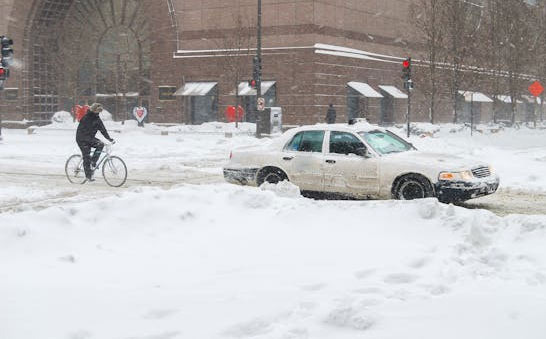
Chicago has historically experienced several record snowfalls.
Below are five recorded snowfalls in Chicago:
January 26-27, 1967: A total of 23 inches (about 58.4 cm) of snow fell over two days. This is recorded as the highest snowfall in Chicago's history.
January 1-3, 1999: During this period, 21.6 inches (about 54.9 cm) of snow fell. Notably, on January 2, 18.6 inches (about 47.2 cm) fell in a single day, setting a record for the maximum daily snowfall.
January 12-14, 1979: A total of 20.3 inches (about 51.6 cm) of snow fell. This caused the city to come to a standstill, and snow removal efforts faced significant challenges.
January 31-February 2, 2011: During this period, 21.2 inches (about 53.8 cm) of snow fell. This snowfall is known as the 'Groundhog Day Blizzard' and caused major traffic disruptions along with strong winds.
January 31-February 2, 2015: About 19.3 inches (about 49 cm) of snow fell. This is recorded as the fifth highest snowfall in Chicago's history.
These snowfalls illustrate the climatic characteristics of Chicago and the influence of continental climate.
During heavy snowfall periods, traffic disruptions and significant impacts on daily life occur, so it is important to carefully check local weather information and prepare accordingly.
Chicago's Lowest Temperature Record
The lowest temperature recorded in Chicago was -27°C, measured on January 20, 1985.
This day is recorded as the coldest day in Chicago's history, and the wind chill made it feel even colder.
Risks and Prevention of Frostbite
In such extreme cold, the risk of frostbite significantly increases. Frostbite is a condition where skin and tissues freeze and become damaged, primarily occurring in exposed areas such as fingers, toes, nose, and ears.
Symptoms of Frostbite:
- Skin becomes cold and pale
- Numbness or tingling
- Skin appears hard and waxy
- In severe cases, blisters or necrosis may occur
Prevention Methods for Frostbite:
- Wear appropriate clothing: Wear multiple layers of warm clothing and protect the body with hats, gloves, scarves, and thick socks.
- Avoid wet clothing: Moisture quickly drains body heat, so change out of wet clothes immediately.
- Avoid prolonged exposure: Avoid long activities in cold environments and take breaks in warm places periodically.
- Avoid alcohol consumption: Alcohol may give a temporary feeling of warmth but actually lowers body temperature, so it is best to avoid it.
First Aid for Frostbite:
- Move to a warm place: Immediately get out of the cold environment and move to a warm location.
- Soak in warm water: Soak the frostbitten area in warm water at about 37-42°C for 30-60 minutes to gradually thaw it.
- Do not rub: Rubbing or massaging the frostbitten area can worsen tissue damage, so avoid it.
- Blister care: If blisters form, do not pop them, and protect them with clean gauze to prevent infection.
- Visit a medical facility: Depending on the severity of frostbite, visit a hospital immediately for professional treatment.
During winter in Chicago, it is important to strictly follow these preventive measures to minimize the risk of frostbite.








 Khan Film Blog Production |
 Rice Shop Uncle BLOG |
 Illinois Mom |
 allstar realty |
 Nanana Nanana Nanana |
  Korean Mom |
  My NYC |
  moo moo |
  Mr Oh |
  forevergee |
  festival |
  manchester |
  constant |
  Leapfrog Move |
  vibranto |
  Tora Tora |
  yellowbutter |
  Dolly |
  US Embassy |
  NYC saladbar |
  Finding Superfoods |
  lightyear |
  song bang |
  vexomo |
  Indiana Jones |