

The total Korean population in Georgia is recently estimated to be between 90,000 and 110,000.
According to government statistics, there is a figure of about 90,000 Koreans, while unofficial counts suggest there may be more.
However, it is not a recent phenomenon that Koreans have started to live in Georgia. The Korean population has grown over a long period.
With the airport opening up, companies from around the world began to enter, especially many from Asia.
Naturally, expatriates, family-based immigrants, and international students flocked in, and from then on, the unique Korean phenomenon of "once one settles, others follow" took effect.
The first arrivals found no Korean restaurants, and even the Asian markets they found were so inadequate that the kimchi was not very tasty. So, the first generation of immigrants started their own restaurants, opened markets, and established churches.
In particular, churches played a significant role in the Korean community in Georgia. They were not just places for worship, but also provided job information, school information for children, and business connections... it felt somewhat like a 'Korean comprehensive information center.'
Thanks to this, Koreans were able to endure in the lonely and unfamiliar South. Then, in the 2000s, Korean immigration surged again. This was as Korean companies began to establish factories in Georgia.
Companies related to automotive parts, logistics, and electronics entered, and as Georgia became a hub for manufacturing and logistics, many young working families moved in.
The housing prices were not as outrageous as in California or New York; they were reasonably livable, the weather was warm, and the international airport made travel to Korea convenient.
Particularly, rumors spread that it was a good place to raise children, and the combination of "education + housing prices + airport accessibility" aligned perfectly. Thus, areas where Koreans gathered became increasingly defined. Notable examples include the northern Atlanta areas like Doraville, Duluth, and Suwanee.
Nowadays, if you visit Gwinnett County (귀넷 카운티) and Suwanee, you can find everything from cafes to hair salons, skin care shops, and math tutoring centers. With the community established, newcomers can settle in much more easily and quickly.
In short, Korean immigration is a path created by the courage of a few, and it has grown to what it is today thanks to those who widened the path and laid down the stones.
As the Korean community has settled, this place has become no longer a foreign land but a 'viable option for living.'
It may not be a dazzling metropolis, but it is a space where families can live safely together, conduct business, and enjoy Korean flavors and culture. The story of Korean immigration to Georgia can ultimately be seen as "a tale of finding comfort and practicality while putting down roots in the South."





 Cherokee Rose |
 Dingho and USA News |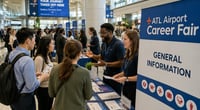
 moonshine 7 |
 Let's Be Like a Salt-like City Person |
 Gimmi207 Blog |
  manchester |
  constant |
  Leapfrog Move |
  vibranto |
  Tora Tora |
  yellowbutter |
  Dolly |
  US Embassy |
  NYC saladbar |
  Finding Superfoods |
  lightyear |
  song bang |
  vexomo |
  Indiana Jones |
  meloncat |
  novapixel |
  mortrix |
  Esther 1983 |
  fortbliss |
  Moscow Kim |