

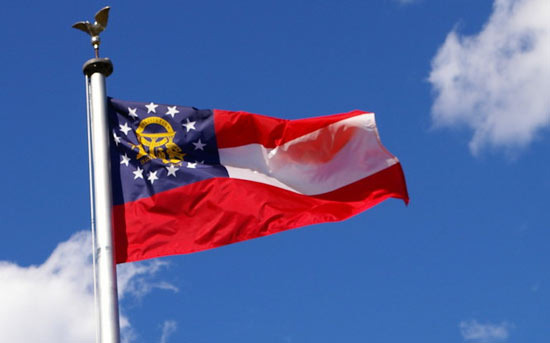
Diving into the story of Georgia's flag, one might wonder, "How complicated can changing a flag be?" but this state has fought over its flag for decades. The design we see today did not emerge from the start, and it holds the record for the most frequently changed flag in the United States. Georgia's first flag was created in 1879, shortly after the Civil War, featuring a design that subtly included symbols of the South. It contained elements similar to the Confederate flag. Over time, the design continued to change, but the resemblance to the Confederate flag never fully disappeared, leading to ongoing controversy. Particularly in the 1950s, when issues of civil rights and racial discrimination intensified, the Confederate flag was openly included in the design, interpreted by many as a political message opposing the Black civil rights movement. It seemed to declare, "Our Southern way does not change." Thus, since 1956, the Georgia flag has become one of the most contentious symbols in the United States. Black residents protested that it symbolized racism, while conservatives argued it represented "the history of the South preserving tradition." Ultimately, as the conflict escalated, the flag was hastily changed in 2001, but the problem was that the new design was too complex and did not resonate with people's sentiments. Instead, it only increased opposition, leading to renewed battles over the flag's replacement. Consequently, Georgia held a referendum in 2004, and the current flag was chosen, finally bringing some resolution to the controversy. The current flag resembles the style of the American flag and includes the phrase 'Wisdom, Justice, Moderation,' which symbolizes Georgia. In short, Georgia signaled that it chose a flag reflecting current values rather than clinging to a past Southern identity. The flag is just a piece of fabric, but in Georgia, it embodies a process of reconsidering history without hiding or glorifying it. Therefore, this flag is not merely a symbol but also evidence of the long-standing conflicts and choices of a South that wishes to change, carrying a weighty story even if it is not flamboyant.






 Cherokee Rose |
 Dingho and USA News |
 moonshine 7 |

 Let's Be Like a Salt-like City Person |
  dralix58 |
  Gorama Round |
  Skydiving |
  dreamport |
  Yellow Snowman |
  Toaster Pizza Magic Show |
  velvetnom |
  Anytime Journey |
  Mrs. Duluth |
  jaxter |
  Atlanta Mama |
  Baguette Blog |
  US Embassy |
  Korean Mom |
  My NYC |
  moo moo |
  Mr Oh |
  forevergee |
  festival |
  manchester |