
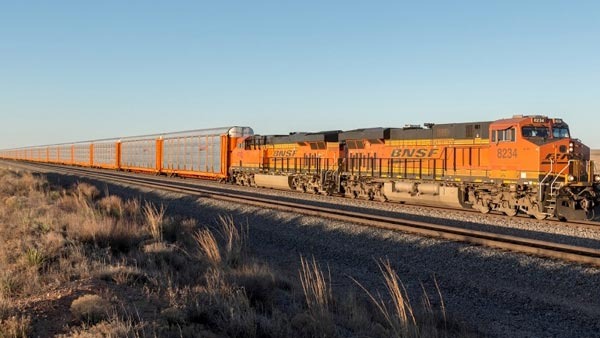
Living in San Antonio, you will see freight trains several times a day by the roadside or near the tracks.
It is common to wait at railroad crossings while driving through the city, and during the slow passage of those long freight trains, the unique metallic sounds and vibrations resonate in the air. In fact, San Antonio is one of the key intersections for railroad logistics in the southern United States, so it is natural to see freight trains frequently.
Notably, two major railroad companies, Union Pacific and BNSF (Burlington Northern Santa Fe), operate vast networks centered around this area. The geographical location of this city is highly strategic. It connects to Dallas and Fort Worth to the north and Laredo at the Mexican border to the south, functioning as a midpoint for North American trade.
Automotive parts, consumer goods, food, and raw materials coming from Mexico are transported through San Antonio to various parts of the United States. In particular, the railroad lines along the I-35 highway corridor play a central role in 'rail + truck intermodal transportation' alongside land logistics.
The most commonly seen type of freight train near San Antonio is the container train. Imports coming from the port city of Houston or the Gulf of Mexico are primarily transported on these trains.
Next in frequency are trains carrying petrochemical products, grains, steel, and automotive parts. The logistics flow from refineries and agricultural warehouses in the southern region mostly follows this route to the central and western parts of the country.
Additionally, there are several railroad yards and junctions near San Antonio, where you can often see freight trains stopping or being reconfigured on the outskirts of the city.
For example, Union Pacific's Eagle Pass line and Laredo line are major routes for cross-border trade, with trains running almost continuously. Therefore, it is common to hear the sound of trains from afar, both during the day and in the early morning. Among residents, that sound is often regarded as a part of the everyday background noise of San Antonio.
Surrounding the railroads, there are always industrial complexes, warehouses, and freight terminals, which contribute to the vibrant local economy. Industries related to railroad logistics, warehousing, and trucking form an important pillar of the city's economy. And as you drive along the outskirts of the city, you can easily spot long lines of oil tanks or container yards next to the railroad.
This scenery shows that San Antonio is not just a tourist city but functions as a hub for southern logistics in the United States. Interestingly, these freight trains also leave a peculiar impression on tourists.
Seeing the endlessly stretching freight trains in person evokes a strangely American feeling, reminiscent of old American movies. The railroads of San Antonio symbolize the connection between the city's past and present.
While it is a historical city famous for the mission era and the Alamo War, it is also a modern industrial city where steel wheels are in motion. Thus, the freight trains here are not just a means of transportation but evidence that San Antonio is still a vibrant industrial city.







 Helpful Life Stories |
 American Man in a Mask |
 Hajiwon Blog Hair Salon |
 Make My Day |
 TEXAS Fishing Boat |
  US Embassy |
  Korean Mom |
  My NYC |
  moo moo |
  Mr Oh |
  forevergee |
  festival |
  manchester |
  constant |
  Leapfrog Move |
  vibranto |
  Tora Tora |
  yellowbutter |
  Dolly |
  NYC saladbar |
  Finding Superfoods |
  lightyear |
  song bang |
  vexomo |
  Indiana Jones |