

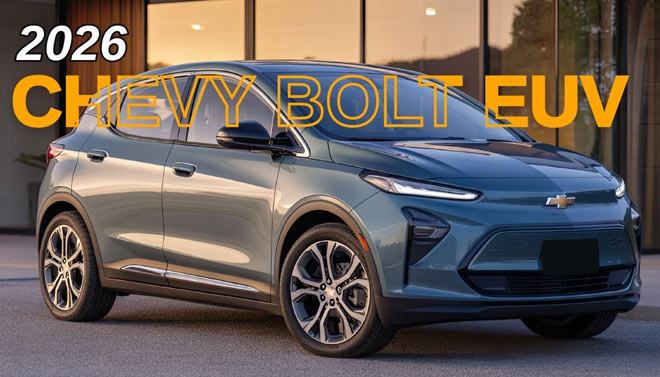
The Chevrolet Bolt EV is a model that has faced a lot of talk about being "discontinued" or "finished" over the years.
However, it continues to be produced. In fact, the 2027 model has been released on a completely different platform.
The Bolt EV is actually quite a significant model in the history of electric vehicles.
When it first appeared in 2016, most electric vehicles were either expensive or had short ranges. However, the Bolt was praised as a "realistic electric vehicle" for offering over 200 miles of range at a relatively reasonable price.
But as time went on, the situation changed a bit. There were battery recall issues, and as GM shifted its electric vehicle strategy to the new Ultium platform, rumors about the Bolt being discontinued continued to circulate. GM even announced that it would halt Bolt production.
However, GM changed its mind again. The reason is that there are actually quite a few people who like this car more than expected.
One common sentiment among Bolt EV enthusiasts is that it offers "good value for the price."
Looking at the electric vehicle market, it feels like prices are steadily rising. Many models are priced over $40,000 or $50,000. However, the Bolt still maintains a price close to $30,000. The starting price for the 2027 model is expected to be around $28,500.
When discussing electric vehicles, subsidies are always mentioned. However, the Chevrolet Bolt EV is a car that garners interest even without considering subsidies. This is because its price is relatively realistic. The starting price for the 2027 Bolt EV is expected to be around $28,000. Considering that most electric vehicles start at over $40,000 these days, that's quite a low price.
As a result, some people respond by saying, "This is fine even without subsidies." This is because it is less of a burden for those looking to try an electric vehicle for the first time. Additionally, maintenance costs are relatively low. Due to the nature of electric vehicles, there is no need for engine oil changes, and fuel costs can be reduced. Therefore, it is said that surprisingly many people choose the Bolt EV for its economic viability, even without subsidies.
Thus, many people consider it as an entry-level electric vehicle. For those who think, "I want to try an electric vehicle for the first time, but I don't want to spend too much," there aren't many options available. In such cases, the Bolt often comes up as a candidate.
The 2027 Bolt has also undergone significant technological changes. The biggest change is that it uses GM's Ultium platform. The battery structure has been modernized compared to previous models.
The battery uses a 65kWh LFP battery. LFP stands for Lithium Iron Phosphate, which is a method commonly used in the electric vehicle industry these days. It has the advantages of being relatively inexpensive and durable.
The expected range is about 255 to 262 miles. This is sufficient distance for everyday commuting or grocery shopping.
The charging speed has also improved significantly. It supports up to 150kW for DC fast charging. It is said to take about 25 minutes to charge from 10% to 80%. Considering that the previous Bolt had some shortcomings in charging speed, this is a considerable improvement.
Additionally, there is an interesting change: it uses a Tesla-style charging port. This is the NACS port, which is becoming increasingly standard in the U.S. electric vehicle market. This means that it is likely to be able to use the Tesla Supercharger network.
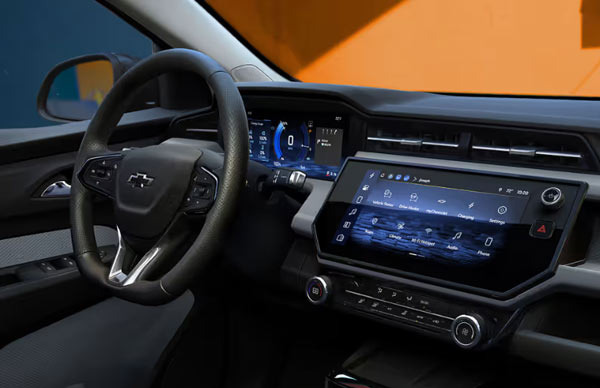
The interior has been completely redesigned. It features an 11.3-inch touchscreen and an 11-inch digital instrument cluster, with a design similar to GM's latest electric vehicles.
There is also an option to choose a feature called Super Cruise. This is GM's hands-free driving system, which allows the vehicle to drive itself on certain highways without hands on the wheel.
Moreover, there is another surprisingly interesting feature: the Vehicle-to-Home function. Simply put, this allows the car's battery to be used as a power source for the home. When a power outage occurs, the car acts as a sort of generator.
Looking at these features, the Bolt is an "affordable electric vehicle" that surprisingly incorporates a lot of technology.
As a result, there are quite a few people in the automotive community who quietly appreciate the Bolt EV. It may not be flashy or fast, but it is practical, has low maintenance costs, and is relatively reasonably priced.
Some people say this.
"An electric vehicle doesn't have to be fancy; it just needs to be comfortable to drive."
The Bolt EV is exactly that kind of car. In an electric vehicle market that is becoming increasingly upscale and expensive, it is a very attractive choice for those looking for a simple and practical electric vehicle.







 SKy Face |
 gleeful |
 forevergee |
 mortrix |
 cherrydino |
 Nuchuhan Exploration BLOG |
 Moscow Kim |
 Peter Pan Pet |

 U.S. Weather Bureau News |
  The Gelaton |
  Twist Kim |
  berlon93 |
  Physical Laws and Science |
  good thinking |
  Solo Yolo |
  Mr Oh |
  laro90 |
  San Diego TOP Idol |
  Round and Round Children's Song Kingdom |
  American Golf Course Travelogue |
  MEDBIO American Doctor Blog |
  Hot Seat Driver |
  bryvexi |
  koala organic farm |
  riverstone |
  My Antonio |
  California Information News |
  chilli chilli |
  Moon Su San |