

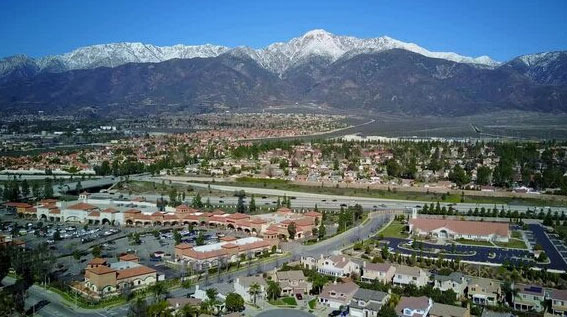
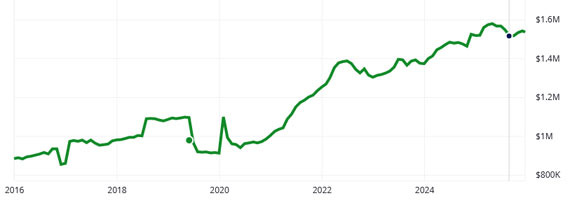
Contrary to expectations that home prices across the U.S. would adjust after the pandemic, there are neighborhoods that have held up remarkably well.
One of them is Rancho Cucamonga. This city, located in Southern California's Inland Empire, has not seen a significant drop in home prices post-pandemic; instead, they have remained steady or have gradually increased. This raises a question: Were homes in Rancho Cucamonga originally undervalued, or was it simply a neighborhood well-suited for the work-from-home era?
Before the pandemic, Rancho Cucamonga was always in a somewhat ambiguous position. It was neither Los Angeles nor Orange County, yet it didn't completely feel like a rural area either. If one had to point out something unique, it would be that the Korean Nongshim ramen factory is located here.
Nonetheless, the local school district was decent, and the safety was stable, but it was a place that often faced the question, "Why here?"
Home prices were relatively reasonable compared to the Southern California average, and with little change over time, it wasn't incorrect to say they were undervalued at that point.
However, the pandemic changed everything. As remote work became the norm, the significance of commuting distances began to fade.
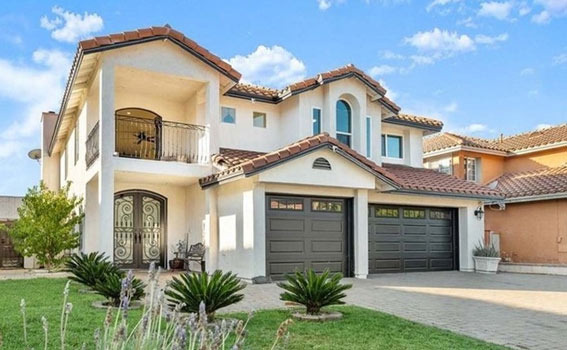
For those who no longer needed to commute daily to downtown LA or Silicon Beach, Rancho Cucamonga suddenly became an attractive option. With the same budget, they could buy larger homes, single-family houses with yards, or newly built communities. This change was not a temporary trend but rather a shift in lifestyle.
The strengths of Rancho Cucamonga become evident at this point. It offers large shopping malls, essential infrastructure, highway accessibility, and a residential environment set against the San Gabriel Mountains. It is optimized for a lifestyle where one works from home and can handle everything locally on weekends.
For remote workers, a home is no longer just a place to sleep; it has become a space where they spend most of their day. By that standard, homes in Rancho Cucamonga offered excellent value for the price.
Thus, those who believe that home prices have not dropped argue that the prices in this neighborhood are not a bubble but rather a return to their rightful place. They interpret that before the pandemic, the area was undervalued due to a commuting-centric mindset, but as work styles changed, its value was reassessed.
In fact, as long as fully remote or hybrid work remains, the demand in this area is unlikely to diminish easily.
On the other hand, there are cautious perspectives. While remote work seemed permanent, more companies are increasingly demanding a return to the office.
If commuting becomes important again, the location of Rancho Cucamonga could become a weakness. In this case, the current prices might reflect an excessive premium for remote work.
Ultimately, the key to understanding real estate in this area is that it is not a speculative market but rather one that bets on lifestyle changes.
For those who spend long hours working from home and value the quality of their living space, it remains a fantastic option. Conversely, for those who need to commute to the city daily, the perceived value may decrease.
Looking solely at the fact that home prices have not dropped post-pandemic may seem strange. However, in a world where work styles have changed, Rancho Cucamonga is not just a lucky neighborhood but one that has truly caught the wave of change.
Whether it was a recovery from undervaluation or a unique opportunity in the work-from-home era depends on individual lifestyles. The reason home prices in this neighborhood are holding steady lies right there.
The downside of Rancho Cucamonga is its air quality. Due to its location in the Inland Empire, it is close to a basin topography, and on days when the wind is stagnant, fine dust and smog can easily accumulate. The proximity to mountains can sometimes trap the air. Especially during the summer and wildfire season, the air quality index can deteriorate sharply, leading to frequent restrictions on outdoor activities.
Accessibility is also an issue; while highways pass through, there can be significant bottlenecks during rush hours, and the travel time to major business districts in LA or Orange County can feel quite long.
Public transportation options are limited, so without a car, the living radius can shrink dramatically. If remote work decreases, this downside may be felt more acutely, which I consider a risk.






 moo moo |
 ultron78 |
 garlic bread |
 Sugar Cream Door Bulletproof Noodles |
 urbanmint |
 CA Real Estate |
 Star Way |
 Choi Cho |
 some fame |
 DREAM BIG |
  frostbite |
  330 Forever My Love |
  El Dorado |
  dralix58 |
  Gorama Round |
  Skydiving |
  dreamport |
  Yellow Snowman |
  Toaster Pizza Magic Show |
  velvetnom |
  Anytime Journey |
  Mrs. Duluth |
  jaxter |
  Atlanta Mama |
  Baguette Blog |
  Tan Sol |
  US Embassy |
  Korean Mom |
  My NYC |