

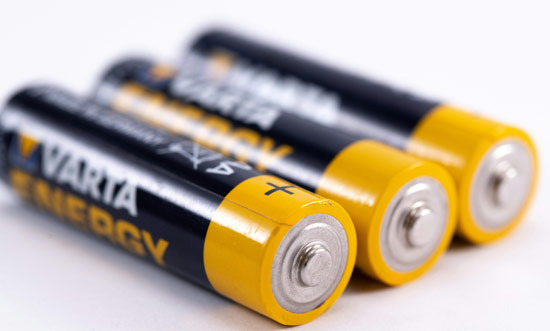
AAA and AA batteries were used in everything from remote controls to toys, wireless mice, wall clocks, and flashlights, but nowadays, just one USB cable can charge anything and get it working again. In fact, this small cylindrical battery enjoyed its heyday during the 'digital camera era' but has gradually been pushed to the back since the smartphone era.
As of 2025, the battery market itself has not completely disappeared, but it seems that the opportunities for it are steadily diminishing.
Now, even toys are rechargeable, mini fans are rechargeable, electric toothbrushes are rechargeable, and even razors are charged via USB-C. Meanwhile, AAA and AA batteries still awkwardly occupy shelf space in stores, as if begging, "Do you need me?"
It's funny that rechargeable batteries (Ni-MH) were once touted as an incredible future technology, but nowadays they are quietly tucked away, overshadowed by lithium-ion (Li-ion) products. Who buys rechargeable AA batteries these days, plugs in the charger, and waits all night?
In a world where a single USB-C cable can charge to 80% in just 30 minutes, the very concept of a 'battery charger' feels like something from the past, akin to the internet used with old telephone modems. Consequently, regular batteries like alkaline ones have even less of a place. It's not that something is wrong or broken; it's just that as time passes, people have lost interest.
But does that mean the battery market is completely dead? Not at all. Products like clocks, TV remote controls, wireless door sensors, toys, laser pointers, and wall-mounted thermometers that "last for half a year once inserted" still rely on batteries.
This is a tricky point. "It's too much trouble to switch to rechargeable, but using batteries feels somehow outdated." Consumers are confused, and battery companies are not selling as well as before, yet they are not going bankrupt either; it's a rather delicate situation.
The reason the market has shrunk but not completely disappeared is due to 'habitual consumption' where people continue to buy out of sheer inertia. Simply put, it's a market that persists because there is no thought of replacing it.
Another interesting point is that most USB charging products have built-in lithium batteries that are difficult to replace. Nowadays, when something breaks, people think, "I should just buy a new one" rather than repair it, so the AA/AAA method of replacing batteries might actually be more environmentally friendly. Ironically, those who care about the environment tend to buy rechargeable lithium products. Ultimately, a strange consumer trend has emerged where people frequently discard products while deluding themselves into thinking, "I'm eco-friendly because I use rechargeable batteries."
The battery market has indeed shrunk and is likely to shrink further in the future. However, it will not completely disappear. Batteries are tenacious survivors that endure in small corners.
In an age where everyone is charging via USB, AA and AAA batteries quietly work behind the scenes as the unsung energy workers. While people boast about their flashy smart devices and run around with charging cables, these batteries survive with a heavy loyalty, "Once inserted, they run quietly for at least a few months."
But... who knows how things will change in 20 years? Even after thinking it over, I can't quite grasp whether I will still be buying batteries then.





 novapixel |
 Peter Pan Pet |
 horse |
 Sunset Oregon |
 daisypat |
 Old English |
 US Home Buying Information Home Insurance |
 U.S. Military Recruitment Information |
 K-POP TV News |
 Archaic Kim |
  manchester |
  constant |
  Leapfrog Move |
  vibranto |
  Tora Tora |
  yellowbutter |
  Dolly |
  US Embassy |
  NYC saladbar |
  Finding Superfoods |
  lightyear |
  song bang |
  vexomo |
  Indiana Jones |
  meloncat |
  mortrix |
  Esther 1983 |
  fortbliss |
  Moscow Kim |