
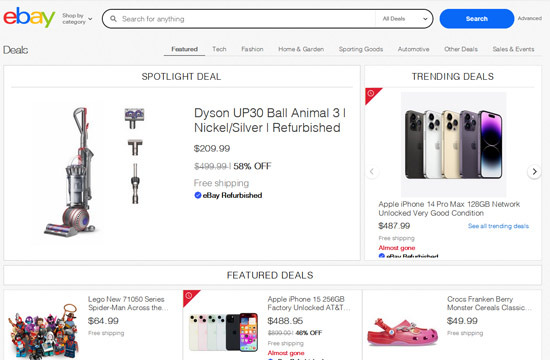
Ebay started as an online auction site named 'AuctionWeb' in 1995.
At that time, it was simply a platform to facilitate transactions between individuals, but it gained immense popularity as rare collectibles and used goods were actively traded. In 1997, it changed its name to 'eBay' and grew into a global e-commerce company by going public on NASDAQ.
After acquiring PayPal, it secured payment stability and expanded its services to various countries in the 2000s. At one point, it broadened its scope by acquiring Skype and StubHub, but refocused on its core marketplace.
One of the most significant policy changes eBay has made in recent years is transitioning to directly managing its payment system.
In the past, payments were primarily made through PayPal, and sellers clearly understood the fees deducted from their sales revenue. However, now eBay's direct involvement in payments has led to reports of higher fees than before.
Previously, sellers accepted the "eBay + PayPal" dual fee structure for the sake of payment stability and reliability, but now there are complaints that "eBay manages everything and takes more fees. " In reality, the fee structure is based not just on the sale amount but also includes shipping costs, which increases the burden.
In the past, when selling a $10 item and charging $3 for shipping separately, the fee was primarily based on the $10. Now, fees apply to the total of $13, reducing the seller's margin. Additionally, the structure encouraging the use of advertising and promotional tools has strengthened, leading to sellers often spending more than just the basic sales fee.
Small sellers evaluate that "eBay is becoming more like Amazon." They feel that not only do they have to pay platform usage fees, but they also need to spend on advertising to ensure visibility, and payment fees have increased, making it feel like they are paying comprehensive marketing costs.
On the other hand, for large sellers or brand vendors, the stability from eBay's direct payment management, enhanced buyer protection, and simplified global remittance can be seen as advantages. Issues like PayPal account freezes or deposit delays that were once troublesome have decreased, and for buyers, the refund and claim processes have become simpler, increasing trust. Ultimately, evaluations are polarized.
In the long-standing seller community, there is a significant disappointment that "it used to be seller-friendly, but now it is platform-centric," while newly entered sellers or global sellers respond that "management is cleaner than other channels." In particular, sellers targeting the U.S. market from Korea or abroad positively evaluate eBay's integrated payment system as it lowers the initial entry barrier.
However, looking at the overall trend, the sentiment of the 'old eBay' with its free and personal transactions has largely disappeared, and it is gradually transforming into a corporate platform. As the perception of fees has increased, seller dissatisfaction has grown, but at the same time, platform stability and trust have improved, creating a duality.
In today's recession due to tariffs, evaluations of eBay are divided between "it's disappointing that profits are down" and "it's good that the system is stable."






 Weekend Movie Blog |
 Beauty, Health, Lifestyle Blog |
 coloradoman |
 Superman Cat Blog |
 Noodle Noodle |
  Tonky |
  viroma |
  cookie |
  Live and that's it |
  Alright Twain |
  eatontown blog |
  HAWAII Korean Church News |
  Amore |
  linex |
  Balancework |
  laro90 |
  MEDBIO American Doctor Blog |
  SWAT TEAM BLK |
  DREAM BIG |
  frostbite |
  330 Forever My Love |
  El Dorado |
  dralix58 |
  Gorama Round |
  Skydiving |