
Spaces that symbolized the nightlife of Koreatown in LA are disappearing one by one.
Recently, the Shrine Karaoke, located near 6th and Virgil, has ceased operations, sparking renewed discussion about the changes in the Koreatown commercial landscape.
Shrine Karaoke was once one of the more famous karaoke spots in LA's Koreatown.
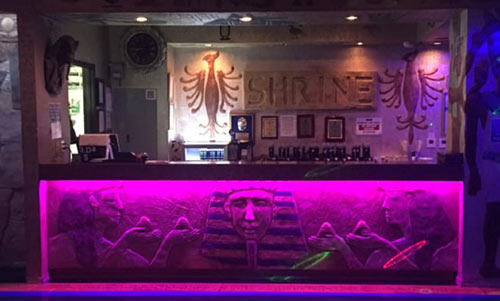
Known for its interior reminiscent of Egyptian pyramid murals (similar to the Booking Nightclub Kanak that was on Wilshire Boulevard in 1998), it featured a state-of-the-art music sound system and dazzling lighting equipment, particularly praised for its smoke machine with laser lights and high-quality microphone system, which earned a reputation for excellent sound quality among visitors.
Famous for its microphone effects that made singers sound like real artists, it was often regarded as one of the better-equipped karaoke venues in Koreatown. Of course, it also faced scrutiny from the LAPD due to issues related to hostess services and conflicts with related entertainment businesses.
Nonetheless, Shrine Karaoke was more of a gathering place than just a karaoke venue. It frequently hosted family gatherings and company parties. Thanks to its spacious rooms and reliable sound facilities, it was a popular spot for events like birthday parties. In fact, Shrine Karaoke had established itself as a representative venue of Koreatown nightlife, consistently attracting customers for an impressive 20 years since its opening.
Shrine Karaoke was located in the basement of the Grand Spa shopping mall, which also had the advantage of a large parking lot. Its operating hours, from 6 PM to 4 AM, made it a popular destination late into the night. Many customers enjoyed meals along with karaoke, as the combo menu included karaoke usage.
However, the recent closure is seen as having implications beyond just the shutdown of one business. The real estate industry is speculating that with the closure of the Grand Spa, a major anchor business in the building, the future use of the building may change.
Given that medical buildings are already increasing in the nearby area, there are predictions that this building could also be converted into a medical facility. Experts view these changes as a signal that the commercial structure of Koreatown is being restructured. The pandemic has severely impacted the dining and entertainment sectors, while rising rent and labor costs have created an environment where existing businesses find it difficult to survive.
The demographic structure of Koreatown is also changing. The proportion of Koreans has decreased compared to the past, while the number of young professionals and residents of various ethnicities has increased.
Real estate industry insiders say that Koreatown has now entered a new turning point.
The closure of Shrine Karaoke could end as just the history of one business. However, it also illustrates the gradual transformation of culture and commerce in Koreatown.
What used to be a street lit up by karaoke and bar lights every night is now changing into a different kind of space.
The commercial landscape of a city is always changing. It seems that Koreatown in LA is right in the midst of that change.





 Balancework |
 Make My Day |
 viroma |
 eatontown blog |
 Toaster Pizza Magic Show |
 Beauty, Health, Lifestyle Blog |
 Weekend Movie Blog |
 coloradoman |
 Victory 1988 |
 Superman Cat Blog |
  Sunshine Blog |
  Minnesota Small Business |
  Strawberry Pancake Warrior |
  amolayo |
  korvon |
  Que Buena |
  virexo |
  silverpath |
  Komet Park |
  reliable |
  vexo90 |
  As Always Today |
  veltar87 |
  United States National Administrative Organization Stories |
  springwaltz |
  dense |
  Tiger Milk Foam Research Institute |
  Oreore Mushroom |
  optimistic |
  Good Good |