

Are polar bears the most dangerous, grizzlies are moderate, and black bears are the least dangerous?
Many people ask if this is true. They probably heard it somewhere on YouTube.
"Polar bears are the most dangerous, and the brighter the color, the more dangerous they are."
This isn't entirely wrong, but to be honest, it's half right and half misleading.
Living in Anchorage, I often laugh inside when outsiders ask, "Where can I see bears?"
From a local's perspective, it's like asking, "Is it possible to live here without seeing a bear?"
So today, I'll clarify this from a local's point of view.
The color order is somewhat correct.
Black bear → Grizzly (brown) → Polar bear (white). It's not incorrect to list them in this order of "danger level."
But this is similar to saying, "A Porsche SUV is faster than a Ford SUV."
It's true, but if you ask whether that difference could affect your life in real life, the answer changes.
If you get hit by a Ford SUV on the street, won't you get hurt?
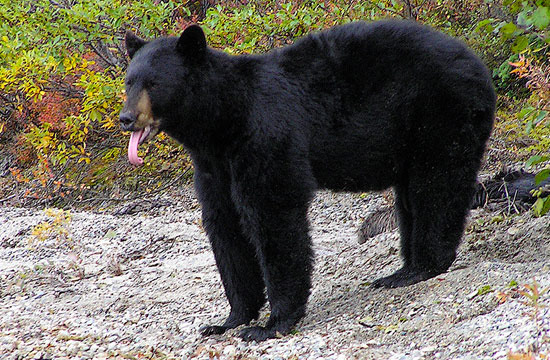
Black bears are the smallest and tend to be timid, often fleeing when they see people.
Black bears are the most common in Anchorage. You can often see signs of them just a little into the Chugach State Park trails.
During berry season, they even come down to backyards. It's not news when they rummage through trash cans.
However, most of these bears will run away when they see people. As long as you are careful about the cases where they might attack out of surprise, your chances of survival are quite high.
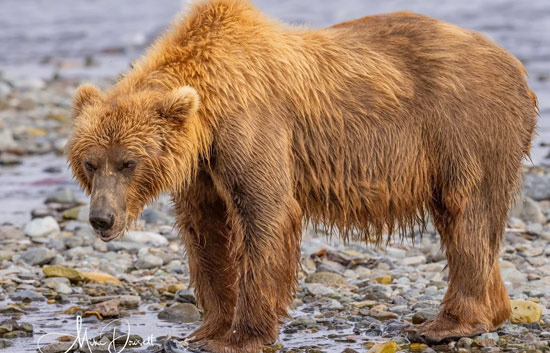
In Denali or Katmai, it's at the level where "it's harder not to see them." Especially during salmon season, they are everywhere and showcase themselves by the water.
The problem is that these bears are huge, second only to polar bears, and incredibly strong.
They often engage in defensive attacks to protect their territory or cubs, and if you cross paths with one, there's no way out.
When you actually encounter one, even a strong man might instinctively think he could die in one hit.
They don't see humans as food, but if provoked, they will attack immediately, and even hunters with shotguns or sprays find it hard to avoid casualties if they encounter one suddenly.
For reference, this type of bear is said to cause the most human fatalities in North America.
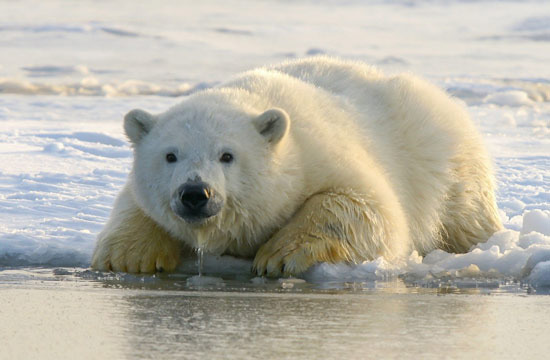
Polar bears? They are not in Anchorage.
To see polar bears, you have to go far up to Arctic towns like Utqiagvik.
The chance of seeing a polar bear in the wild from here is probably as low as seeing a desert camel in Anchorage.
Anyway, Arctic towns are genuinely "places where people need to be cautious." Polar bears are not the type to run away from humans.
They see humans as potential food and come charging in, swinging their paws as they approach. They are one of the few predators that view humans as prey.
If you approach thinking of a Coca-Cola commercial, whether you get torn horizontally or vertically is entirely up to the polar bear's mood.
In fact, encountering a polar bear is a much more dangerous situation than meeting a shark while bleeding in the ocean.
Polar bears live in harsh environments with scarce food, which makes them highly aggressive, and once they start attacking, they are relentless, leading to very low survival chances. If you don't have a shotgun or a large-caliber hunting rifle, your chances of survival are almost nonexistent.
There is a twist, though. Since their habitat is limited to the ice, the actual statistics on human fatalities or injuries caused by them are the lowest.
So is a gun the answer?Many people legally carry guns in Alaska. But asking, "Can I shoot if I see a bear in front of me?" is a completely different story.
The principle is clear. Self-defense, meaning in a life-threatening situation, is permissible. Shooting just because you saw one is illegal and can lead to actual punishment.
And realistically speaking, even if you have a gun, it won't matter if you can't respond properly.
You have to make a judgment and shoot accurately within seconds, but how many people can do that in such a situation?
Your hands shake, the bear is faster than you think, and things happen in an instant.
So what people here really believe in is something else. Bear spray. A more realistic survival tool than a gun.
If you maintain distance and spray, your chances increase. This is a conclusion drawn from experience, not theory. Guns are for movies, and spray is reality.
In Anchorage's backcountry, you need to be cautious of black bears, and if you go deeper into the outskirts, you need to think about grizzlies, and if you go all the way to the northern edge, the game itself changes.The important thing is not the color of the bear but one thing: "Why am I standing in front of this bear right now?"
"The moment you encounter a bear, it may already be too late."
Bringing bear spray before your trip to Alaska is better than studying bear colors ten times.
 SandwichSurf




 novapixel |
 UNI Lover |
 NE Hodori Preik |
 parlon |
 Ohio Ohayoung Hello |
 AL ALASKA |
 Omelet Rice for Strength |
 Sunny's Travel in America |

 Haha and Bomi Blog |
  glenview 89 |
  Valley Hong |
  Idaho's Sumi's House |
  Mr. Midwest America |
  wildfire |
  legalway |
  postcard |
  cheesecake07 |
  My Miami Stories |
  windylotus |
  Mia Flori |
  velaro29 |
  velaro |
  foxtrot83 |
  moname |
  mapleline |
  US Legal Consultation on Trials |