


Since the establishment of Tesla's Gigafactory in Storey County near Reno, the industrial landscape of Reno, once known as 'The Biggest Little City,' has changed significantly. The population of the Reno-Sparks metropolitan area has surpassed 400,000, and while the rapid growth seen since the 2010s has somewhat slowed recently, it appears to still maintain a net inflow trend. The geographical proximity to the California Bay Area is consistently cited as a factor influencing relocation decisions.
The core of the industrial base is a manufacturing and logistics cluster centered around the Tahoe-Reno Industrial Center. With companies like Tesla, Apple, Google, and Switch establishing data centers and logistics facilities in the area, jobs in warehousing and manufacturing have increased significantly. The supply of research and development personnel centered around the University of Nevada, Reno is also considered a supporting factor for the industrial restructuring, and there have been recent reports of additional investments from battery-related suppliers.
The unemployment rate has remained around 3 percent, similar to or slightly lower than the national average, and the increase in jobs in the manufacturing and logistics sectors has led to income growth rates that exceed the western regional average. However, there are ongoing concerns that the rapid influx of population has led to housing supply not keeping pace with demand, resulting in increased housing costs, with periods where rent increases outpaced income growth. Recently, an increase in new construction supply has been observed, leading to a slight moderation in the rate of increase.
Infrastructure investments include the expansion of USA Parkway, improvements to the I-80 corridor, and the creation of additional sites in the Tahoe-Reno Industrial Center, with discussions ongoing about expanding the power grid to attract new data centers. The expansion of the cargo terminal at Reno-Tahoe International Airport is also mentioned as a factor strengthening its status as a logistics hub, along with efforts to increase urban residential supply through downtown Reno redevelopment projects.
Analyses from Moody's and the Brookings Institution often cite Reno as a prime example of a city establishing itself as a manufacturing and logistics base behind Silicon Valley. However, the high dependence on specific large corporations and the fact that the rate of increase in housing prices has outpaced income growth are also pointed out as risk factors for long-term growth. Water resource management remains a long-term challenge common to inland western cities, and issues regarding water allocation in the Truckee River basin are mentioned as variables that could continuously impact regional development speed.
From the perspective of Korean households, Reno is considered an attractive option for those looking to live and invest simultaneously, as it is adjacent to California while offering relatively low living costs and no income tax benefits. However, given that home prices have risen sharply in recent years, it is essential to carefully consider the timing of purchases and local variations.
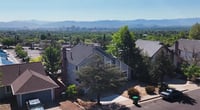
When choosing a residence, areas like Sparks or South Valley, where new construction is active, tend to have relatively lower price burdens compared to downtown Reno, and selecting properties with consideration for commuting distances to industrial centers can help stabilize rental demand.
In summary, Reno is a city where industrial restructuring centered around manufacturing and data centers is clearly underway, and many believe it will continue to maintain its status as a western logistics and manufacturing hub even ten years from now. However, the dependence on specific industries and housing cost burdens should be examined in a balanced manner.
 IceCreamMetro
 moonforesttraveler2017

 garlic bread |
 Sugar Cream Door Bulletproof Noodles |
 urbanmint |
 |
| 
 Premium Gas Camp |
 Nevada Teppanyaki |
 Marisol |
 Nevada Vegas UNLV |

 draxen |
  gallery |
  milkyotter |
  Zoom Zoom Zoom |
  Minnesota Lakes and Clouds |
  noraro |
  tervox95 |
  vale vale |
  yentra |
  Golden life |
  andrew park |
  Peter Pan Pet |
  Balan |
  Cali M Law Group |
  neroyo |
  Dreams Come True as Desired |
  Khan Film Blog Production |
  coloradoman |
  Living Economy Information Blog |
  rustley |