

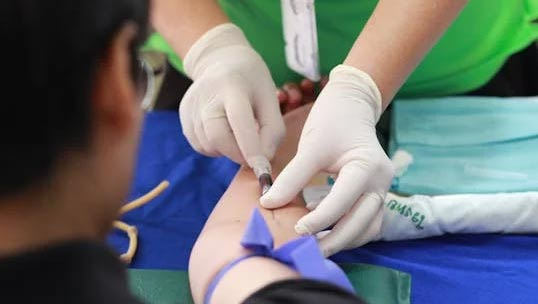
Let's explore the vaccinations recommended for adults over 50. We have summarized the importance and methods of vaccinations for each disease, so please refer to it.
Influenza (Flu Shot)
The flu (influenza) vaccine should be administered annually, and healthy adults show a 70-90% prevention effect. Even if infected, symptoms are mild, and hospitalization and mortality rates are lower. Especially for middle-aged and older adults with chronic diseases, vaccination is essential as they are at high risk of severe illness from influenza infection.
Shingles
Shingles is caused by the varicella-zoster virus and is common in older adults with weakened immune systems. It can cause severe pain, and postherpetic neuralgia may occur as a complication, making prevention important. The shingles vaccine is recommended for adults over 50, with live vaccines administered twice and recombinant vaccines given at intervals of 2-6 months.
Pneumococcal
Pneumococcus causes diseases such as pneumonia and is particularly dangerous for older adults and those with chronic diseases. Adults over 65 are recommended to receive the pneumococcal vaccine, and high-risk individuals under 65 should also get vaccinated. There are protein-conjugate and polysaccharide vaccines, and older adults can receive the polysaccharide vaccine once or sequentially administer both types of vaccines.
Tetanus
Tetanus is caused by the tetanus bacteria and can be contracted through rusty nails or animal wounds. The prognosis is not good for older adults, so vaccination should be done every 10 years. Those who have not been vaccinated before can be protected through three doses.
Hepatitis B
If you have not received the hepatitis B vaccine after turning 50, it is advisable to get vaccinated. It is especially essential for high-risk groups (healthcare workers, chronic liver disease patients, frequent travelers). It is transmitted through bodily fluids, and vaccination can prevent liver cancer. The hepatitis B vaccine requires three doses at intervals of 0, 1, and 6 months.
Hepatitis B is one of the major causes of liver cancer, making prevention important. If vaccination is not done, especially in high-risk groups, the risk of contracting hepatitis B is high, which can lead to liver inflammation and, in the long term, cirrhosis or liver cancer.
The hepatitis B vaccine is considered a very important vaccination in the United States, and it is generally covered by insurance. In certain areas, public health programs are also available to provide vaccinations at low costs.







 El Dorado |
 lightyear |
 Moscow Kim |
 coloradoman |
 Montgomery Mom |
 xylora |
 wendra |
 Aura-Infused WACAM |
 Texas Migration Story |
 There Are Such Things in the World |
  Tonky |
  viroma |
  cookie |
  Live and that's it |
  Alright Twain |
  eatontown blog |
  HAWAII Korean Church News |
  Amore |
  linex |
  Balancework |
  laro90 |
  MEDBIO American Doctor Blog |
  SWAT TEAM BLK |
  DREAM BIG |
  frostbite |
  330 Forever My Love |
  dralix58 |
  Gorama Round |
  Skydiving |