
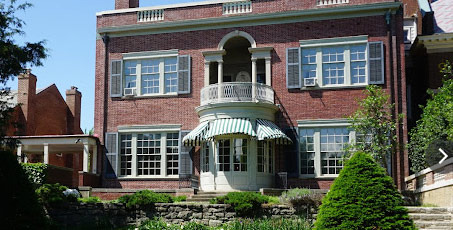
The Woodrow Wilson House is the mansion where the 28th President of the United States, Woodrow Wilson, lived after his presidency, located in the Kalorama neighborhood of Washington D.C.
This mansion, built in 1915 in the Georgian Revival style, was home to Woodrow Wilson and his wife, Edith Wilson, from 1921 after leaving the White House. President Wilson stayed here until his death in 1924, and Mrs. Wilson lived here until her death in 1961.
Currently, this mansion is designated as a national historic site and operates as a museum, where visitors can view various exhibits including President Wilson's personal belongings, artworks, photographs, furniture, and gifts received from the nation. It also provides historical lessons that offer a glimpse into American life in the 1920s.
This is the only presidential museum in Washington D.C., known for providing a unique experience for history enthusiasts.
https://woodrowwilsonhouse.org
Introduction to the Museum
A century after Woodrow Wilson's presidency, his legacy continues to influence discussions on American foreign policy, progressivism, and democracy.
His progressive "New Freedom" policies aimed to promote equity through the federal government but deliberately excluded African Americans.
His stance on racial justice starkly illustrates the limitations of progressive ideals. While he was praised internationally as a leader who advanced democracy and freedom, domestically, he implemented policies that deepened racial discrimination and inequality, restricting the rights of African Americans, women, and immigrants.
Understanding the Wilson Era correctly allows us to recognize the systemic inequalities that persist today. At the same time, reexamining his role in defining and leading 20th-century international relations is crucial for reconsidering 21st-century global trends.
The Woodrow Wilson House functions as a public forum for discussing his legacy and the Progressive Era through exhibitions and scholarly exchanges. It is dedicated to exploring the past and present candidly and dynamically, providing a space for reconciliation and healing.
A century after Woodrow Wilson's presidency, his legacy continues to shape discussions about American foreign policy, progressivism, and democracy. His time in office is marked by paradoxes. While his progressive "New Freedom" platform sought an active federal government to promote equity, it deliberately excluded African Americans. Wilson's inaction on racial justice highlighted the limitations of these progressive ideals, as many of his domestic policies reinforced segregation and racial injustice. Despite his international efforts to promote democracy and freedom, his policies at home often curtailed the rights of African Americans, women, and immigrants.
A full understanding of the Wilson Era sheds light on systemic injustices that persist today. At the same time, his leadership in shaping 20th-century international relations remains significant in rethinking global dynamics for the 21st century. The Woodrow Wilson House serves as a platform for public exhibitions and scholarly discussions about his legacy and the Progressive Era. Committed to fostering dialogue and reconciliation, the museum offers a space for exploring the complexities of the past and their relevance to contemporary issues.







 El Dorado |

 Eldorado 88 |


 Washington Denzel DJ |
  Tonky |
  viroma |
  cookie |
  Live and that's it |
  Alright Twain |
  eatontown blog |
  HAWAII Korean Church News |
  Amore |
  linex |
  Balancework |
  laro90 |
  MEDBIO American Doctor Blog |
  SWAT TEAM BLK |
  DREAM BIG |
  frostbite |
  330 Forever My Love |
  dralix58 |
  Gorama Round |
  Skydiving |