

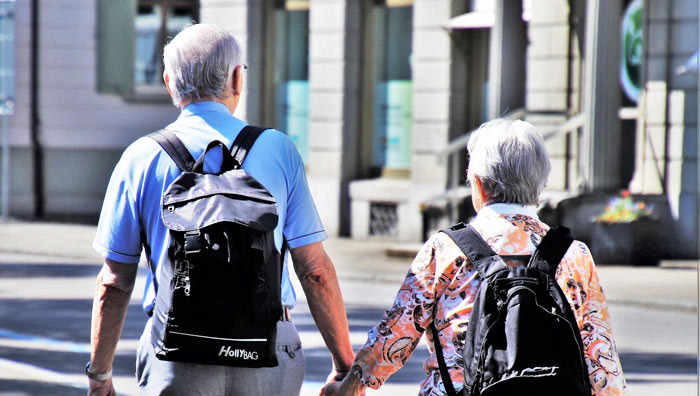
There has been a lot of talk lately about 'reverse immigration', where people return to Korea after living in the U.S. for decades and retiring.
However, looking at the reality, it is not as easy as it seems. There are quite a few cases of people who attempted reverse immigration and ended up going back to the U.S. or struggling to adapt to life in Korea.
Korea is known as a 'quick quick' society globally. Hospital appointments, package deliveries, and administrative services are all extremely fast.
While this may seem like an advantage on the surface, it can actually be stressful for retirees who have lived at a more relaxed pace in the U.S.
People walk quickly on the streets, public transport operates on a minute-by-minute basis, and administrative offices rattle off procedures... For first-generation immigrants who have been away from Korea for decades, facing this Korean-style speed can be overwhelming.
In the end, some choose to return to the U.S. after only a few years, citing "I can't breathe" as their reason.
And when they enter expecting to find many old friends or relatives in Korea, the reality can be different.Relationships may have faded over the long years apart, and friends may not be easily reachable.
In Korean neighborhoods, they may feel lonely, placed in the unfamiliar position of being 'seniors who returned from living abroad'.
Unlike in the U.S., where church or community gatherings support the lives of retirees, in Korea, they have to start new relationships from scratch, which is not easy.
Economic Illusion
While it is true that "healthcare costs are low in Korea, making it a good place to live", the story changes when you expand it to overall living expenses.
Housing prices, rent, and the cost of living are already at developed country levels. The tax benefits for retirees are also structured differently than in the U.S., leading to unexpectedly high expenses after initially thinking life in Korea would be cheaper.
Especially if they try to settle in the metropolitan area, the burden of rent is significant, and while rural areas may have lower prices, they lack medical and cultural infrastructure, making life inconvenient.
The U.S. is a country with many benefits for consumers, so many consumer goods and necessities are relatively cheap.
As expenses for cars, appliances, furniture, and groceries accumulate, which are more expensive in Korea than in the U.S., it becomes difficult to achieve a better financial situation than in the U.S.
In the end, they encounter the wall of "financial worries remain even in Korea".
Most first-generation immigrants raised their children in the U.S. Their children have already established jobs and families in the U.S., and their grandchildren are there too.
However, if they reverse immigrate to Korea, they will spend long periods away from their family.
At first, they may think, "Video calls are enough", but as their grandchildren grow, the desire to hold them increases, and the reality of not having their children by their side during medical visits becomes a source of loneliness.
This is one of the major reasons that lead them to give up on reverse immigration and return to the U.S.
Institutional Hurdles
While the F-4 visa and nationality recovery system have clear advantages, there are many practical hurdles such as taxes, insurance, and administrative procedures once they actually enter.
For example, there are complex issues that arise all at once, such as how to report overseas pension income while residing in Korea, how much the Korean health insurance premium will be, and how to handle inheritance and gift taxes.
Having struggled with U.S. tax reporting, when they add Korean administration on top of that, the thought of "it would be easier just to stay in the U.S." becomes stronger.
Identity Confusion
Finally, there is the question of 'where do I belong?'
Having lived in the U.S. for decades, they are not completely American, and returning to Korea, they do not feel like a part of Korean society either.
When presenting ID at the grocery store checkout, going through procedures at the bank, or even attending neighborhood meetings, they are strangely treated as outsiders. This awkwardness of identity becomes a significant source of fatigue for retirees.
Ultimately, the reason reverse immigration fails for many from the U.S. is not simply that "Korea is inconvenient", but rather a complex issue intertwined with culture, economy, family, institutions, and identity.
They come in looking only at the advantage of healthcare benefits in Korea, but end up unable to cope with the rest of the reality and turn back.
If not, they will eventually miss the uncomfortable aspects of life in the U.S. again, and reverse immigration often ends in failure.
Of course, not everyone chooses reverse immigration. For those living in large cities in the U.S., with hospitals lined up right outside their door and who can afford the costs, it is better to stay in the U.S.
Moreover, Medicare starts at age 65 in the U.S., reducing the burden of healthcare costs, and the average citizen's awareness and community stability are also advantages. Thus, reverse immigration becomes a choice primarily for "ordinary retirees".
Ultimately, reverse immigration is not just a simple case of homesickness, but a realistic conclusion reached after calculating "where can I receive care more safely and quickly as my health declines". It is important to remember that if not decided carefully, it can lead to a financially pressured retirement life.




 Living with a Consistent Heart |
 quanta7 |
 U.S. Weather Bureau News |
 same same life |
 Texas Migration Story |
  Questions about firearms while living in America |
  Shoot Me |
  mochifox |
  zucchini |
  Anna Life |
  Exciting FM Radio |
  pet dog |
  toodin |
  rosed |
  DeArizona Blog |
  river9 |
  ollege Mom |
  Pronunciation Yo |
  nuvex11 |
  Living in Florida |
  axelon47 |
  lumbus |
  Scade Studio |
  love ya |