
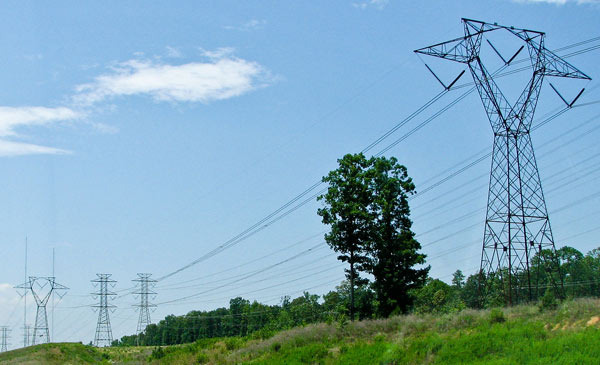
Virginia has a diverse geography, ranging from urban areas in the northern part near Washington D.C. to rural regions in the west along the Appalachian Mountains. Due to these geographical characteristics, the power supply network is also very complex. The power across the state is primarily managed by two major power companies, 'Dominion Energy' and 'Appalachian Power', which together account for about 90% of the total power supply. The remainder is managed by local power cooperatives or small public power systems.
First, Dominion Energy is a company headquartered in Richmond, Virginia, responsible for most of the power supply in eastern and central Virginia. Cities such as Fairfax, Arlington, Alexandria, and Virginia Beach, near the capital Washington D.C., also fall under this company's jurisdiction. Dominion supplies power across the state through over 20,000 miles of transmission lines, with major power plants consisting of thermal, natural gas, nuclear, and solar sources. A representative power plant is the Surry Nuclear Power Station near Jamestown, which is a key facility for Virginia's power generation. This nuclear power plant, which began operations in 1972, is located south of the James River and produces over 1,600 megawatts of power from two reactors. This power alone can supply about 400,000 households in Virginia simultaneously.
Another key nuclear power plant that complements this is the North Anna Nuclear Generating Station. Located in Louisa County, north of Richmond, this facility has been in operation since 1978 and serves as a primary power source for central Virginia. Dominion is currently considering the introduction of fourth-generation small modular reactor (SMR) technology at this plant, aiming to increase the share of carbon-free power in the long term.
Dominion's thermal power network was historically coal-based, but it is rapidly transitioning to natural gas. Large gas power plants are operational in areas such as Chesapeake, Meadowview, and Brunswick County. Notably, the Brunswick Power Station, completed in 2016, is a state-of-the-art facility with a capacity of 1,400 megawatts of natural gas combined cycle power. A similar-sized plant is also operational in nearby Greensville County, considered a key part of Dominion's 'clean power transition' strategy.
Meanwhile, the power in the western region is managed by 'Appalachian Power'. This company operates an extensive transmission network that spans Ohio and West Virginia, supplying power to areas in western Virginia such as Roanoke, Blacksburg, and Wytheville.
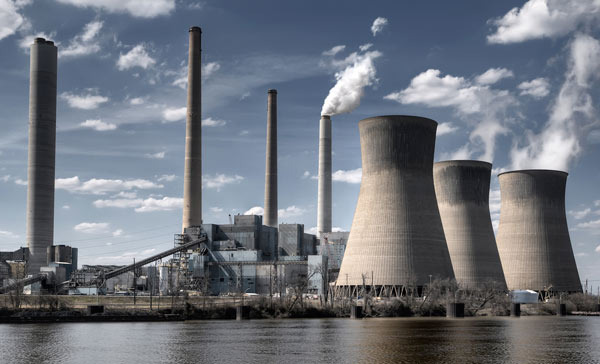
Major power plants include the John E. Amos Plant and the Kanawha River Plant, both located along the West Virginia riverbank, facilitating power transmission to western Virginia. The John E. Amos Plant is a large coal-fired power plant located near St. Albans, West Virginia, which began phased operations in 1971 and is operated by American Electric Power (AEP, the parent company of Appalachian Power). Together, the three generating units produce over 2,900 megawatts, and the steam billowing from the massive cooling towers is iconic and visible from afar. Although it has faced environmental controversies due to high coal consumption in the past, it has recently implemented desulfurization equipment and low-carbon technologies to reduce emissions.
Additionally, a hydroelectric power plant operates near Smith Mountain Lake. This facility, known as the Smith Mountain Dam, is responsible for 600 megawatts of hydroelectric power. This hydroelectric power plays a crucial role in managing load during peak hours.
Virginia has also been proactive in increasing the share of renewable energy recently. Dominion Energy is currently working on over 40 solar power projects across the state, with large-scale solar farms being developed in the southern Richmond and Hampton Roads areas. Notably, offshore in the Chesapeake Bay, the 'Coastal Virginia Offshore Wind' project, the largest offshore wind farm on the East Coast of the United States, is underway. Scheduled for completion in 2027, it will install 180 wind turbines and, once completed, will supply power to approximately 660,000 households.
The transmission network connects the entire state of Virginia with 500 kilovolt (kV) ultra-high voltage transmission lines, forming a large power loop from Richmond to northern Washington D.C. and south to Norfolk and Virginia Beach. The transmission network is also connected to the eastern power grid alliance known as PJM Interconnection, allowing for power exchanges with Maryland, Pennsylvania, and North Carolina when needed.
In summary, Virginia's power grid operates with a mix of 30% nuclear, 45% natural gas, and 25% from coal, hydro, and solar sources. Dominion Energy is transitioning to a structure centered on nuclear, wind, and solar power with a goal of carbon neutrality by 2040, while Appalachian Power is also gradually reducing coal generation.
Ultimately, Virginia's power system stands at the intersection of 'tradition and transition'. On one side are the nuclear and gas power plants that have illuminated Virginia for decades, and on the other side are the wind turbines rising above the sea and the solar panels in the fields. The energy of the past supports the present, while new energy prepares for the future, marking the current Virginia power grid's position.







 nivex85 |
 yentra |
 Virginia Butterfly Mom |
 U.S. Weather Bureau News |
 Tonky |
  viroma |
  cookie |
  Live and that's it |
  Alright Twain |
  eatontown blog |
  HAWAII Korean Church News |
  Amore |
  linex |
  Balancework |
  laro90 |
  MEDBIO American Doctor Blog |
  SWAT TEAM BLK |
  DREAM BIG |
  frostbite |
  330 Forever My Love |
  El Dorado |
  dralix58 |
  Gorama Round |
  Skydiving |