

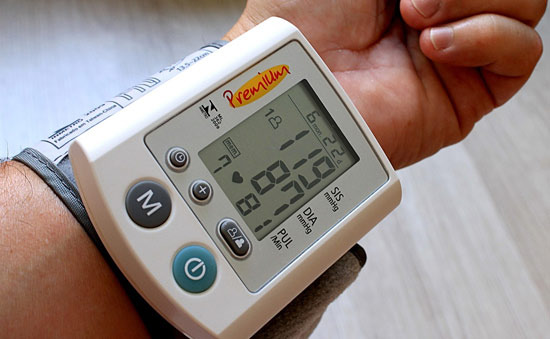
Many people think that since blood pressure is measured at hospitals, there is no need for a blood pressure monitor at home.
Some also think, "I'm still young," or "I feel fine," and don't pay much attention to their blood pressure.
However, blood pressure can quietly rise and suddenly cause problems one day.
The scary thing about high blood pressure is that there are often no symptoms.
If you have a headache or a fever, you can immediately sense that something is wrong with your body.
But that's not usually the case with blood pressure. There are times when your readings can be quite high even when you feel perfectly normal.
This is why doctors often refer to high blood pressure as a "silent killer."
That's why it's important to develop the habit of regularly checking your blood pressure at home.
Measuring it multiple times at home can often be much more accurate than just one reading at the hospital.
Some people experience increased blood pressure due to anxiety when visiting a hospital. This is known as the "white coat effect."
This occurs when someone gets nervous in front of a doctor or nurse, resulting in a higher reading than usual.
Conversely, some people may have high blood pressure in their daily lives but show normal readings at the hospital.
Because of these situations, consistently monitoring at home can be beneficial.
Nowadays, home blood pressure monitors are very easy to use.
You just wrap it around your arm and press a button. In just a few seconds, the reading appears.
Technology has improved, and the accuracy has significantly increased compared to the past. Best of all, they are not that expensive.
You can find decent products online or at pharmacies for around $50 to $100.
Having health insurance does not mean you won't face health issues.What if you develop a serious condition like a stroke or brain hemorrhage due to poor blood pressure management?
A stroke is not just a condition that gets treated at the hospital and then forgotten. Many times, there are lasting effects.
You may find yourself unable to properly use one arm or leg, or you might experience slurred speech or memory loss.
People often need rehabilitation for years. In some cases, their entire lives can change.
When you think about these situations, you can feel how hollow the statement "I have insurance, so I'm fine" can be.
Insurance can help reduce treatment costs, but it cannot perfectly restore your health to its original state. That's why prevention is much more important.
Managing blood pressure is not that difficult. The first step is knowing what your blood pressure is. Normal blood pressure is usually around 120 over 80. What's important is being aware of your average blood pressure over time.
Just getting into the habit of measuring it once in the morning and once in the evening can give you a good understanding of your body's condition.
If your readings are consistently higher than usual, you can change your lifestyle or consult a doctor. Catching these small signals early is the most realistic way to prevent serious illnesses.
When you think about it, a blood pressure monitor might be one of the most cost-effective health tools to have at home. Many times, they cost less than $100. Yet, this small device allows you to check your body's condition every day.
That's why when discussing health, people often say to have a scale and a blood pressure monitor at home. It doesn't require any special skills, and it only takes a few minutes.
While it may seem like the body breaks down suddenly, it often shows small signals first. Blood pressure is one of those signals. If a device that costs less than $100 can help prevent serious illness later, it's worth the investment.


 Enjoyable American Life Diary |
 California Dreamer |
 Best Frozen Yogurt |
 Burbank Lee |
 ANSLO NEWS |
 Roman Pan |



 Until the Day It Gets Better |
  morixa |
  nero kim |
  USA Hyundai Kia |
  OC Real Estate Business Information |
  My Town My Way Blog |
  Splendid Mission |
  Yonori Nori |
  Unknown Dog Walk blog |
  Dingho and USA News |
  Nevada Vegas UNLV |
  Sammy Beach |
  Nanana Nanana Nanana |
  UNI Lover |
  Sunny's Travel in America |
  Hawaiian Dooly Mom |
  My Love DS |
  AZ Road Master |
  Coastal city |
  Sarah's Blog |