
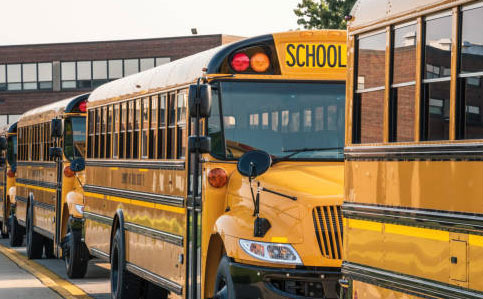
In the United States, school buses play an important role in providing educational experiences to students beyond just being a means of transportation. The history and development of school buses are closely linked to the American education system, with various changes made considering safety, efficiency, and convenience. Today, we will take a closer look at the history of school buses in the United States.
1. The Origins of Early School Buses (Early 19th Century)
The first school bus in the United States appeared in the early 19th century. At that time, horse-drawn vehicles were used rather than the concept of a school bus. It was common for students to travel to school by riding in carriages, which were referred to as school wagons. These carriages helped students travel safely to school, but they were not widely adopted as they were not considered a general public transportation option.
2. Early 20th Century: The Arrival of the First School Bus
In the early 1900s, students in rural areas of the United States faced many difficulties getting to school. The distance between cities and schools, along with various traffic conditions, posed problems, leading to the use of automobiles as a solution. In 1914, the first instance of modifying a car into a school bus occurred in the United States.
At that time, the school bus was a modified version of the original car used to transport students to school, focusing more on practicality than safety. However, discussions about the safety of school buses began as issues such as traffic accidents arose.
3. 1930s: The Modern Form of School Buses
In the 1930s, the design of school buses began to evolve into a form closer to what we see today. During this period, automobile companies started manufacturing school buses, and devices were added to enhance safety.
Involvement of Automobile Companies: From this period, companies specializing in the manufacture of school buses emerged, with Blue Bird Corporation and International Harvester becoming leaders in school bus production.
Color of School Buses: In 1939, the U.S. Department of Education designated the color of school buses as "yellow." This color was proposed by educator and design expert Burt Williams, as it was visually distinctive from a distance and chosen for safety reasons. Since then, yellow has become the iconic color of school buses and is still used worldwide to represent school buses.
4. 1950s-1960s: The Revolution of School Bus Safety
In the 1950s and 1960s, many changes were made to improve the safety of school buses. During this time, there were strong demands for the safety of school buses due to student fatalities from traffic accidents. Consequently, changes were made to the design and functionality of school buses.
Strengthening Safety Regulations: From the late 1950s, school buses began to incorporate metal structures, safety belts, and wider entrances to ensure that students could board and disembark more safely.
Collaboration Between School Buses and the Department of Education: In the 1960s, the U.S. Department of Education established safety regulations for school buses, leading to a nationwide effort to unify safety standards. These regulations continue to serve as important guidelines for the design and operation of school buses today.
5. 1980s-1990s: Changes in Environment and Technology
In the 1980s and 1990s, school buses underwent many changes due to advancements in environmental and technological fields.
Environmental Issues: The environmental protection movement that began in the 1980s also impacted school buses. During this time, attempts were made to switch school bus fuel from diesel to CNG (Compressed Natural Gas) as part of efforts to reduce air pollution.
Technological Advancements: In the 1990s, GPS and integrated wireless communication systems were introduced to school buses, allowing for more efficient management of student safety and operations.
6. After 2000: Enhanced Smart Technology and Safety Features
In the 2000s, school buses evolved by incorporating smart technology and enhancing security features. Various advanced technologies have been introduced to further improve student safety and transportation efficiency.
Smart Technology: A smart card system was introduced in school buses, allowing students to scan their cards each time they board, enabling real-time tracking of the bus's location and recording of boarding and disembarking times.
Rear Cameras and Sensor Systems: To ensure the safety of students boarding and disembarking, rear cameras and internal and external sensors were installed to help prevent accidents after the bus has picked up students.
Automotive Safety Technology: Latest automotive safety technologies, such as automatic braking systems and lane-keeping systems, have been introduced to school buses, reducing accidents and ensuring student safety.
School buses are an important part of the American education system, securing student safety through their history and development, making travel to school safer and more efficient. From the early carriages to today's advanced technology-equipped smart school buses, school buses have evolved in line with the times. Continuous technological advancements and safety enhancements will provide students with even safer means of transportation in the future.






 Weekend Movie Blog |
 Beauty, Health, Lifestyle Blog |
 coloradoman |
 Superman Cat Blog |
 Noodle Noodle |
  Tonky |
  viroma |
  cookie |
  Live and that's it |
  Alright Twain |
  eatontown blog |
  HAWAII Korean Church News |
  Amore |
  linex |
  Balancework |
  laro90 |
  MEDBIO American Doctor Blog |
  SWAT TEAM BLK |
  DREAM BIG |
  frostbite |
  330 Forever My Love |
  El Dorado |
  dralix58 |
  Gorama Round |
  Skydiving |