
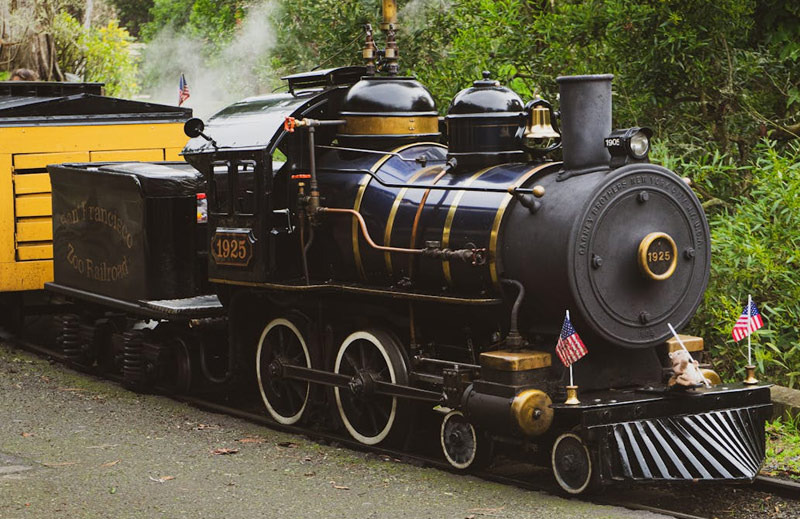
Los Angeles is currently the second largest city in the United States, and the introduction and expansion of railroads from the late 19th century played a key role in urban development and economic growth. Los Angeles grew into an agricultural and industrial hub through railroads, successfully achieving both population and economic prosperity.
Early Development of Los Angeles
Beginning as an Agricultural Center
- In the early 19th century, Los Angeles was a small town where agriculture and ranching were the main economic activities.
- Thanks to fertile land and a mild climate, citrus farming flourished, leading to an increasing need for railroads as a means of transportation for exports.
Gold Rush and Early Growth
- After the California Gold Rush in 1849, Los Angeles began to establish itself as a logistics and trade center in Southern California.
Introduction of Railroads
Southern Pacific Railroad (1876)
- In 1876, the Southern Pacific Railroad completed the first railroad line connecting Los Angeles to San Francisco.
- This railroad became an important starting point for Los Angeles to connect with the eastern United States.
Connection to the Transcontinental Railroad
- In 1885, the Atchison, Topeka and Santa Fe Railroad was completed, directly connecting Los Angeles to the East.
- This connection facilitated the influx of immigrants and investors from the eastern regions to Los Angeles.
Railroad Competition and the Citrus Industry Boom
- Price competition among railroad companies significantly lowered freight rates, establishing a foundation for large-scale exports of citrus produced in the Los Angeles area to eastern markets.
- The success of the citrus industry became a crucial driving force behind the economic growth of Los Angeles.
The Impact of Railroads on the Development of Los Angeles
Rapid Population Growth
- Railroads facilitated the movement of immigrants, leading to a rapid increase in Los Angeles's population.
- 1870s: About 5,000 people
- 1900s: About 100,000 people
- 1920s: Over 1 million people
- Immigrants from the East and Midwest moved to Los Angeles via railroads, driving economic growth in various sectors such as agriculture, construction, and services.
Development as an Industrial and Logistics Hub
- Los Angeles developed into a logistics hub through railroads.
- Major products, including agricultural goods (especially citrus) and oil, were transported by rail.
- The railroad network connected to the Port of Los Angeles, enhancing import and export logistics.
Real Estate Development Boom
- The expansion of the railroad network played a significant role in developing land in the outskirts of the city.
- Railroad companies developed areas around the city, creating residential and commercial districts, leading to a real estate boom.
- During this time, cities like Pasadena, Long Beach, and Burbank were formed.
Development of the Los Angeles Suburban Railroad System
Pacific Electric Railway
- Established in 1901, the Pacific Electric Railway was one of the largest suburban railroad systems in the world.
- This electric railway, nicknamed "Big Red Cars," connected major cities and regions in Southern California, including Los Angeles.
- Route length: About 1,600 km
- Main connecting areas: Pasadena, Long Beach, Santa Monica, etc.
- The Pacific Electric Railway promoted suburban development in the Los Angeles metropolitan area.
Decline of Railroads and the Rise of Car Culture
Rise of Cars and Highways
- In the mid-20th century, the development of the automobile industry and the expansion of the highway system gradually reduced the role of railroads.
- In particular, Los Angeles transformed into a car-centric city, and the Pacific Electric Railway ceased operations in 1961.
Growth of the Aviation Industry
- The development of Los Angeles International Airport (LAX) contributed to air transport becoming a major mode of transportation, replacing railroads.
Modern Los Angeles Railroads and Public Transportation
Metro System
- From the late 20th century, Los Angeles introduced a new public transportation system to address car-centric traffic issues.
- LA Metro currently operates six subway and light rail lines, connecting major areas within the city and its outskirts.
Legacy of Railroads
- Railroads continue to influence the design of Los Angeles's transportation network and economic structure today.
- The historical railroad legacy can be seen in monumental buildings like Union Station.
- https://www.unionstationla.com
Los Angeles was able to grow from an agricultural center to a modern metropolis through railroads. Railroads led to an influx of population and economic revitalization in the city, significantly contributing to the development of suburban areas and industrial growth. Although the rise of automobiles and the aviation industry has reduced the role of railroads, they have profoundly influenced the history and urban structure of Los Angeles, and continue to play an important role in public transportation and logistics today.







 Weekend Movie Blog |
 Beauty, Health, Lifestyle Blog |

 coloradoman |
 Superman Cat Blog |
 novapixel |
  Tonky |
  viroma |
  cookie |
  Live and that's it |
  Alright Twain |
  eatontown blog |
  HAWAII Korean Church News |
  Amore |
  linex |
  Balancework |
  laro90 |
  MEDBIO American Doctor Blog |
  SWAT TEAM BLK |
  DREAM BIG |
  frostbite |
  330 Forever My Love |
  El Dorado |
  dralix58 |
  Gorama Round |
  Skydiving |