
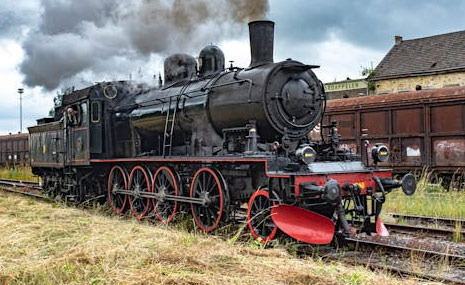
San Francisco is an important city on the west coast of the United States, and since the mid-19th century, the construction of the transcontinental railroad and the expansion of railroads have had a decisive impact on the city's growth and prosperity. Below is an overview of the development history of San Francisco, focusing on its relationship with railroads.
1. Early Development of San Francisco
The Gold Rush and the Birth of the City (1848-1855)
With the start of the California Gold Rush in 1848, San Francisco rapidly grew with immigrants and settlers dreaming of gold mining. In 1848, the population was only about 1,000, but by 1850 it had increased to 25,000.- San Francisco functioned as a major gateway to the goldfields and developed into a center for logistics, finance, and commerce.
Growth as a Port City
San Francisco's natural harbor established itself as an important trade hub connected to the Pacific. Initially, maritime transport was the main means of transportation, but the need for railroads to connect to inland areas grew increasingly urgent.
2. Introduction of Railroads and the Transcontinental Railroad
Completion of the Transcontinental Railroad (1869)
In 1869, the first transcontinental railroad in the United States was completed at Promontory Point, Utah, connecting California with the eastern United States.- This railroad provided the fastest and most efficient means of transportation between San Francisco and the East, becoming a catalyst for the city's development.
- In particular, the San Francisco harbor grew into an international logistics hub connecting the Pacific and Atlantic through the transcontinental railroad.
San Francisco and the Railroad Network
- San Francisco became a center for logistics and population movement, connected to the Union Pacific Railroad and the Central Pacific Railroad.
- These railroads played a crucial role in making San Francisco the center of the western regional economy.
3. Development of Railroads in San Francisco
Construction of Local Railroads
- From the 1870s, San Francisco expanded its local railroad network, strengthening connections with the suburbs.
- Connections with San Jose and other surrounding cities allowed for easy transportation of agricultural products and timber to San Francisco.
Integration of Ferries and Railroads
- San Francisco is located on a peninsula physically separated from the mainland, leading to the development of a transportation system that combined railroads and ferries.
- Ferries transported railroad passengers and cargo to the city center, enhancing the connection between railroads and the harbor.
California Street Cable Car (1873)
- Due to its unique topography (hills), San Francisco introduced a cable car system in addition to railroads.
- Cable cars allowed people to move up and down the hills, solving urban transportation issues.
4. Impact of Railroads on San Francisco's Development
Economic Growth
- Railroads transported agricultural products, minerals, and timber produced in California to San Francisco, revitalizing the city's economy.
- San Francisco established itself as a financial and commercial center, earning the nickname the New York of the West.
Population Growth
- Railroads made it easier for immigrants and workers to move to San Francisco, significantly increasing the city's population.
- In particular, Chinese immigrants greatly contributed to the city's development alongside railroad construction.
Growth of the Tourism Industry
- Railroads provided convenient transportation for tourists visiting San Francisco, fostering the growth of the city's tourism industry.
5. San Francisco and Modern Railroads
BART (Bay Area Rapid Transit)
In the 1970s, BART, a rapid transit system connecting San Francisco with surrounding cities, was introduced.- BART streamlined intercity commuting as a modern transportation means, further strengthening the San Francisco Bay area's economy.
Legacy of Railroads
- Today, San Francisco utilizes its historic railroads and cable cars as tourist attractions.
- Visitors can experience restored cable cars and railroad vehicles in areas like Fisherman's Wharf and Embarcadero.
The development and prosperity of San Francisco are closely linked to the expansion of railroads. Railroads not only promoted the city's economic and population growth but also established San Francisco as a hub in the Pacific and transcontinental logistics network. Even today, the railroads and cable cars of San Francisco remain important symbols representing the city's history and culture.






 Peter Pan Pet |

 Nuchuhan Exploration BLOG |
 Sugar Cream Door Bulletproof Noodles |
 Moscow Kim |
 Korean Mom |
  My NYC |
  moo moo |
  Mr Oh |
  forevergee |
  festival |
  manchester |
  constant |
  Leapfrog Move |
  vibranto |
  Tora Tora |
  yellowbutter |
  Dolly |
  US Embassy |
  NYC saladbar |
  Finding Superfoods |
  lightyear |
  song bang |
  vexomo |
  Indiana Jones |