

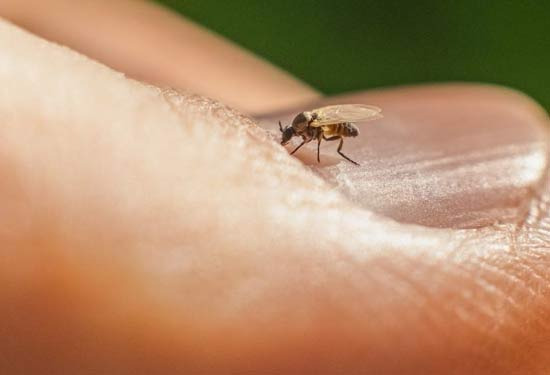
Even in December in San Antonio, it is not entirely impossible to get bitten by bugs.
There are many days when the temperature rises to 75 degrees during the day, and if the humidity is also somewhat high, it creates a favorable environment for small bugs to be active.
So if one day you suddenly notice a red bump on your arm or leg that itches, you can't help but wonder, "What bit me?" Especially if you saw a small black bug flying around, the suspect is likely a mosquito. Just because it's December doesn't mean there are no mosquitoes.
In cold weather, they don't die; they quietly hide and become active again when it suddenly warms up. As long as there is standing water in places like houseplants, balconies, nearby puddles, or drains, adult mosquitoes can survive. Mosquito bites often appear as round, slightly swollen spots and can be quite itchy.
The second possibility is no-see-ums, small biting bugs similar to biting midges. As the name suggests, no-see-ums are so small that they are almost invisible. They are much smaller than mosquitoes and can disappear like a black dot, leaving you itchy without even knowing what bit you. When they bite, they can cause small red welts that itch longer than mosquito bites. Especially if you get bitten in multiple places at once, the likelihood of it being these bugs is high. They are most active around dusk or in grassy, riverbank, or humid areas, and they can still be around in winter if the temperatures are warm.
The third possibility is gnats. On days when it rains a little in winter and there is humidity, you can see them swarming. Some types do not bite directly, but some can pierce the skin and leave irritation. The marks can be red and itchy, but they may not swell as much as mosquito bites. If you get bitten near grass, rivers, or walking paths outdoors, it's worth considering.
Another pest that cannot be ignored is fleas. Even without cats or dogs, they can hitch a ride on your clothes from grass or parks. Fleas appear as small black dots and can jump quickly. The bite marks appear as small red dots in a line or cluster, especially if they are concentrated around the ankles or calves, which raises the possibility of fleas.
Large swelling and severe itching → mosquito possibility
Multiple small dots clustered together → no-see-um/flea suspicion
Small bugs that are hard to see, biting like the wind → leaning towards no-see-ums
Concentration around the ankles → flea possibility
After outdoor activities during the day and evening → gnat/mosquito possibility
The solution is simple. First, it is most important not to scratch. Scratching can make it worse and leave pigmentation. If the itching is severe, applying hydrocortisone cream or aloe gel from the pharmacy can help soothe it a bit. Ice packs can also be quite helpful.
If you got bitten indoors, you should spray mosquito repellent or apply pest control pads to door gaps, and check for any standing water in drains or plant saucers. If fleas are suspected, washing bedding and vacuuming the floors frequently is a quick solution.
Ultimately, the winter biting incidents in San Antonio are connected to the characteristics of this city. On the surface, it may seem like winter means no bug worries, but the warm South still quietly harbors bugs. Even a small flying bug can leave traces on your skin if given the chance, so don't let your guard down. From a single bite mark, it is likely that the main culprits are mosquitoes, no-see-ums, or fleas that came in from the grass.
If you are not feeling unwell, it may disappear after a while, but if the itching is severe or the bite marks spread, it is best to apply medication and manage it. Prevention is the wisest approach. When going hiking, bring mosquito spray, and even if it's breezy, wearing thin long pants is safer than shorts. If you let your guard down just because it's winter in San Antonio, the bugs will reach out first.







 Helpful Life Stories |
 American Man in a Mask |
 Texas Migration Story |
 USA Pharmacy Pharmacist |
 Texas Migration Story |
  Tonky |
  viroma |
  cookie |
  Live and that's it |
  Alright Twain |
  eatontown blog |
  HAWAII Korean Church News |
  Amore |
  linex |
  Balancework |
  laro90 |
  MEDBIO American Doctor Blog |
  SWAT TEAM BLK |
  DREAM BIG |
  frostbite |
  330 Forever My Love |
  El Dorado |
  dralix58 |
  Gorama Round |
  Skydiving |