

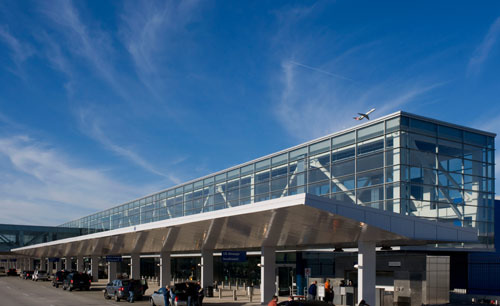
The most frequently used airport in Detroit is indeed the Detroit Metropolitan Wayne County Airport, DTW.
Commonly referred to as "Detroit Airport," its actual location is in Romulus, about 22 miles southwest of downtown Detroit.
If traffic is smooth, it takes about 30 minutes to reach by car, but during rush hours, it can take over 45 minutes. Especially from the northern suburbs where many Koreans live, such as Novi, Troy, and Rochester Hills, it's advisable to expect around 40 to 60 minutes.
DTW is one of the major airports representing the Midwest of the United States.
It serves approximately 35 million passengers annually and is one of the top hub airports in the country. It plays a key hub role for Delta Air Lines, making connections to major cities in the U.S. as well as to Europe and Asia very convenient.
The airport is divided into two main terminals: the McNamara Terminal and the Evans Terminal.
The McNamara Terminal is primarily operated by Delta Air Lines and is quite large. Walking from one end of the terminal to the other can take over 10 minutes. Fortunately, there is a free express tram running inside the terminal for easy movement.
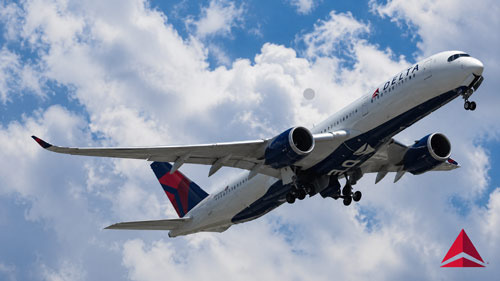
The importance of DTW lies in the fact that it connects one of the most significant international routes for Koreans living in Michigan, which is between Detroit (DTW) and Incheon (ICN).
Due to the steady demand for visits to Korea, family invitations, and business trips, Detroit Airport effectively serves as the gateway to Korea for Koreans in the Midwest.
Many people ask, "Is there a direct flight from Korean Air every day?" Currently, the Detroit-Incheon route is operated in a codeshare format by Korean Air and Delta Air Lines. Thanks to the SkyTeam alliance, reservations can also be made on the Korean Air website, and it is effectively available for flights almost every day. The DTW-ICN route operates about one direct flight per day, with a flight time of approximately 14.5 to 15 hours.
Prices vary significantly depending on the season. The cheapest times are generally from late January to March and from early September to early November. During these periods, round-trip economy tickets can sometimes be purchased for around $1,100 to $1,600.
In contrast, prices rise significantly during the summer vacation season from June to August and around the year-end holidays. Round-trip economy fares often exceed $2,000 to $3,000, and last-minute bookings or bookings just before peak season can exceed $3,500. It is common to see round-trip fares from Detroit to Incheon on the Korean Air official site listed in the upper $2,000 range during the summer.
Business class fares show even greater variation. In the off-peak season, round-trip fares start at around $4,000 to $6,000, but during the summer and year-end, they can exceed $8,000. The flight time is about 13 to 14 hours, and there is a significant difference in ticket prices depending on the peak and off-peak seasons.
Generally, round-trip tickets are around $1,100 to $1,500 in the off-peak season, but during summer vacation or year-end holidays, they can rise to over $1,800 to $2,500. For business class, expect to pay over $4,000 to $8,000 for a round trip.
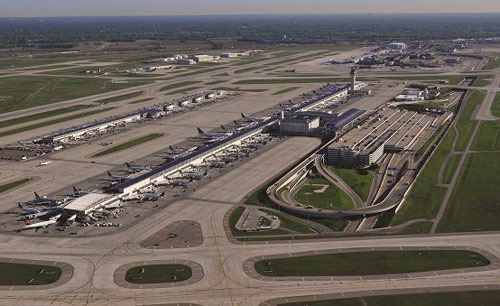
It's also important to be aware of airport parking fees. The McNamara Terminal parking lot costs about $32 per day, while the Economy Lot for long-term parking is around $14 to $18 per day. For a week-long trip, using Uber or Lyft can often be cheaper.
For those using rail transportation, the Detroit Amtrak station is also an important facility. Located in the New Center area, the Wolverine line connects to Chicago.
Traveling from Detroit to Chicago takes about 4 to 5 hours, with one-way fares ranging from $35 to $90 depending on the booking time. It takes about an hour to reach the nearby college town of Ann Arbor, with one-way fares around $10 to $25.
Additionally, one of Detroit's unique advantages is its accessibility to Canada. You can easily travel to Windsor, Canada, from downtown via the Detroit-Windsor Tunnel and the Ambassador Bridge. Crossing the border by car typically takes about 15 to 30 minutes, and a passport or appropriate border crossing documents are required.
Realistically, Detroit is a car-centric city. Most airport transfers are done by personal vehicles or rideshare services like Uber and Lyft. The Uber fare from downtown to DTW is usually around $40 to $70, while in suburban areas, it typically ranges from $60 to $100.
Ultimately, while Detroit's transportation infrastructure is car-centric, it serves as a convenient transportation hub in the Midwest with a major international airport, a rail network connecting to Chicago, and accessibility to the Canadian border.
In particular, direct connections to Korea are one of the biggest advantages for Koreans in Michigan.
 MagicSmile
 SmileTiger


 Good World Good Thoughts |
 celtics |
 candytip |
 Gold Bar |
 Pirate Ship Popcorn Maker |
 amolayo |
 So is multiplied by So, So Ji-sub |
 juniper |
 Michigan Enthusiast |
 U.S. Weather Bureau News |
  My Town My Way Blog |
  holy cow |
  endone |
  starline |
  Where is a really nice neighborhood? |
  Real Estate |
  Forest Gump |
  Real Estate Investment Korean American |
  Dollydori, Lover of Movies |
  dmzline |
  travelo |
  American Food Information & Calories |
  Splendid Mission |
  sparklingo |
  Watch Walker |
  Soy Angelino |
  autumn |
  K-POP TV News |
  cortiva6 |
  Nevada Teppanyaki |