

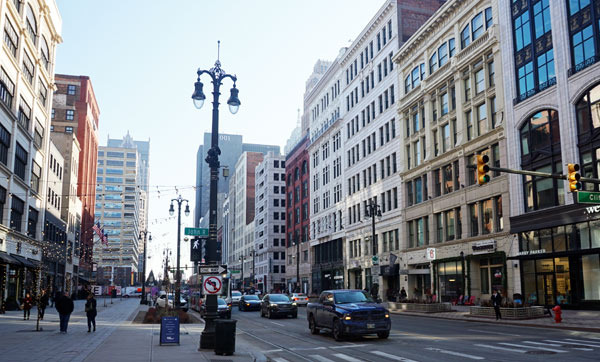
Detroit's real estate can be summarized as 'extreme polarization.' As of 2026, the median home price in the city is around $85,000 to $100,000, making it one of the most affordable among major U.S. cities. Due to the decline of the automotive industry and the city's bankruptcy in 2013, there was a massive population exodus and a problem with vacant homes, making it easy to find listings for just a few thousand dollars just outside the city center.
1. The Real Reason Detroit Home Prices Once 'Crashed'
The background of Detroit's home prices plummeting is rooted in America's harsh industrial history and economic downturns. Once thriving as the 'heart of the automotive empire,' Detroit has been on a rapid decline since the 1970s due to changes in manufacturing and the influx of Japanese and European cars.
The final blow came with the 2008 subprime mortgage crisis and the official bankruptcy declaration of Detroit in 2013. As jobs disappeared, residents left the city in droves, and with vacant homes left unattended, crime rates soared. With the city's finances depleted, even streetlights couldn't be turned on, leading to many homes being foreclosed and dumped on the market at rock-bottom prices, resulting in the infamous 'housing market crash.' Currently, the market is slowly recovering, with median home prices in the city rising to between $85,000 and $100,000 as of 2026, but it still remains among the cheapest in major U.S. cities.
2. Reasons Why Koreans Are Quietly Gathering in This Area
Despite its rough history, the Detroit metro area (including suburbs) has surprisingly formed a strong Korean community.
High-quality jobs related to the automotive industry: Even though Detroit has declined, the headquarters of America's Big 3 automakers—GM, Ford, and Stellantis—and numerous global Tier 1 suppliers are still located here. Many U.S. branches of South Korea's Hyundai and Kia-related research institutes and battery and parts companies have also entered the market, leading to a continuous influx of highly educated Korean professionals such as engineers, researchers, and expatriates.
Excellent suburban school districts and safety: While the city center may be underdeveloped, just a little outside, you can find some of the best public school districts and safe living environments in the U.S. With strong job opportunities, education, and stable infrastructure, this area has become a surprisingly attractive settlement for Koreans.
3. Reasons Not to Jump at Cheap Prices: Property Taxes and Regional Disparities
However, approaching Detroit real estate by only trusting the visible sale prices can lead to significant issues.
The side effects of tax burdens: The biggest problem is property taxes. Detroit's millage rate (the amount of tax per $1,000 of assessed value) is over 70 mills, one of the highest in the U.S. This is because the city raised tax rates excessively to fill the financial gap created by its bankruptcy. In other words, even if you buy a $70,000 home cheaply, the annual property tax burden can be several times higher than in other cities, making it more costly than the home itself.
Extreme regional polarization: Recently redeveloped areas in the city center or historic districts, as well as safe suburban areas, have completely different home price structures.
| Area Classification | Target Area | Expected Home Price Range |
| City Redevelopment Area | Midtown, Corktown | $200,000 - $500,000 |
| City Historic District | Indian Village, Boston-Edison | $200,000 - $600,000 |
| Stable Nearby Suburbs | Royal Oak | $250,000 - $500,000 |
| Affluent Areas and Excellent School Districts | Birmingham, Bloomfield Hills, Grosse Pointe | $400,000 - over $3 million |
The millage rate in downtown Detroit is over 70 mills, one of the highest in the U.S., which can make it more expensive than the home itself, along with safety and school district burdens.
On the other hand, areas preferred by Koreans, which are safe and have good infrastructure, have completely different home price structures.
City Redevelopment and Historic Districts: Midtown, Corktown, Boston-Edison, etc., have seen improvements in infrastructure, with prices ranging from $200,000 to $600,000.
Nearby Suburban Areas: Royal Oak is around $250,000 to $500,000, while affluent neighborhoods and excellent school districts like Birmingham, Bloomfield Hills, and Grosse Pointe can soar to at least $500,000 to over $2 million.
In conclusion, while downtown Detroit is incredibly cheap, the risks of taxes and safety are significant, and the desirable outer suburbs are comparably expensive to other major U.S. cities. Therefore, it is essential to consider not only the sale price but also the annual property tax and neighborhood safety.
 RubyMooner
 LightAndPrio
 MoonlitZone
 SunrayWriter



 |
| 
 Premium Gas Camp |
 CA Real Estate |
 cheesepup |
 breezem |
 juniper |
 So is multiplied by So, So Ji-sub |
 Michigan Enthusiast |
 oflare |
 bayaa |
  Living in America and Writing Essays |
  Piano Teacher Blog |
  bearcup |
  explorer |
  dictionary |
  Mr Bull Jung |
  radiant |
  Georgia 88 |
  Great TOWN NEWS |
  Open Flex Mind |
  Hartford Blog |
  unified |
  Generation X |
  ringwinds |
  American Food Information & Calories |
  Hawaii Maui Kahului |
  calvorn |
  fernando park |
  newyorker 101 |
  coffeee |